

Celebrate Diwali Over A Festive Indian Thali At The Crossing
Diwali meals rarely begin with restraint. A bowl of something crisp appears first, somebody adds chutney, bread reaches the table while the first plate is still being finished, and dessert is already being discussed before anyone has made serious progress through dinner. The pleasure comes from abundance, but also from how differently each part of the meal eats.
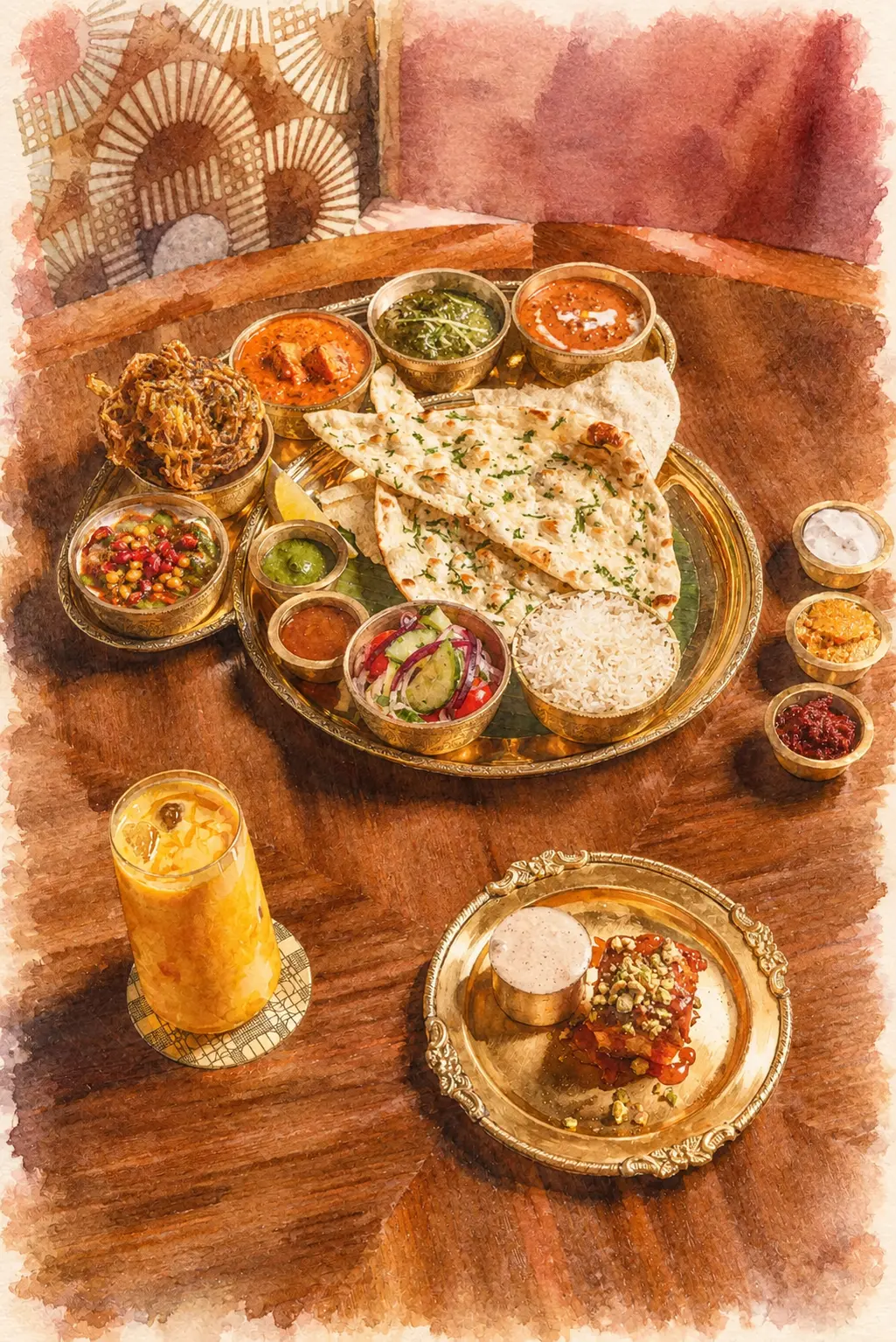
For the festive season, The Crossing has built a Diwali Special Thali around that idea. The menu brings together Dahi Bhalla, Onion, Leek & Fennel Bhajiya, Paneer Butter Masala, Saag, Dal Makhani, Papad and Chutneys, Rice, Plain Naan and Dessert. It is a generous plate, but not a random collection of celebratory dishes. Each element changes the next mouthful. The restaurant takes its name from India’s railway crossings, and the thali carries that idea neatly: many regional flavours arriving together, a whole journey gathered onto one plate.

A Cooler Start Before The Richer Dishes
Dahi Bhalla is an easy place to begin. Soft lentil dumplings sit beneath seasoned yoghurt, giving the plate a cool, gently tangy opening. It is not trying to compete with the richer dishes waiting nearby. Its job is simpler: soften the pace, bring acidity and give the palate something fresh before the meal deepens.
The bhajiya heads in another direction. Onion, leek and fennel are fried until the outside takes on a crisp edge while the centre stays tender. Fennel brings a light aromatic sweetness rather than more heat. A bite of bhajiya followed by dahi bhalla makes sense almost instinctively. One is warm and crisp, the other cool and soft.
This is the pleasure of a thali when it has been thought through properly. You do not finish one section and move obediently to the next. You return, mix, tear bread, add chutney, then change your mind about what the next bite should be.
The Centre Of The Plate
Paneer Butter Masala gives the thali its richest note. Paneer carries a tomato-led sauce well because it keeps its shape and mildness, leaving room for the gravy to do most of the talking. The result is comforting, especially with naan, but the meal would feel heavy if every bowl followed the same register.
Saag changes that. Greens bring an earthier taste and a softer kind of richness, less glossy and more grounded. Beside paneer, the contrast is useful rather than decorative. It gives the plate somewhere else to go.
Then there is Dal Makhani. Black lentils need time. Slow cooking softens them, deepens their savoury character and creates the creamy texture associated with the dish. On a festive thali, dal is not background food. It often becomes the bowl people return to after trying everything else, especially once rice arrives.
Rice, Naan, Papad And The Small Things Which Matter
A thali changes depending on what you eat it with. Rice loosens dal and catches sauce differently. Plain naan gives paneer and saag something warm and chewy to sit against. Papad offers a quick dry crunch between softer mouthfuls.
Chutneys do even more with very little. A spoonful can sharpen a rich sauce, wake up a piece of bread or pull a fried snack back into focus. These small accompaniments are easy to overlook when reading a menu, although they often decide how lively the plate feels halfway through the meal.
There is also a practical pleasure in having everything within reach. Diwali dinners tend to stretch. Conversation interrupts eating, somebody wants another piece of naan, a plate gets passed across the table. A thali suits this kind of evening because it does not demand a rigid order.
A Festive Menu Built For Sharing The Occasion
The Crossing’s Diwali menu is vegetarian, but it does not rely on a single idea of richness to feel celebratory. Fried food, yoghurt, paneer, lentils, greens, rice and bread each bring a different texture and weight. That variety is what allows the meal to stay interesting beyond the first few bites.
Dessert completes the thali. By then, the table has usually slowed down. Naan has disappeared, chutney bowls look decidedly less neat, and somebody is deciding whether there is room for a little more dal.
There usually is.
By the time the last piece of naan has gone and the final sweet course arrives, the table should look a little untidy and nobody should be in much of a hurry. That is part of the pleasure of Diwali: a meal made of many small choices, passed around, returned to and enjoyed slowly.
The Diwali Special Thali will be available from 2 to 10 November 2026.
Paris: €32 | Book: https://crossingindianbistro.com/paris-reservation/
Nice: €38 | Book: https://www.sevenrooms.com/explore/thecrossingindianbistronice/reservations/create/search/
Leeds: £25 | Book: https://www.sevenrooms.com/explore/thecrossingindianbistroleeds/reservations/create/search/
Ealing: £25 | Book: https://www.opentable.co.uk/r/the-crossing-indian-bistro-london


