

What Makes a Modern Indian Bistro Different?
Indian restaurants have existed outside India for decades. Yet the idea of the modern Indian bistro is relatively new — and often misunderstood. It is not simply a smaller restaurant, a lighter menu, or a contemporary interior. Nor is it an attempt to dilute tradition for global appeal.
A modern Indian bistro represents a shift in philosophy rather than format. It reflects how Indian cuisine is beginning to speak for itself in global cities — with clarity, confidence, and restraint.
In places like Paris, where dining culture values precision and craft, this evolution feels both necessary and overdue. To understand what makes a modern Indian bistro different, one must look beyond presentation and examine intention.
Table of Contents
- From Representation to Translation
- Restraint as a Form of Confidence
- Editing the Menu Without Losing Identity
- Technique Over Spectacle
- Ingredients With Provenance and Purpose
- Atmosphere: Calm Instead of Ornamentation
- The Bistro as a Cultural Bridge
- The Crossing Paris: A Case Study in Modern Indian Bistro Thinking
- Why the Modern Indian Bistro Matters Now
- Final Thoughts: Difference as Intentionality
From Representation to Translation
Historically, Indian restaurants abroad often carried the burden of representation.
Menus attempted to cover vast geographies, offering dozens of dishes in an effort to explain India in one sitting. The result was abundance without focus — food that was rich, loud, and frequently disconnected from context.
The modern Indian bistro rejects this impulse.
Rather than representing everything, it translates something specific. It acknowledges that Indian cuisine is not a single narrative, but a collection of regional, personal, and migratory stories. A bistro format allows for editing — a conscious narrowing of focus that brings clarity instead of excess.
This act of translation is what allows Indian food to belong naturally in global dining cultures rather than sitting apart from them.

Restraint as a Form of Confidence
One of the most defining characteristics of a modern Indian bistro is restraint.
This restraint appears in:
- Shorter, more considered menus
- Controlled spice usage
- Balanced portion sizes
- Thoughtful pacing of a meal
Rather than impressing through complexity, the modern Indian bistro builds trust through consistency and precision. It understands that Indian cuisine already carries depth — what it needs is space.
In Paris, where culinary authority is often expressed through simplicity, this restraint aligns Indian food with local dining values without compromising authenticity.
Editing the Menu Without Losing Identity
Editing is not subtraction; it is refinement.
A modern Indian bistro chooses dishes that speak clearly rather than loudly. Recipes are not selected for recognisability alone, but for how well they express technique, memory, and balance.
Comfort food plays an important role here. Lentils cooked patiently, railway-style curries, carefully prepared biryanis, and understated desserts anchor the menu emotionally. These dishes offer familiarity without falling into nostalgia.
This approach allows Indian cuisine to be understood not as exotic or overwhelming, but as composed and grounded — qualities that resonate deeply with contemporary diners.
Technique Over Spectacle
Traditional Indian cooking is technically demanding, yet its mastery is often invisible.
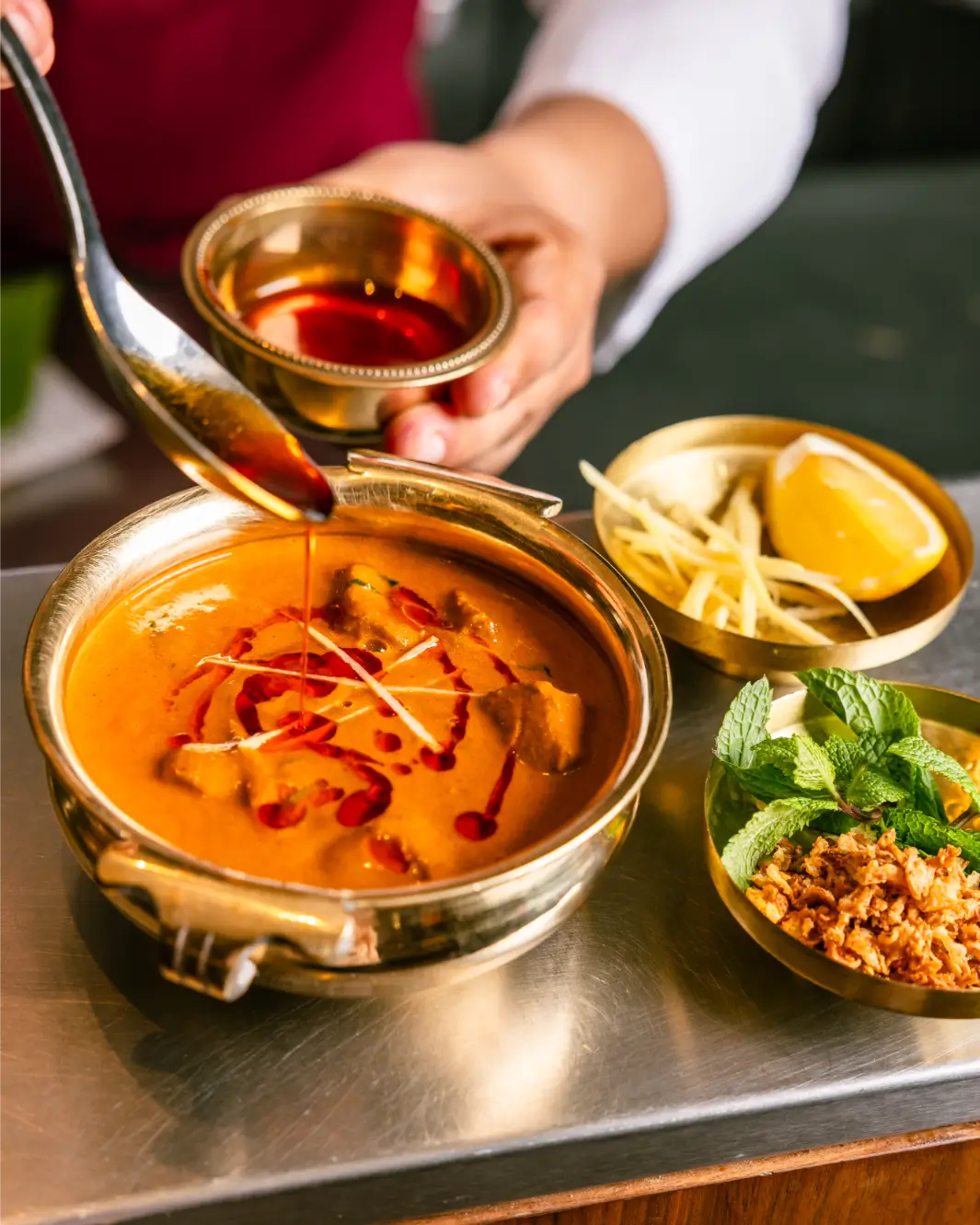
The modern Indian bistro foregrounds this invisibility. It does not rely on garnish, excessive richness, or theatrical presentation. Instead, it allows technique — timing, heat control, layering of spices — to shape the experience.
This emphasis on craft aligns Indian cooking with the values of modern gastronomy, where mastery is measured by precision rather than performance.
In the best Indian restaurant experiences in Paris, this quiet technical confidence is often what distinguishes a bistro from a conventional restaurant.

Ingredients With Provenance and Purpose
Another defining feature of the modern Indian bistro is its relationship with ingredients.
Rather than treating spices as generic, the focus shifts to provenance — GI-tagged saffron, pepper, cardamom, cumin, and region-specific aromatics. Ingredients are chosen for what they contribute emotionally as well as gastronomically.
This attention mirrors the way Indian ingredients historically travelled through trade routes and railways, adapting without losing identity. In a modern context, it reinforces authenticity through respect rather than explanation.
For diners, this translates into food that feels lighter, clearer, and more digestible — physically and culturally.
Atmosphere: Calm Instead of Ornamentation
The modern Indian bistro also rethinks space.
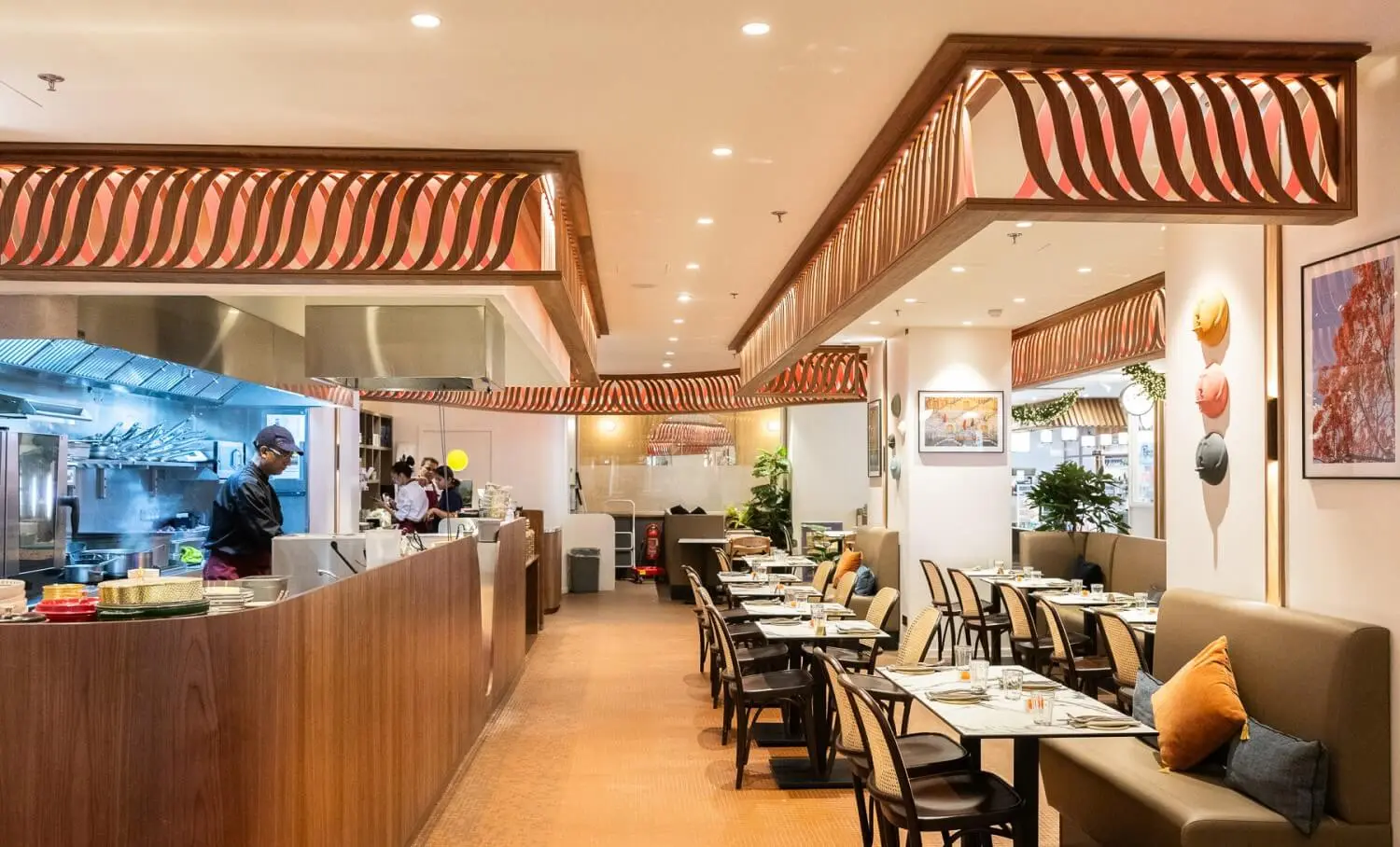
Instead of heavy décor or overt thematic cues, interiors are calm, edited, and intentional. Warmth comes from proportion and material rather than ornamentation. This design philosophy mirrors the food itself — thoughtful, composed, and confident.
Such spaces encourage repeat visits rather than one-time experiences. They are designed for mid-week dinners as much as special occasions, reinforcing the idea that Indian food belongs in everyday dining rhythms.
The Bistro as a Cultural Bridge
At its best, a modern Indian bistro functions as a cultural bridge.
It does not dilute Indian cuisine, nor does it insist on explanation. Instead, it trusts diners to engage intuitively. This trust is essential in cities like Paris, where guests value being met as equals rather than audiences.
The bistro format allows Indian food to exist in dialogue with its surroundings — responding to local dining habits while maintaining its internal logic.
The Crossing Paris: A Case Study in Modern Indian Bistro Thinking
The Crossing Paris exemplifies what defines a modern Indian bistro today.
Inspired by India’s railway journeys — where recipes travelled, adapted, and settled — the restaurant approaches Indian cuisine as something migratory and lived. Its menu is edited, its flavours restrained, and its techniques precise.
Consistently rated among the best Indian restaurants in Paris, The Crossing does not attempt to recreate India. It translates Indian food memory into a form that belongs naturally in a Parisian context.
Slow-cooked lentils, railway-inspired curries, balanced spice blends, and understated desserts reflect a philosophy rooted in patience and repetition rather than novelty. The result is Indian food that feels confident, contemporary, and emotionally grounded.
Why the Modern Indian Bistro Matters Now

The rise of the modern Indian bistro reflects a broader shift in how global cuisines are understood.
Diners today are less interested in spectacle and more drawn to meaning. They seek food that carries identity without performance, and authenticity without excess.
Indian cuisine, with its deep relationship to memory, movement, and craft, is uniquely suited to this moment. The bistro format allows it to express these qualities clearly and confidently.
Final Thoughts: Difference as Intentionality
What makes a modern Indian bistro different is not innovation for its own sake.
It is intention.
An intention to edit rather than accumulate. To translate rather than explain. To trust rather than persuade. It is Indian cuisine presented not as an event, but as a relationship — one built over time, through consistency and care.
In cities like Paris, where food is treated as culture, this approach allows Indian dining to step fully into its place. The modern Indian bistro does not announce itself loudly. It simply belongs.
And that, ultimately, is the difference.


