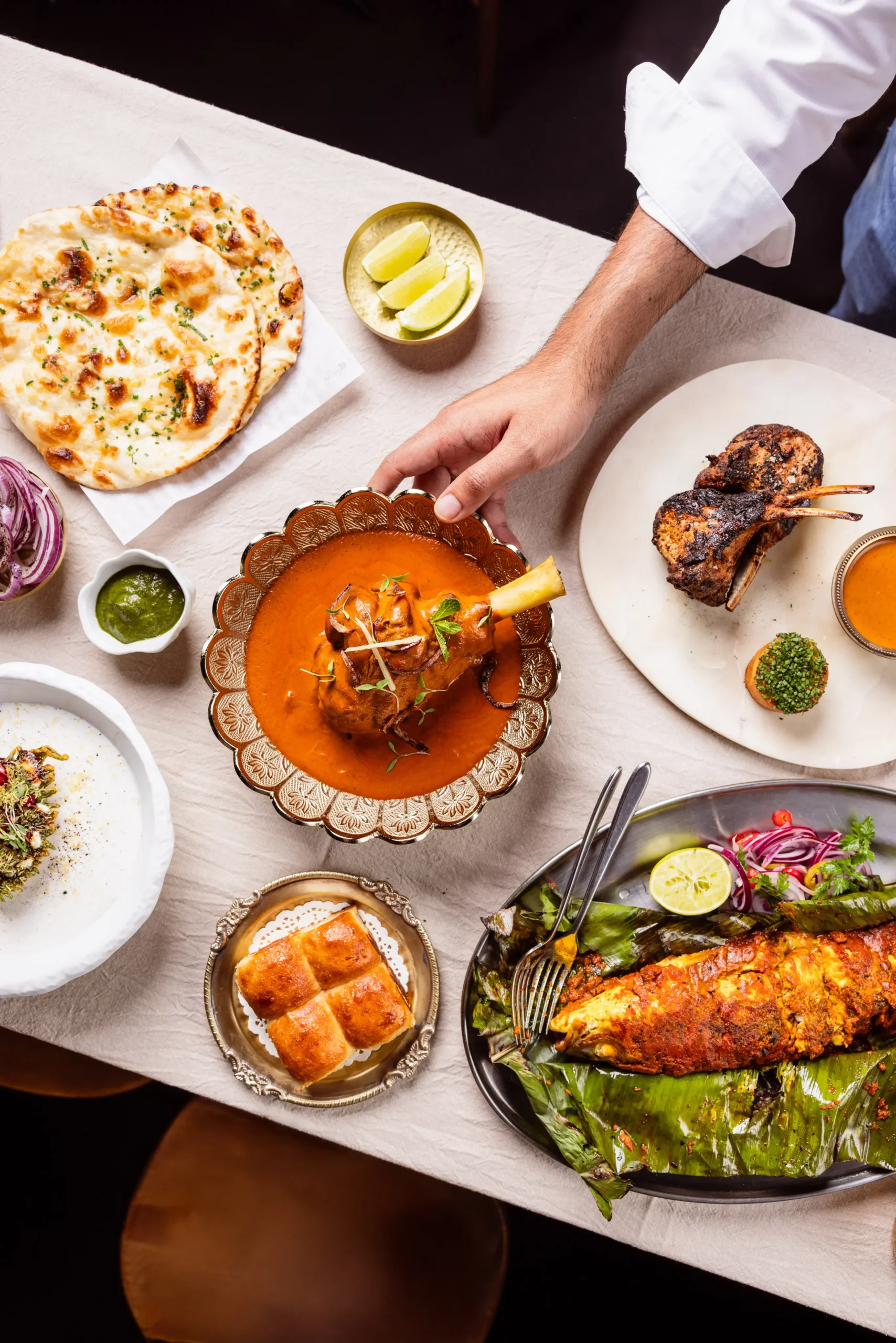

The Language of Ingredients, Stories from India’s Spice Routes

The Crossing

At The Crossing, every ingredient tells a story from India’s spice routes and railway journeys. Our cuisine celebrates how people, trains, and spices have moved, mingled, and shaped the nation’s diverse flavors.

Ingredients & Sourcing

Blending Tradition With Modernity

Chef Ankur Chakraborty’s philosophy blends tradition with modern interpretation, honoring how ingredients travel, evolve, and connect cultures. The Railway Ingredient Map reflects this journey, where station kitchens and shared meals turned India’s railways into spice routes, carrying not just food, but stories.

Chef Ankur’s Philosophy

Chef Ankur’s cooking blends rooted tradition, cultural movement, and modern technique, honoring how ingredients travel, evolve, and connect. His approach celebrates the generosity of knowledge, sharing stories as much as recipes.

This page is a living archive of the ingredients that shape The Crossing, a modern Indian bistro with a soul deeply rooted in heritage.

Why Ingredients Matter at The Crossing

Each ingredient traces the journeys of India’s people and flavors, stories of movement, memory, and connection.

Layered Heat — Pepper Before Chili

India’s heat evolved from pepper to chili — a balance of warmth over fire, mapped like dialects across the land.

Saffron — Kashmir’s Golden Thread

Hand-picked in Pampore’s autumn fields, saffron’s few crimson threads once traveled by train, bringing warmth and color to winter chai along Himalayan routes.

Black Pepper — Fire Before the Chili

Before chilies arrived, Malabar’s Tellicherry pepper carried India’s heat — its citrusy spice journeying inland by rail through monsoon-soaked hills.

Cumin — The Quiet Backbone

Earthy and aromatic, cumin grounds Indian cooking — its crackle in hot ghee once signaling dawn and the first call of chai vendors along the rails.

Rose Water — Fragrance of Celebration

From Mughal kitchens to railway biryani stalls, rose water added a whisper of ceremony,
turning simple meals into fragrant farewells and homecomings.

Green Cardamom — Fragrance of the Hills

Grown in Kerala’s misty Western Ghats, cardamom’s floral sweetness once drifted down Nilgiri trains, scenting rice, tea, and the morning air.

Fennel — Sweetness After Heat

Cooling and fragrant, fennel balances spice and refreshes the palate — once sold in brass tins by railway hawkers on long, sunlit journeys.

Fenugreek Leaves — Bittersweet Depth

Methi’s gentle bitterness deepens into warmth and comfort, its scent of parathas once mingling with chai and newspaper ink on early trains.

Coconut Milk, Flesh & Oil — The Coastal Palette

From the Konkan to Kerala, coconut in all its forms — milk, flesh, and oil — carried the rhythm of coastal mornings through monsoon-soaked rails.

Tamarind — Tamar-e-Hind

Sweet, sour, and grounding, tamarind — the “date of India” — flavored chutneys that
brightened railway snacks across dusty, sunlit platforms.

The Science of Tandoor Cooking- How Flavour Is Created img

The Science of Tandoor Cooking: How Flavour Is Created

The tandoor is often described in romantic terms — ancient, primal, elemental. Yet beneath its clay walls lies one of the most sophisticated cooking systems ever developed. Long before modern kitchens spoke of convection, radiant heat, or controlled combustion, the tandoor mastered all three simultaneously.

How GI Spices Shape the Flavour

How GI Spices Shape the Flavours at The Crossing

Flavour is never accidental. At the best Indian restaurant experiences, it is shaped by origin, time, and intention. This article explores how GI-tagged spices — protected by geography and tradition — quietly define the flavours at The Crossing Nice, offering food lovers a deeper understanding of Indian cuisine as it exists between India, Paris, and the French Riviera.

The Journey of Indian Spices Across Railway Routes

Indian spices did not spread through grand trade routes alone. They travelled daily, humbly, and persistently — carried by trains that stitched together regions, languages, and kitchens. This article explores the journey of Indian spices across railway routes, revealing how movement shaped flavour, hospitality, and everyday cooking. Set against the philosophy of The Crossing Indian Bistro in Nice, this story connects Indian railway culture with Parisian restraint and Riviera sensibility to illuminate one of the best Indian restaurant experiences on the coast.