

One of the easiest mistakes to make in an Indian restaurant is also one of the most understandable: ordering as though every section of the menu requires representation. A couple of starters become three, somebody wants chicken tikka, someone else spots the lamb chops, butter chicken is apparently non-negotiable, and then another curry sounds too interesting to leave behind. Rice follows, naturally, along with enough naan to cover most of the table.
Indian food is generous by nature, but generosity does not require quantity for its own sake. A better order has changes in texture, temperature and intensity built into it. Sour things make richer dishes easier to eat, grilled food gives the palate a break before curries, and a spoonful of yoghurt can become surprisingly important halfway through dinner. Bread and rice have different jobs too, despite the frequency with which we order both automatically.
At The Crossing in Chapel Allerton, Chef Ankur Chakraborty tends to guide a first meal along similar lines. His recommendation begins with the chaat bowl, moves through a small plate and something from the grill, then settles into a deeper dish rather than trying to cover the entire menu. It is a useful way to approach Indian food in Leeds generally. You are building a table, not completing a checklist.
Start with contrast rather than weight
The beginning of dinner is usually the wrong place for the heaviest thing on the menu. Chaat works particularly well because it brings acidity, crunch, yoghurt and chutney into play before the richer food arrives.
The Crossing chaat bowl combines white lentil dumpling, chickpea chaat, chutneys and a crisp shiso leaf. Dahi puri puts tangy potato, tamarind and spiced yoghurt inside crisp wheat shells, while phuchka sharpens things further with green mango and tamarind waters. These dishes do not fill the table for long, but they change your appetite. Tamarind cuts sharply, yoghurt cools things down and the crisp shells disappear almost immediately.
Dahi puri also comes with a minor problem that menus rarely acknowledge. Once you pick one up, hesitation is a bad idea. Trying to turn it into two polite bites generally ends with the shell collapsing somewhere between the plate and your shirt.
For two people, one chaat dish is usually enough before something warmer. A larger table could add Kerala fried chicken, finished with spicy salt, gunpowder aioli and curry leaf, or the gunpowder prawns with podi butter and garlic. By then you already have crispness, sourness, heat and something richer. There is no urgent need to order another three starters simply because they are there.

Give the grill some room
The grill is one of the easiest ways to stop an Indian dinner becoming a succession of sauces. Direct heat gives meat, fish or paneer char at the edges, while yoghurt, spice or other marinades keep the centre tender. The difference becomes particularly noticeable once everything is being shared.
Chicken tikka at The Crossing uses boneless thigh with Kashmiri chilli and yoghurt, served with mint labneh and black masala. Burrah kebab is more assertive, with grilled lamb chops, pepper and chilli, while paatra ni macchi wraps sea bass in banana leaf with a Parsi green herb masala. Paneer tikka achari fills pressed paneer with pine nut and mango chilli pickle before it reaches the grill.
There is no particular virtue in ordering all four. For two diners, one grill after a small plate gives enough change in texture. Four people can reasonably choose two, especially if they are genuinely different, such as fish alongside lamb or paneer alongside chicken. Ordering well is often less about discovering a secret dish and more about noticing when two things are likely to do the same job.
That becomes especially useful with the curries. Butter chicken and chicken tikka masala are both familiar for good reason, but putting them side by side gives the table less contrast than their separate reputations might suggest. The butter chicken uses tomato, butter, fenugreek and cardamom, while the chicken tikka masala is built around tandoori chicken, garlic, onion and tomato. Pick the one you actually want, then make the second curry behave differently.
Choose curries that disagree slightly
A good shared table is usually more interesting when the curries are not variations on the same richness. The Alleppey prawn curry, for instance, brings coconut, ginger and turmeric together with mustard and curry leaves. Madras mutton pepper fry has lamb, coconut, curry leaves and shallot masala, while the Railway Lamb Curry is a slower and heavier proposition, with a whole lamb shank in smoked rogani laal maas curry.
The lamb shank is difficult to treat as one anonymous curry among several. It arrives substantial, bone included, with enough sauce to make bread inevitable. It makes more sense as the centre of the meal than as one of four dishes jostling around the rice.
Vegetarian ordering benefits from the same approach. Saag paneer brings garlic spinach, fennel and cumin; mushroom korma uses mushroom kofta croquettes with melon seed and mace; kathal kala masala takes jackfruit into a Chettinadu-spiced curry with curry leaf and shallots. They are all substantial, but they do not taste remotely identical. That is the distinction worth looking for.
Bread, rice and the things nobody gets excited about until they arrive
Naan is ordered almost reflexively in Britain, occasionally before anybody has decided what it will accompany. Plain naan remains useful precisely because it does not demand much attention. Confit garlic and chive naan is considerably more assertive, while laccha paratha gives you flaky layers that work well against a deeper meat curry. The menu also has kulcha filled with spiced potato and paneer, which is filling enough to deserve more consideration than a standard side order.
Rice suits dishes with looser sauces that need absorbing rather than scooping. Coconut-based prawn curry over basmati makes immediate sense; a thick lamb curry and paratha make a different kind of sense. Ordering rice and bread together is perfectly reasonable for four people, but a small table can easily end dinner staring at an untouched bowl of rice and two increasingly cold naans.
The apparently less exciting sides often prevent that richer food becoming tiring. Zeera aloo is sautéed potato with cumin, ginger and fresh chilli, while raita is little more than whisked yoghurt with toasted cumin. The latter rarely causes much excitement when the order is being taken. After lamb, chilli and a second piece of naan, everybody suddenly wants some.

Treat biryani as dinner, not as a side of rice
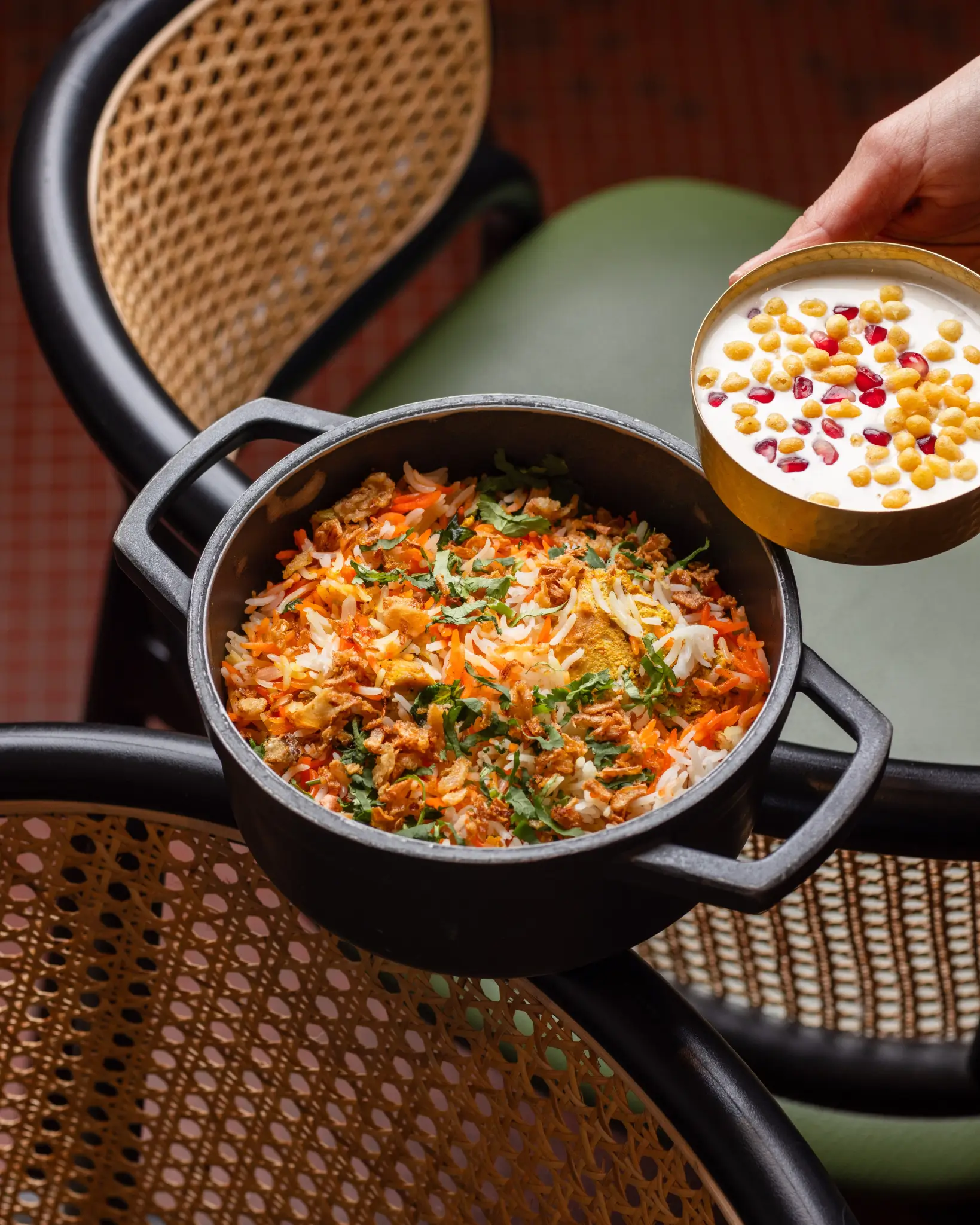
Biryani deserves a separate decision because it already contains many of the things diners try to add around it. Rice, meat, spice and aroma are cooked together, so covering it with two curries rather defeats the point.
The Crossing’s chicken dum biryani uses boneless chicken, fragrant spices and saffron basmati rice with pomegranate raita. If you are searching for biryani in Leeds, give the dish enough room to taste it. Chaat followed by a grill and then biryani is a complete meal. Adding two curries, naan and another rice dish begins to feel more like preparation for a very long winter.
The pressure-cooked pulaos require similar attention. Kashmiri lamb pulao is made with yakhni and fragrant spices, while the gucchi pulao combines morels, mushrooms and cumin. Both are cooked to order in sealed pressure cookers, and the menu asks guests to allow up to twenty minutes. Order them while the earlier plates are arriving rather than wondering about the delay once everything else has been eaten.
What a good table for four might actually look like
For four people visiting The Crossing for the first time, the chaat bowl and gunpowder prawns are a strong start. Chicken tikka and paatra ni macchi add two very different grilled dishes, after which I would choose either the Railway Lamb Curry with naan and raita, or chicken dum biryani if rice is going to be the focus.
That is already plenty of food. If everybody is still hungry after the first plates have disappeared, ordering another dish is considerably easier than dealing with three untouched curries at the end of dinner. Indian food is particularly forgiving in that respect because sharing makes additions simple.
The same logic applies whether you are looking for Indian food in Chapel Allerton or ordering at a favourite restaurant elsewhere in Leeds. Pay more attention to contrast than quantity, give grilled food space beside sauced dishes, and do not reduce biryani to an accompaniment.
Plain naan, incidentally, still deserves more respect than it gets.


