

A railway platform in India is rarely just a place to wait. There is the sound of a kettle being lifted from the stove, the scent of spices carried through the air and the familiar anticipation of something good to eat before the train departs. Food belongs to the experience of travelling by rail as surely as the stations themselves.
For Chef Ankur Chakraborty, these impressions are part of his childhood. His father worked for the Indian Railways, and their journeys across the country exposed him to an extraordinary variety of regional cooking. What began as an experience of travel would eventually inform the philosophy behind The Crossing Indian Bistro.
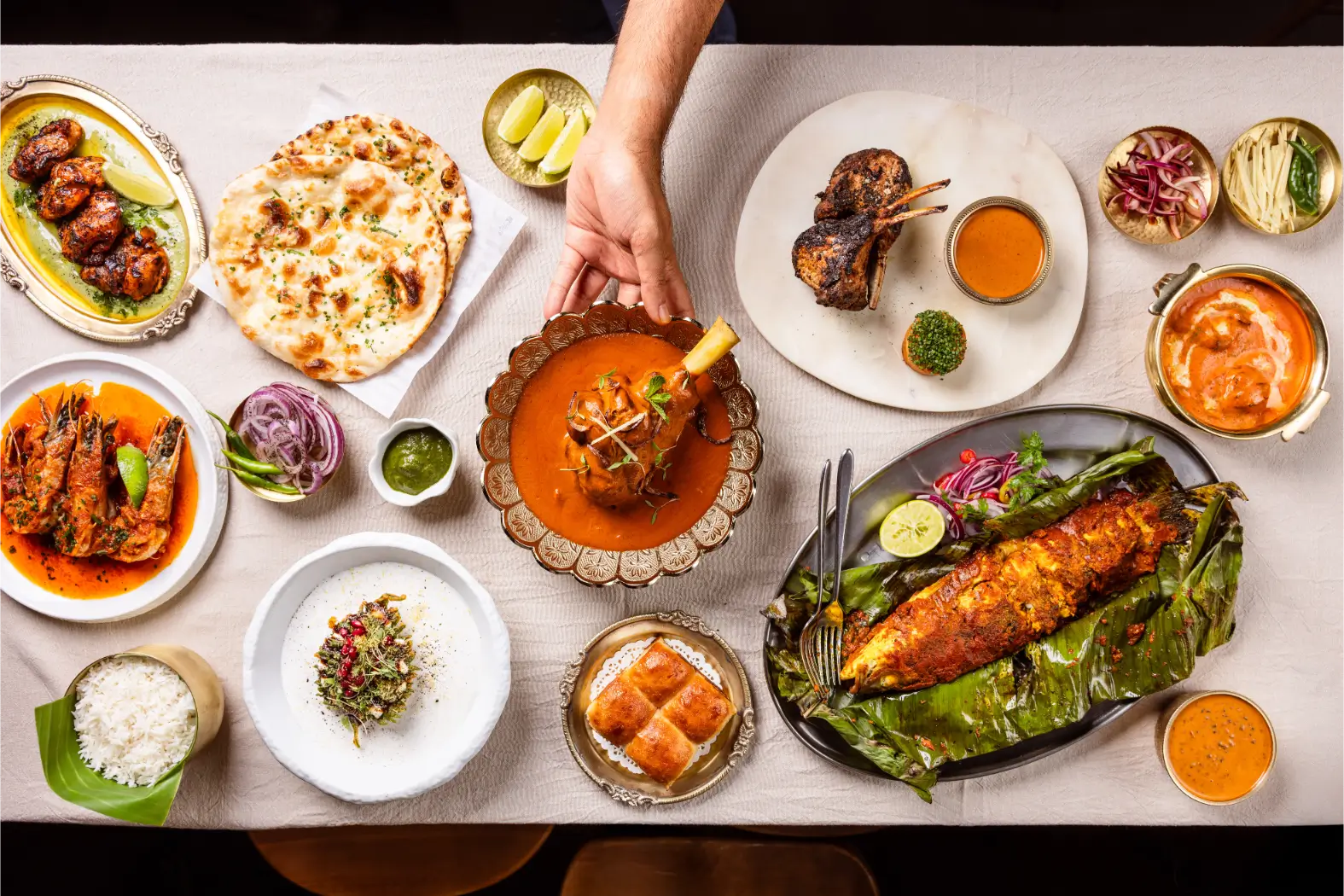
At the restaurant’s Chapel Allerton address, that history finds one of its clearest expressions in the Railway Lamb Curry, a slow-braised lamb shank served in a smoked rogani laal maas curry. It is a dish with the substance of a comforting Indian lamb curry and a story that reaches considerably further than the dining table.

The Railways and India's Culinary Memory
India’s railway network has long connected regions with markedly different food cultures. A journey across the country can reveal changing preferences for grains, cooking fats, spice combinations and methods of preparation, sometimes within a few hours.
The food associated with railway travel reflects this variety. Station vendors developed local specialities for passengers passing through, while dining-car kitchens had to consider the practicalities of preparing meals for people on the move. Certain dishes became associated with the railway experience, although recipes and recollections differ considerably from one region to another.
Railway mutton curry is among the best-known examples. Its origins are often linked to colonial-era railway catering, but the dish has no single universally established recipe. Accounts differ on the balance of spices, the use of vinegar and the extent to which British dining preferences influenced its development.
What persists is the broader culinary idea: a substantial meat curry, prepared to deliver warmth, flavour and satisfaction during a journey.
The Railway Lamb Curry at The Crossing Leeds draws inspiration from this tradition rather than claiming to reproduce one definitive historical recipe.
A Chef's Personal Connection to the Railway
For Chef Ankur, the railway is not merely a decorative theme or a reference to culinary history. It is the setting of his earliest encounters with India’s regional food traditions.
Travelling with his father meant encountering different languages, landscapes and eating habits. The food served around stations offered a glimpse of local life, often through dishes that had been prepared in much the same spirit for generations.
These experiences shaped his interest in recipes that carry a strong sense of place. The Crossing’s wider philosophy reflects that curiosity, treating Indian cuisine as a collection of distinct culinary traditions rather than a fixed selection of familiar restaurant dishes.
The restaurant’s name refers to railway crossings, those moments when routes intersect and journeys briefly pause. Its interiors draw inspiration from first-class railway lounges, while handcrafted brass tableware acknowledges another aspect of Indian craftsmanship.
The Railway Lamb Curry belongs naturally within this narrative. It gives diners an opportunity to encounter the restaurant’s inspiration through the food itself.
Understanding the Railway Lamb Curry at The Crossing
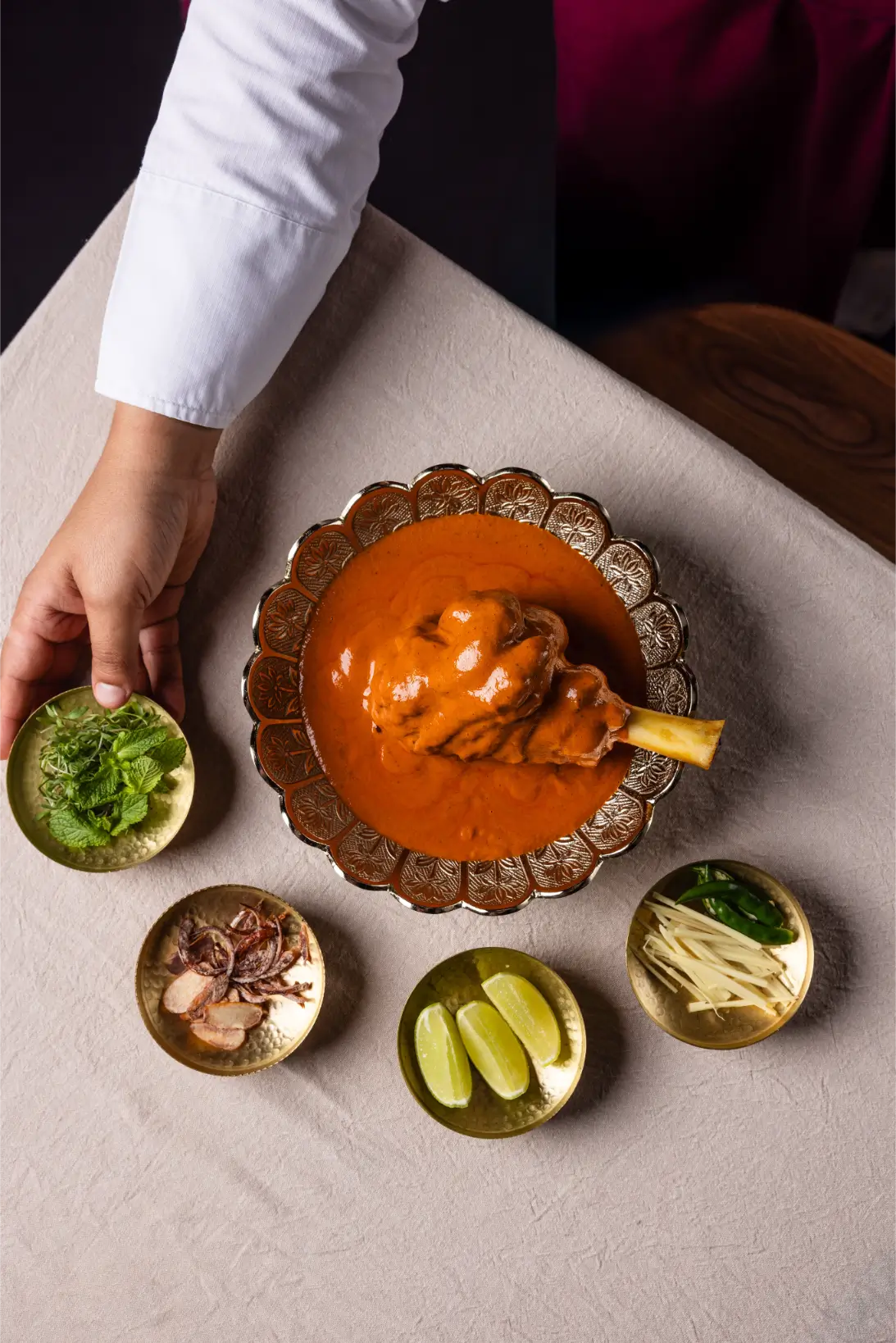
The Leeds menu describes the dish as a slow-braised lamb shank in a smoked rogani laal maas curry. Those few details reveal a great deal about its character.
A lamb shank is a cut that rewards patient cooking. Its connective tissue softens gradually when exposed to gentle heat and moisture, producing meat that becomes tender while retaining a satisfying richness.
Braising is particularly effective for a curry of this kind because the cooking liquid and the meat develop flavour together. Rather than relying solely on a sauce prepared separately, the dish gains character from the extended cooking process.
The reference to laal maas introduces another culinary influence. Associated with Rajasthan, laal maas is known for its assertive chilli-led flavour and its place within the region’s meat-cooking traditions.
At The Crossing, the smoked rogani laal maas preparation is the restaurant’s own interpretation. The menu does not disclose its full spice blend or smoking technique, but it makes clear that the dish is intended to have a more distinctive profile than a conventional mild lamb curry.
For diners searching for the best lamb curry in Leeds, it is an interesting option precisely because its identity is so specific.
Why Slow Cooking Matters
There is an important difference between adding richness to a dish and allowing richness to develop through cooking.
Slow braising gives tougher cuts of meat time to change. Collagen breaks down, the meat becomes more yielding and the surrounding liquid takes on some of its savoury depth. The resulting curry can feel generous without depending entirely on cream or butter.
This method also allows the cook to consider how the spices will behave over time. Some ingredients are more expressive when added early, while others retain their character when introduced later. The balance of heat, fragrance and savouriness becomes especially important in a preparation built around lamb.
Indian meat cookery has numerous traditions of patient cooking, from slow-simmered gravies to dishes associated with royal kitchens and regional households. They are not interchangeable, but they share an understanding that time can be as important as seasoning.
The Railway Lamb Curry at The Crossing Indian Bistro Leeds belongs to that broader appreciation of considered cooking.
The Meaning of Laal Maas
Laal maas is frequently described as a fiery Rajasthani meat curry, but reducing it to its heat overlooks the character of the dish.
The name refers to red meat, and its culinary identity is closely associated with chilli, meat and a concentrated, savoury preparation. Historical and regional variations exist, with different cooks placing emphasis on particular ingredients and methods.
The Crossing’s menu uses the phrase smoked rogani laal maas, signalling a deliberate interpretation rather than a claim to represent every Rajasthani tradition.
For someone accustomed to butter chicken or chicken tikka masala, this provides a different perspective on regional Indian food. The appeal lies less in creamy familiarity and more in the relationship between meat, spice and the depth created through cooking.
It is a dish to approach with curiosity, particularly if you enjoy curries with a pronounced savoury character.
How to Enjoy Railway Lamb Curry
A substantial curry deserves accompaniments that support rather than compete with it.
Steamed basmati rice is a straightforward choice. Its relatively delicate flavour provides a useful contrast to the intensity of a slow-cooked lamb preparation, while allowing the sauce to remain the focus.
Freshly baked Indian bread offers another pleasure, particularly for diners who enjoy gathering up the curry as they eat. Sharing rice and bread between the table also makes the meal feel more relaxed.
For a broader introduction to The Crossing menu, begin with a lighter starter such as dahi puri. Its crisp texture, yoghurt and chutneys create a contrast to the richness of the main course.
If dining with someone who prefers a different style of curry, consider ordering a coastal or vegetable-led preparation alongside the lamb. The comparison is a reminder of the remarkable range of Indian cooking.
From India's Railways to Chapel Allerton
The Crossing’s journey began in Paris in 2023, at Galeries Lafayette Le Gourmet. A second French location followed in Nice before the restaurant arrived in Leeds.
For The Crossing Chapel Allerton, the railway inspiration offers a connection between those different addresses. It is a reminder that food traditions are shaped by movement, memory and the people who carry recipes with them.
The Railway Lamb Curry is particularly expressive of that idea. Its slow-braised lamb and smoked curry preparation are tangible, while the childhood journeys behind the restaurant give the dish a more personal significance.
There is no need to know every detail of railway culinary history to enjoy it. The dish stands on its own as a substantial Indian lamb curry. Understanding its inspiration simply adds another layer to the experience.
For anyone exploring Indian food in Leeds, that combination of regional influence, personal history and careful cooking is a compelling reason to visit.
Discover Railway Lamb Curry at The Crossing Indian Bistro
Regents Court, 33–39 Harrogate Road, Chapel Allerton, Leeds LS7 3PD
Explore the Leeds menu and reserve a table to experience the restaurant’s railway-inspired approach to Indian cuisine.
A Different Kind of Christmas Celebration in North Leeds
A memorable festive dinner does not require a ballroom, a complicated itinerary or an evening built around a rigid schedule. Sometimes, the best choice is a restaurant that serves interesting food in a neighbourhood people enjoy visiting.
For those considering Christmas party restaurants in Leeds, Chapel Allerton offers a welcome alternative to the city centre. Its independent character lends itself to gatherings that feel warm, relaxed and personal.
The Crossing Indian Bistro adds a distinctive culinary perspective, with regional Indian dishes that encourage exploration and conversation. Whether you are organising a small workplace dinner, a family occasion or an evening with friends, the next step is to enquire about the restaurant’s current group booking options and festive availability.
The rest can be refreshingly simple: gather the people you want to celebrate with, choose a good table and give the evening the time it deserves.
Plan Your Festive Gathering
The Crossing Indian Bistro
Regents Court, 33–39 Harrogate Road, Chapel Allerton, Leeds LS7 3PD
Contact The Crossing Leeds to enquire about Christmas dining, group reservations and available festive arrangements.


