

Table of Contents
- The Biggest Misconception About Indian Spice
- What “Spice Level” Actually Means
- Mild, Medium, and Hot—Decoded Through Dishes
- Regional Logic: Why Spice Feels Different Across India
- How to Choose the Right Spice Level for You
- Experiencing Balanced Spice at The Crossing Nice
The Biggest Misconception About Indian Spice
The most common misunderstanding about Indian food is that it is uniformly spicy. In reality, Indian cuisine is not built around heat—it is built around balance.
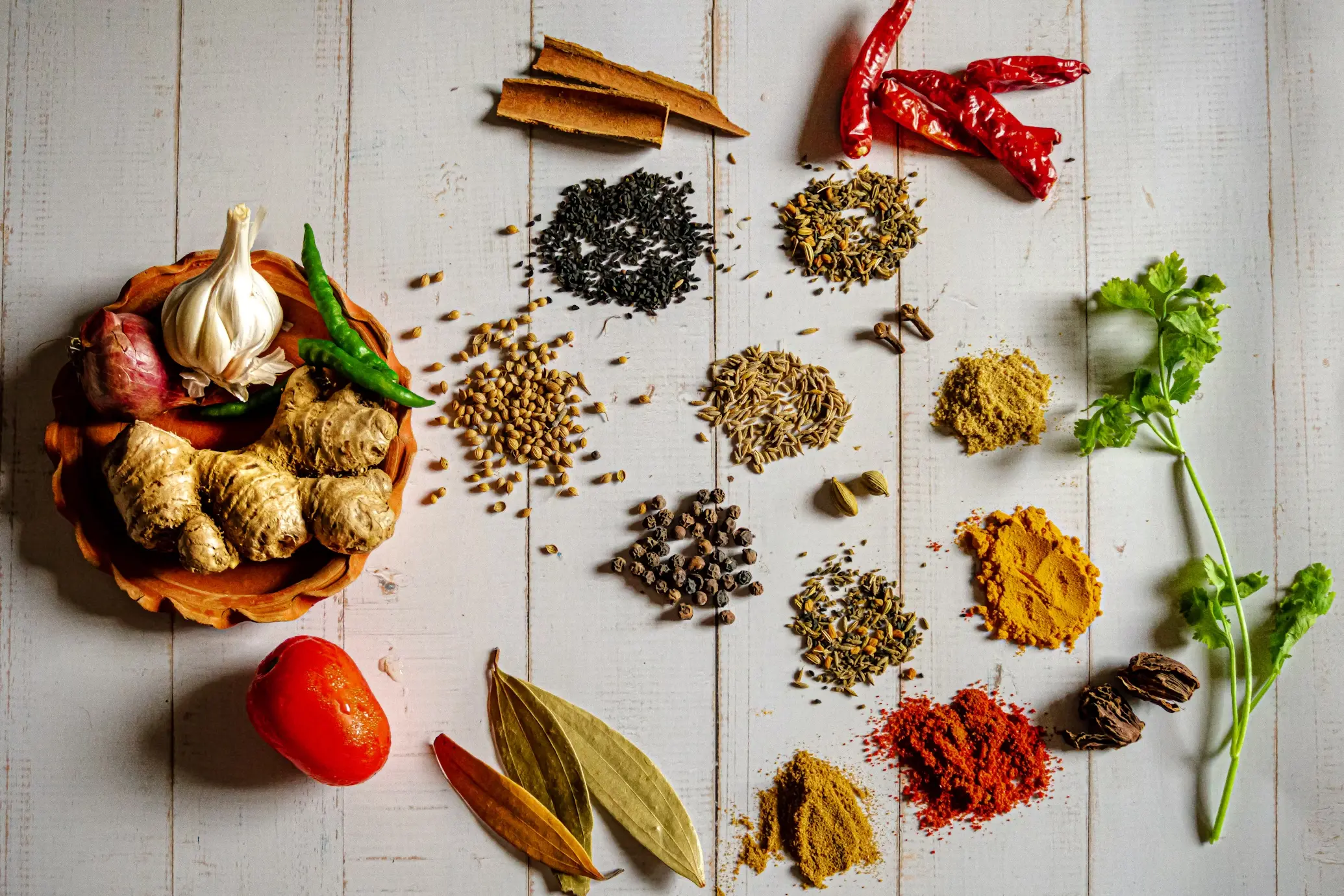
“Spice” in Indian cooking refers to a system of layering flavors: warmth from pepper, depth from cumin, sweetness from fennel, aroma from cardamom. Heat, typically from chili, is only one part of that system—and often not the dominant one.
This distinction matters. A dish can be rich in spices yet mild in heat, or minimal in spices but sharply hot. Understanding this difference is the first step to navigating Indian spice levels with confidence.
What “Spice Level” Actually Means
When menus describe dishes as mild, medium, or spicy, they are simplifying a much more nuanced structure.
Spice level is influenced by three main factors:
- Chili content (fresh, dried, or powdered)
- Cooking method (slow cooking softens heat, high heat intensifies it)
- Fat and acidity (butter, cream, or yogurt can temper spice)
For example, a butter-based curry may contain chili but feel mild due to fat balancing the heat. A dry preparation with less fat may taste sharper even with fewer spices.
At The Crossing, this idea of balance is intentional—spice is calibrated to enhance clarity, not overwhelm the palate.
Mild, Medium, and Hot—Decoded Through Dishes
Instead of relying on labels, it’s more useful to understand spice levels through actual dishes.
Mild (Low Heat, High Flavor):
Dishes like butter chicken or paneer butter masala are structured around tomato, butter, and gentle spices. The heat is minimal, making them accessible without sacrificing depth.
Medium (Balanced Warmth):
Chicken tikka masala or dal tadka introduce a more noticeable warmth. Here, chili supports the dish but does not dominate. The goal is progression—flavor builds gradually rather than hitting immediately.
Hot (Focused Heat, Controlled Use):
Dishes like certain regional lamb curries or preparations using “gunpowder” spice blends bring sharper heat. For instance, gunpowder prawns deliver intensity, but through precision rather than excess.
The key insight: spice levels are not about tolerance—they are about intention.
Regional Logic: Why Spice Feels Different Across India
Spice perception changes across regions, even when heat levels are similar.
In the north, spices are often layered into rich gravies, where dairy softens intensity. In coastal regions, chili heat is paired with coconut and acidity, creating brightness rather than heaviness. In arid regions, spice can be sharper and more direct, designed to preserve and intensify flavor.
This is why two dishes with similar chili content can feel entirely different. One lingers softly; another hits quickly and fades.
At The Crossing Indian Bistro, this diversity is reflected in a menu that draws from multiple regions—each dish carrying its own logic of heat and balance.
How to Choose the Right Spice Level for You
Choosing spice level is less about avoiding heat and more about understanding your preference for intensity and pacing.
- If you prefer comfort and richness, start with butter-based or slow-cooked dishes.
- If you enjoy gradual warmth, opt for grilled items or balanced curries.
- If you’re comfortable with sharper heat, explore dishes with dry spice blends or coastal influences.
A practical approach is to build a meal with contrast—pair a richer, mild dish with something brighter or spicier. This creates balance across the table rather than within a single plate.
Indian meals are designed to be shared, allowing spice levels to complement each other rather than compete.
Experiencing Balanced Spice at The Crossing Nice
For those exploring Indian cuisine in Nice, The Crossing offers a measured approach to spice—one that prioritizes clarity over intensity.
Here, spice is not used to impress but to create structure. The progression of a meal—from a layered chaat to a focused grill, to a slow-cooked curry—allows flavors to build naturally without overwhelming the palate.
Set against the Mediterranean backdrop of CAP3000, the experience feels both refined and accessible. Dishes are calibrated so that even those new to Indian food can explore confidently, while more experienced diners still find depth and precision.
This is where spice becomes what it was always meant to be: not a challenge, but a language.
Conclusion
Indian spice levels are often misunderstood because they are oversimplified. In reality, they reflect a complex system of balance, technique, and regional identity.
Once you move beyond the idea of “spicy equals hot,” a more interesting picture emerges—one where flavor, not heat, leads the experience.
And in a restaurant like The Crossing Nice, that understanding is translated onto the plate with restraint and intention—making every dish not just flavorful, but precise.


