

Table of Contents
- A Gourmet Tourist’s Guide to Discovering Authentic Indian Flavours in France
- Look Beyond the Familiar Names
- Understand the Difference Between Heat and Flavour
- Seek Restaurants That Tell a Story
- What to Order for a Complete Indian Dining Experience
- Why the French Riviera Is Becoming an Unexpected Destination for Indian Cuisine
- The Future of Indian Dining in France
A Gourmet Tourist’s Guide to Discovering Authentic Indian Flavours in France
For decades, Indian cuisine abroad was often defined by a handful of familiar dishes. Rich curries, generous spice blends, and predictable menus became the default introduction for many diners. Yet today’s Indian food scene in France tells a far more compelling story.
Across Paris and the French Riviera, chefs are presenting Indian cuisine with greater regional depth, precision, and cultural context. For gourmet travellers seeking memorable dining experiences, understanding this shift is the key to discovering some of the country’s most exciting culinary destinations.
Look Beyond the Familiar Names
One of the biggest misconceptions about Indian food is that a few globally recognised dishes represent an entire culinary culture.
In reality, India is home to dozens of distinct food traditions shaped by geography, migration, climate, trade routes, and local ingredients. The most rewarding Indian restaurants in France are those that move beyond standardised menus and explore these regional influences.
A thoughtful menu may draw inspiration from coastal Kerala, the railway kitchens of Northern India, Rajput royal recipes, or lesser-known flavours from the northeast. Each dish becomes part of a larger narrative rather than an isolated recipe.
For travellers, this offers something increasingly rare: a genuine sense of culinary discovery.
Understand the Difference Between Heat and Flavour
Many visitors approach Indian cuisine expecting intensity. What often surprises them is balance.
The most accomplished Indian kitchens use spice not to overwhelm but to create structure. Ingredients such as cardamom, cumin, fennel, black pepper, saffron, and fenugreek contribute aroma, texture, and depth rather than simple heat. This philosophy is increasingly embraced by contemporary Indian restaurants in France, where technique and restraint often matter more than complexity.
For diners accustomed to French gastronomy, this approach feels surprisingly familiar. Both traditions value precision, patience, and respect for ingredients.
Seek Restaurants That Tell a Story
Great dining experiences are rarely defined by food alone.
The most memorable restaurants communicate a clear point of view. At The Crossing Indian Bistro, for example, the concept is inspired by India’s railway crossings—places where people, cultures, ingredients, and recipes historically intersected. The restaurant’s philosophy explores how food travels, evolves, and connects communities across regions and generations.
This perspective transforms a meal into something larger than dining. Guests engage with the movement of ingredients, the migration of recipes, and the stories that shaped them.
For culinary travellers, these narratives often become as memorable as the dishes themselves.

What to Order for a Complete Indian Dining Experience
A well-composed Indian meal unfolds gradually.
Begin with something layered and vibrant, such as a Crossing Chaat Bowl or Dahi Puri, where sweet, sour, crunchy, and creamy elements create immediate contrast. Continue with dishes that showcase controlled heat and texture, such as Gunpowder Prawns or carefully grilled tandoori specialities.
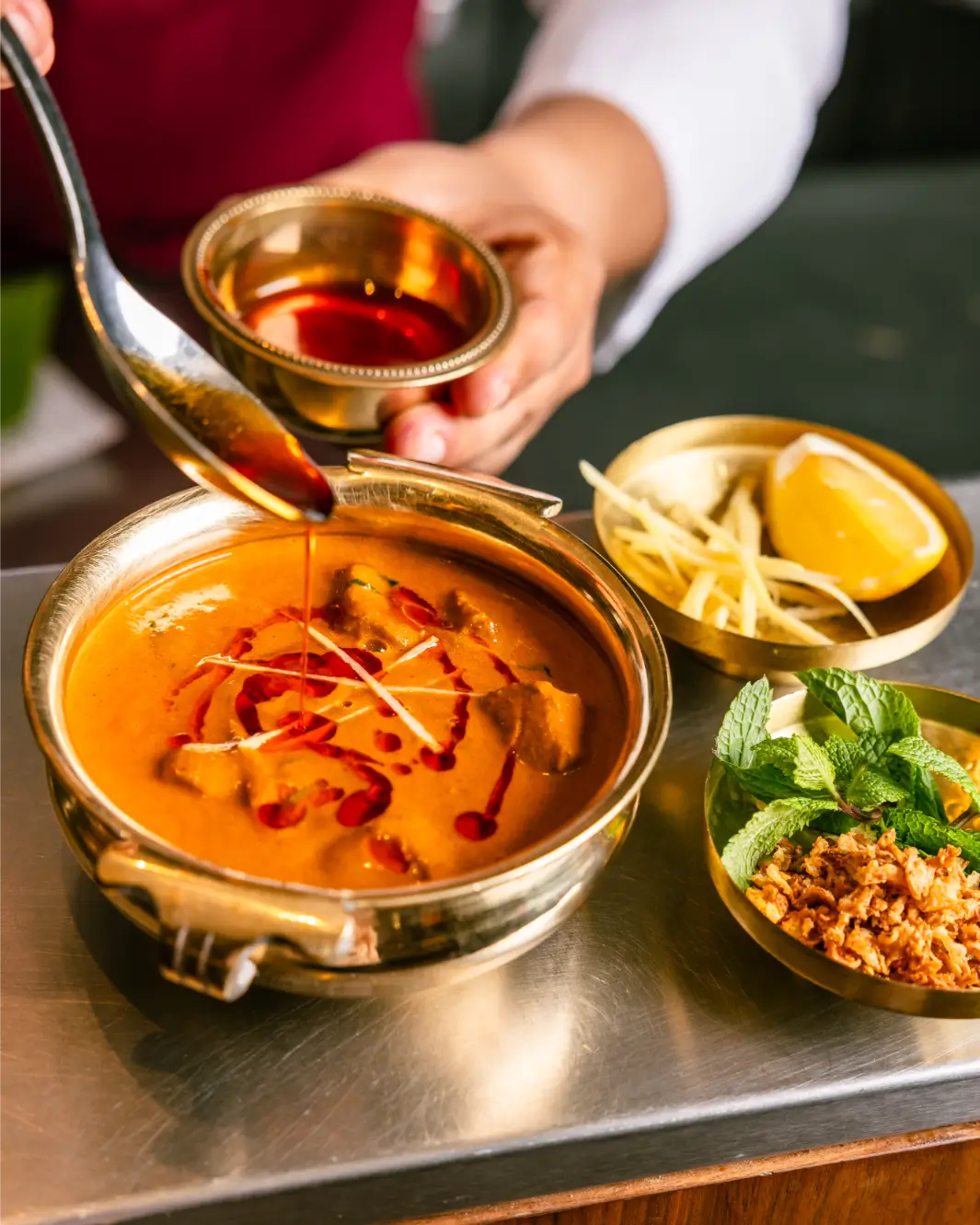
For the main course, slow-cooked dishes often reveal the deepest expression of a kitchen’s philosophy. The Railway Lamb Curry exemplifies this approach, relying on time, technique, and patience rather than excess. Alongside it, a fragrant Chicken Dum Biryani demonstrates the importance of balance, proportion, and aromatic layering.
The goal is not to sample everything, but to understand how flavours build throughout the meal.
Why the French Riviera Is Becoming an Unexpected Destination for Indian Cuisine
While Paris remains an important centre for international dining, the French Riviera is emerging as a fascinating setting for contemporary Indian food.
In Nice, restaurants such as The Crossing combine Indian culinary heritage with Mediterranean surroundings. Located at CAP3000 overlooking the sea, the restaurant reflects a more refined and coastal-inspired interpretation of Indian cuisine while maintaining strong connections to tradition.
For travellers exploring the Côte d’Azur, this creates a distinctive contrast: vibrant Indian flavours enjoyed against one of Europe’s most celebrated coastal landscapes.
The Future of Indian Dining in France
The most exciting Indian restaurants in France are no longer trying to recreate a fixed image of India. Instead, they are presenting a living cuisine—one shaped by movement, adaptation, craftsmanship, and regional identity.
For gourmet tourists, that evolution offers an opportunity to experience Indian food differently. Not as a familiar comfort, but as one of the world’s most diverse and sophisticated culinary traditions, interpreted with confidence, clarity, and a deep respect for its origins.
And perhaps that is the greatest discovery of all.


