

Table of Contents
- What Does Craftsmanship Mean in Indian Dining?
- Why It’s Often Overlooked
- Technique Over Complexity
- The Role of Time in Indian Cooking
- Ingredients as Craft, Not Commodity
- How Craftsmanship Shapes the Dining Experience
- The Crossing: Craftsmanship in Practice
What Does Craftsmanship Mean in Indian Dining?
Craftsmanship in Indian dining is often misunderstood as decoration—intricate plating, elaborate spice blends, or visual richness. In reality, it is far quieter and far more structural.
It lies in how a dish is built: how spices are layered, how heat is controlled, how textures are developed over time. It is not something immediately visible, but something that reveals itself gradually.
At its best, Indian cuisine is a system of decisions—each one precise, each one necessary. Craftsmanship is the discipline that holds those decisions together.
Why It’s Often Overlooked
Indian food, particularly outside India, has long been framed through intensity—bold flavors, rich sauces, and abundance. While these elements are part of the cuisine, they often overshadow the craft behind them.
When everything is presented as complex, the distinction between what is intentional and what is excessive becomes blurred.
Chef Ankur’s approach at The Crossing challenges this perception. By focusing on restraint and clarity, the craftsmanship becomes more visible—not through embellishment, but through precision.
Technique Over Complexity
One of the defining principles of Indian cooking is that technique matters more than complexity.
A dish like dal makhani, for example, is not technically difficult in terms of ingredients. Yet its depth comes from slow cooking, controlled heat, and repetition. Similarly, a well-executed chicken tikka depends less on spice quantity and more on marinade balance and timing.
This emphasis on technique is what separates a well-made dish from an exceptional one. It also explains why the most impressive dishes are often the simplest in appearance.

The Role of Time in Indian Cooking
Time is one of the most critical, and least visible, elements of craftsmanship.
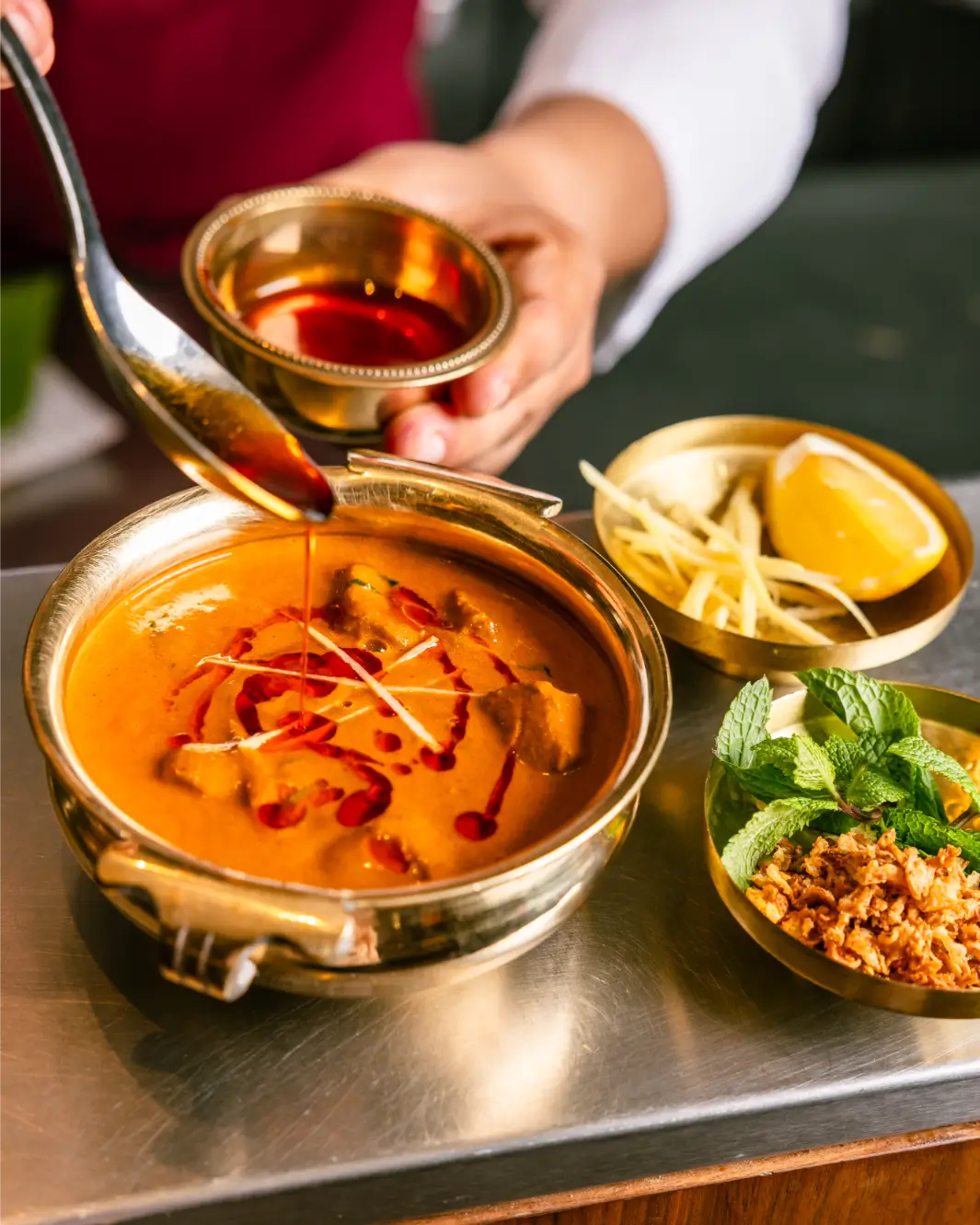
Many Indian dishes rely on processes that cannot be accelerated—slow braising, reduction, fermentation, resting. These are not optional steps; they are essential to flavor development. The Railway Lamb Curry, for instance, derives its character from patience rather than luxury ingredients. Its depth is built gradually, allowing flavors to integrate rather than compete.
This respect for time reflects a broader philosophy: that good food is not rushed—it is earned.

Ingredients as Craft, Not Commodity
In Indian cuisine, ingredients are not interchangeable. Each one carries context—geography, climate, and tradition.
Spices like cumin, cardamom, and fennel are not used for intensity alone. They are chosen for balance, for how they interact with other elements, and for how they evolve during cooking.
At The Crossing, this approach extends to sourcing. Ingredients are selected for authenticity and quality, reinforcing the idea that craftsmanship begins long before the cooking process. This attention to detail transforms ingredients from commodities into components of a larger narrative.
How Craftsmanship Shapes the Dining Experience
When craftsmanship is present, the dining experience feels different—even if the diner cannot immediately explain why.
Flavors feel balanced rather than heavy. Dishes progress logically, rather than competing for attention. The meal unfolds with a sense of rhythm. This is particularly evident in how Indian meals are structured. Small plates introduce contrast, grilled dishes add depth, curries provide continuity, and rice or bread unify the table.
The result is a meal that feels cohesive rather than fragmented—an experience shaped as much by thought as by taste.
The Crossing: Craftsmanship in Practice
At The Crossing Indian Bistro in Nice, craftsmanship is not presented as a concept—it is embedded in every aspect of the experience.
From the way dishes are composed to how the menu is structured, the focus remains on clarity and intention. The restaurant draws from India’s diverse culinary traditions, but presents them through a lens of restraint—allowing technique, time, and ingredients to take precedence.
Even the setting reflects this philosophy. Located within CAP3000, overlooking the Mediterranean, the experience balances refinement with ease—creating a space where craftsmanship can be appreciated without formality.
Conclusion
Craftsmanship in Indian dining is not about making food more complicated—it is about making it more precise.
It is the difference between a dish that impresses quickly and one that stays with you. Between excess and intention.
At The Crossing, this distinction becomes clear. The focus is not on showing what Indian food can be, but on revealing what it already is—when treated with care, discipline, and respect.


