
Table of Contents
- How We Source GI-Tagged Ingredients: The Journey Behind Every Dish at The Crossing
- What Are GI-Tagged Ingredients?
- Why Provenance Matters More Than Ever
- The Journey from India’s Regions to Our Kitchen
- How These Ingredients Shape the Menu
- More Than Ingredients—A Commitment to Heritage
How We Source GI-Tagged Ingredients: The Journey Behind Every Dish at The Crossing
Many restaurants talk about authenticity. Few discuss where authenticity actually begins.
It doesn’t start with a recipe. It starts with an ingredient.
At The Crossing Indian Bistro, sourcing is one of the most important parts of our culinary philosophy. Every menu is built around ingredients that carry a sense of place, history, and identity. That is why we prioritise GI-tagged ingredients whenever possible—products whose quality and reputation are inseparable from the regions they come from.
For us, great Indian food is not simply about recreating flavours. It is about respecting the origins that made those flavours possible.
What Are GI-Tagged Ingredients?
GI stands for Geographical Indication, a certification that protects products closely linked to a specific region.
Much like Champagne can only come from Champagne or Parmigiano Reggiano from certain parts of Italy, India protects many of its most celebrated agricultural products through GI status. These ingredients develop unique characteristics because of local climate, soil conditions, traditional farming practices, and generations of expertise.
The result is not just a label. It is a guarantee of provenance.
For chefs, that distinction matters enormously because flavour begins with origin.
Why Provenance Matters More Than Ever
Today’s diners are increasingly interested in where their food comes from. They want transparency, sustainability, and quality they can trust.
Indian cuisine is particularly dependent on ingredient identity. A saffron grown in Kashmir carries a different aroma than one grown elsewhere. Black pepper from Kerala’s Malabar Coast delivers layers of citrus and warmth that cannot easily be replicated. Even everyday spices such as cumin and cardamom express subtle regional differences that influence the final dish.
When ingredients lose their connection to place, cuisine loses part of its story.
At The Crossing, we believe preserving those stories is just as important as preserving recipes.
The Journey from India's Regions to Our Kitchen
India’s culinary landscape is shaped by movement. For centuries, ingredients travelled through spice routes, railway networks, coastal trade corridors, and local markets, carrying flavours from one region to another. That movement remains central to how we think about food today.
Our sourcing process begins by identifying ingredients that best represent their place of origin. Whether it is saffron from Kashmir, black pepper from Malabar, fragrant cardamom from the Western Ghats, or carefully selected regional spices, each ingredient is chosen not simply for flavour but for authenticity.
The goal is not to create complexity for its own sake. It is to build flavour with integrity.
How These Ingredients Shape the Menu
Guests often notice the difference without immediately knowing why.
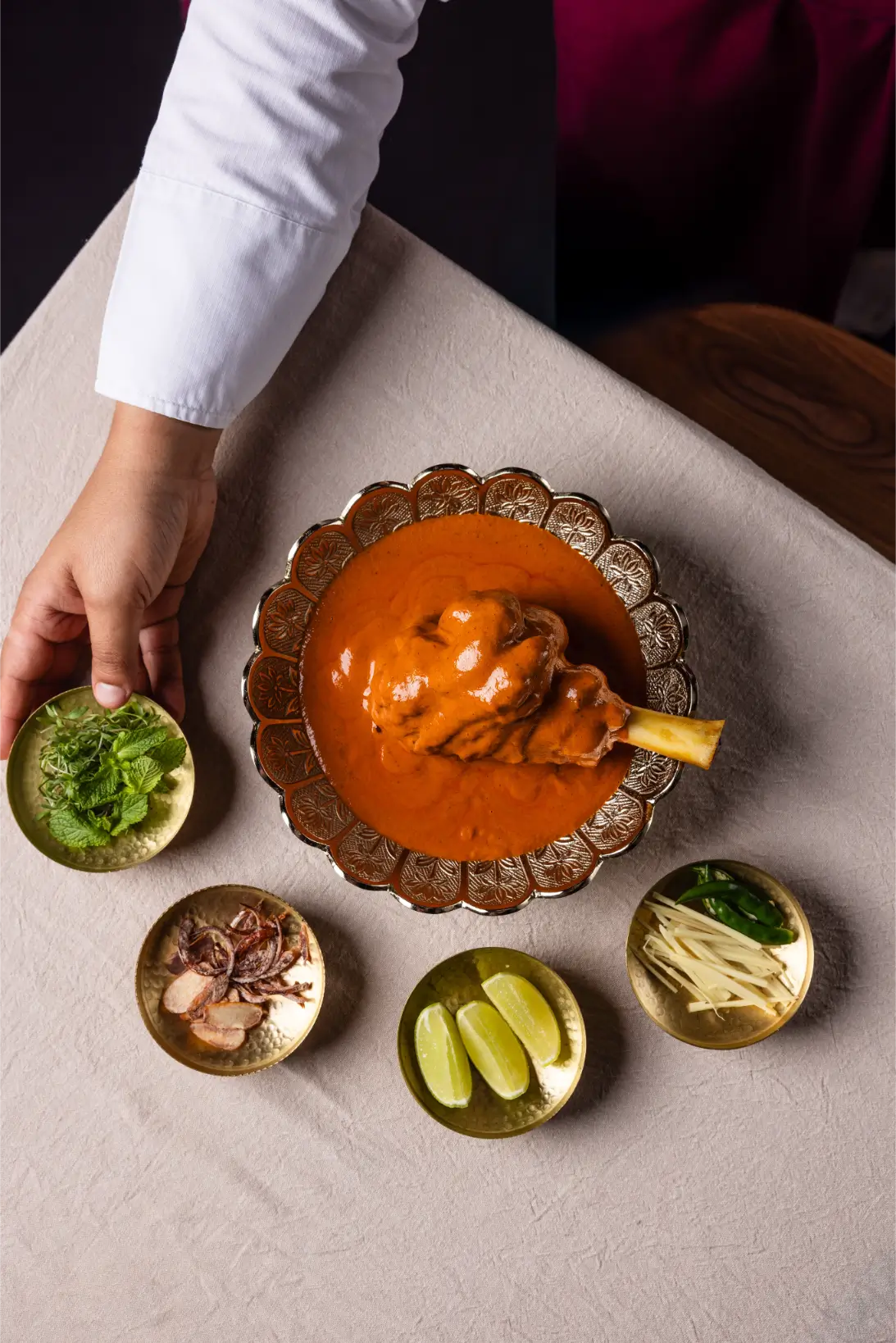
A slow-cooked Railway Lamb Curry develops depth because every element is allowed to speak clearly. The spices support the dish rather than overpower it. A Chicken Dum Biryani relies on aromatic balance rather than intensity. Even seemingly simple dishes reveal layers of flavour that come from careful sourcing and restraint.
Chef Ankur’s philosophy has always been rooted in editing rather than excess—using fewer ingredients, but using the right ones. When provenance is respected, ingredients need less intervention and flavours become more precise.
More Than Ingredients—A Commitment to Heritage
Every GI-tagged ingredient carries the work of farmers, producers, and communities who have preserved regional traditions for generations.
Choosing these ingredients is not only about quality. It is about supporting cultural heritage and recognising the people behind the product. It reflects the same values that shape The Crossing itself: respect for craft, attention to detail, and an understanding that food is ultimately about connection.
When guests dine with us in Nice, overlooking the Mediterranean at CAP3000, they are tasting more than a finished dish. They are experiencing a chain of stories that began thousands of kilometres away in India’s farms, spice-growing regions, and local communities.
Because authentic Indian cuisine is not built on imitation. It is built on origin. And every great meal begins there.


