

Table of Contents
- Introduction: Why Brass Holds More Than Food
- Brass in Indian Culinary History: Function Before Form
- The Artisans Behind the Metal: Generations of Skill
- Fire, Hammer, and Patience: How Brass Tableware Is Made
- Why Brass Changes the Way We Experience Food
- Parisian Restraint and the Reappraisal of Brass Craft
- Brass at the Table Today: Tradition Without Nostalgia
- The Crossing Nice: Brass as Part of a Living Dining Philosophy
- Why Artisanship Defines the Best Indian Restaurant Experience
- Final Reflections: Objects That Carry Memory
Introduction: Why Brass Holds More Than Food
Before food reaches the palate, it is shaped by what carries it. In Indian dining culture, vessels have always mattered. Brass, in particular, occupies a singular place — not for decoration, but for endurance.
For diners encountering handcrafted brass tableware at the best Indian restaurant tables in Nice, the experience is often felt before it is understood. Weight grounds the plate. Warmth lingers. The meal unfolds at a calmer pace.
This response is intentional. Brass tableware was never designed to impress quickly. It was designed to last.

Brass in Indian Culinary History: Function Before Form
Brass entered Indian kitchens through practicality. An alloy of copper and zinc, it proved durable, affordable, and responsive to heat.
In homes and communal kitchens, brass vessels held water, rice, curries, and lentils. Their ability to retain warmth made them ideal for meals meant to be shared slowly.
Over centuries, these functional advantages shaped aesthetic language. Forms evolved around use. Beauty followed purpose.
This lineage explains why brass remains central to Indian culinary presentation — not as nostalgia, but as continuity.
The Artisans Behind the Metal: Generations of Skill
Brass tableware is inseparable from the communities that make it.
In regions such as Moradabad, families have worked brass for generations. Skills are passed hand to hand, not written down. Each artisan learns by repetition — observing heat, listening to metal, adjusting force.
Workshops operate with quiet rhythm. There is no rush. Each piece moves through multiple hands, each responsible for a different stage.
This collective authorship gives brass tableware its depth. Objects carry the memory of many makers rather than a single signature.
Fire, Hammer, and Patience: How Brass Tableware Is Made
The process of crafting brass tableware is deliberate and physical.
Sheets of metal are cut, heated, and shaped by hammer. Heat softens resistance. Cooling restores strength. This cycle repeats until form emerges.
Edges are refined. Surfaces are polished by hand. No shortcut can replace time.
Minor irregularities remain — evidence of the hand rather than flaws to be erased. These marks give each piece character and resilience.
This patience is central to the craft. Brass teaches artisans when to stop as much as when to strike.
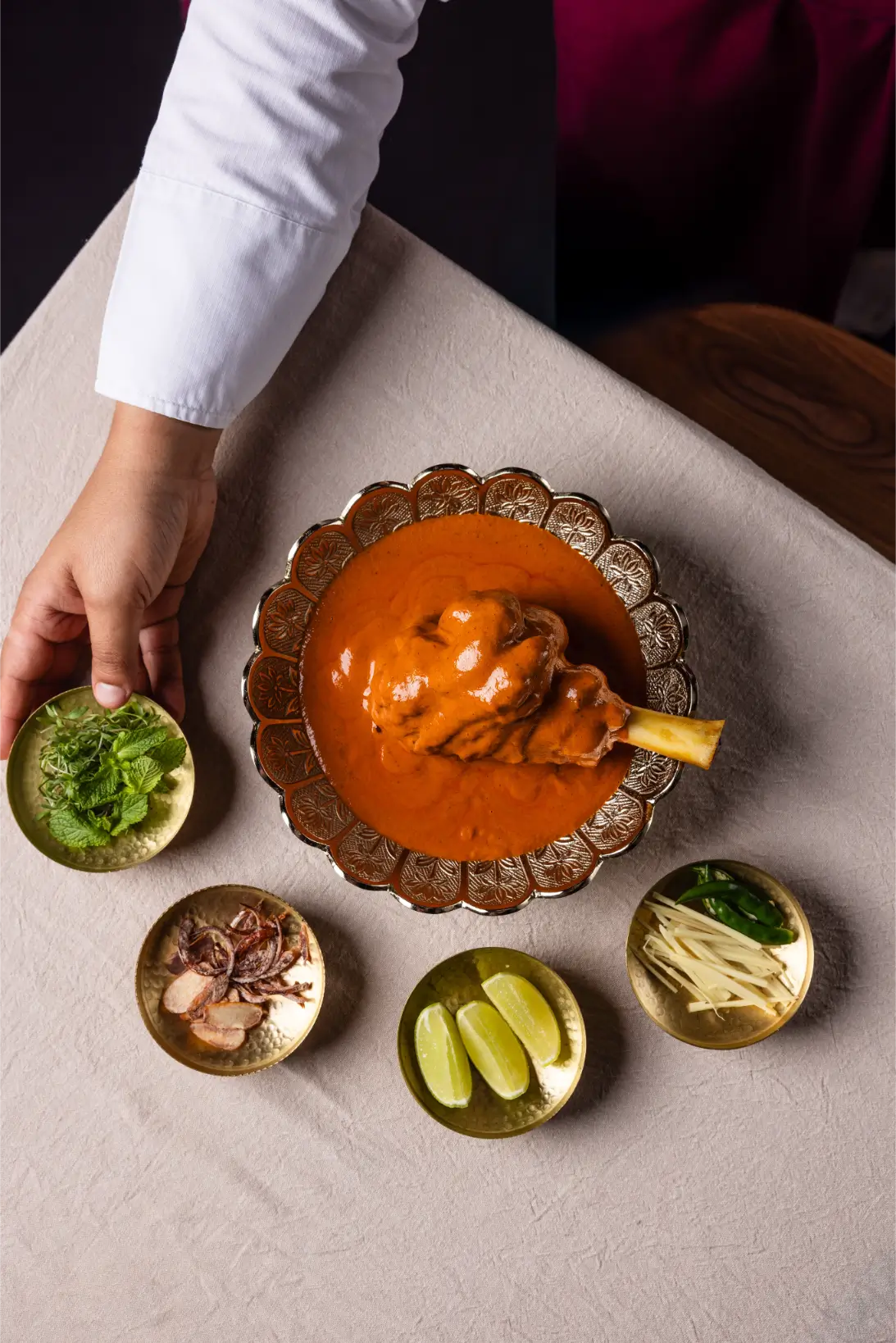
Why Brass Changes the Way We Experience Food
Brass affects dining in subtle but powerful ways.
Its weight stabilises the table. Its warmth sustains temperature. Food cools gradually rather than abruptly.
These qualities slow the meal. Diners linger. Conversation deepens.
At the best Indian restaurant tables, such material intelligence supports hospitality. The vessel collaborates with the cuisine, rather than competing with it.
Parisian Restraint and the Reappraisal of Brass Craft
Parisian dining culture values objects that disappear into use.
When brass tableware entered refined dining contexts in France, it was appreciated not for ornamentation, but for honesty. Texture replaced polish. Patina replaced shine.
This restraint reframed brass as contemporary rather than traditional. It allowed the craft to speak through function.
In Nice, this sensibility aligns naturally with Riviera ease. Brass feels grounded, calm, and purposeful.
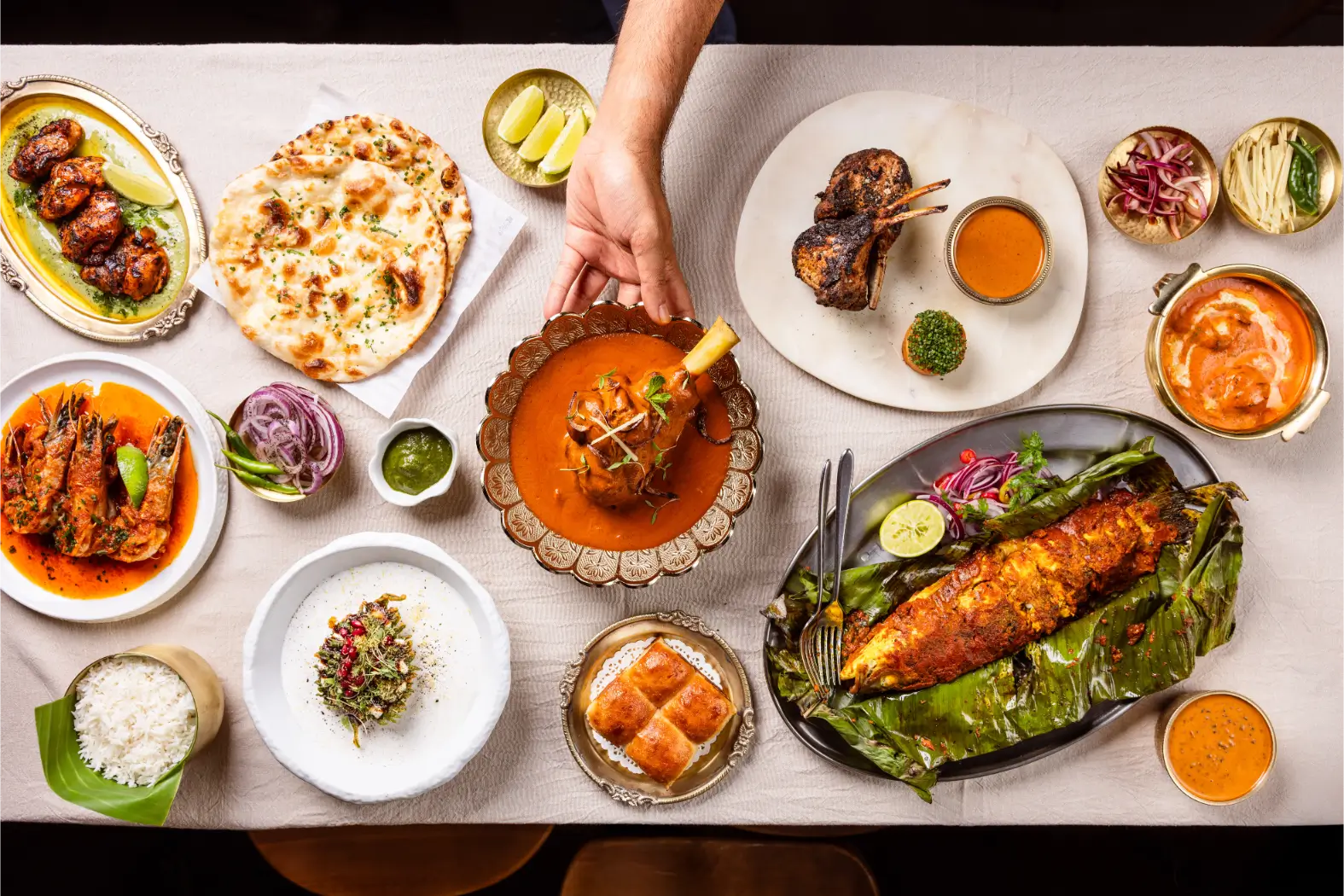
Brass at the Table Today: Tradition Without Nostalgia
Modern Indian dining does not use brass to recreate the past.
Instead, brass appears as an anchor — a reminder that craft and function remain relevant. When paired with thoughtful cuisine, it feels current rather than ceremonial.
This approach avoids nostalgia. Objects are not museum pieces. They are used, washed, returned.
At tables where brass belongs, dining feels lived-in rather than staged.
The Crossing Nice: Brass as Part of a Living Dining Philosophy
At The Crossing Nice, brass tableware is integrated quietly into the dining experience.
Inspired by India’s railway crossings — spaces designed for durability and repetition — the restaurant treats objects as companions to the meal.
Under Chef Ankur Chakraborty’s leadership, cuisine and craft align. Dishes unfold with warmth. Plates retain heat. Meals slow naturally.
This coherence places The Crossing among the best Indian restaurant experiences in Nice — not because of display, but because of understanding.
Why Artisanship Defines the Best Indian Restaurant Experience
The best Indian restaurant experiences are built on alignment.
When food, service, space, and objects share a common philosophy, dining feels complete. Artisanship provides this foundation.
Brass tableware signals respect — for tradition, for labour, for time.
It reminds diners that hospitality is not only cooked, but crafted.

Final Reflections: Objects That Carry Memory
Objects absorb experience.
Brass tableware carries warmth, repetition, and touch. Over time, it develops patina — a visible record of meals shared.
At restaurants that understand this, dining becomes something remembered physically, not just tasted.
For those seeking the best Indian restaurant experiences in Nice, this depth matters. Because when artisans shape the table, the meal carries more than flavour — it carries memory.


