

Table of Contents
- What Does “Masala” Really Mean?
- Why Spice Blends Matter More Than Individual Spices
- The Structure Behind a Good Masala
- Fresh vs Roasted: Two Approaches to Flavor
- Regional Variation and Adaptability
- How Masala Is Used in a Professional Kitchen
- Final Thought: The Intelligence of Blending
What Does “Masala” Really Mean?
The word “masala” is often translated as “spice blend,” but that definition simplifies what is actually a method of building flavor. In Indian cooking, masala refers not just to a mixture of spices, but to how those spices are combined, layered, and applied within a dish.
Unlike fixed recipes, masalas are flexible. They shift depending on region, season, and the dish itself. A garam masala used in a slow-cooked curry will differ from a dry masala used to finish a snack. The common thread is intention—each blend is designed to achieve a specific balance rather than a generic intensity.
Understanding masala is therefore less about memorising ingredients and more about recognising how flavors are constructed.
Why Spice Blends Matter More Than Individual Spices
Individual spices carry distinct characteristics—cumin is earthy, cardamom is floral, pepper is warm. But Indian cuisine rarely relies on them in isolation. Instead, it uses blends to create a more complete profile.
A well-made masala ensures that no single spice dominates. The goal is integration, where flavors support each other rather than compete. This is why dishes made with balanced blends feel cohesive, while poorly constructed ones can feel sharp or uneven.
For diners, this distinction is subtle but important. It explains why two versions of the same dish can taste entirely different, even when they share similar ingredients.
The Structure Behind a Good Masala
A balanced masala follows an internal structure. While the exact composition varies, most blends include elements that provide warmth, aroma, depth, and sometimes sweetness.
For example, spices like black pepper or chili contribute heat, while cardamom or cloves add fragrance. Coriander and cumin often form the base, grounding the blend with earthiness. Occasionally, ingredients like fennel or cinnamon introduce softness.
The key is proportion. A small adjustment in quantity can shift the entire profile. This is why masala-making is often treated as a craft—one that requires repetition and understanding rather than strict measurement.
Fresh vs Roasted: Two Approaches to Flavor
One of the defining variables in masala preparation is whether spices are used fresh or roasted. Each method produces a different outcome.
Freshly ground spices tend to be brighter and more aromatic, preserving volatile oils that dissipate with heat. Roasting, on the other hand, deepens flavor, reducing sharpness and creating a more rounded profile.
In many Indian dishes, both approaches are used together. A base masala may be cooked into the dish, while a finishing blend is added at the end to restore brightness. This layering is what gives Indian food its characteristic depth.
Regional Variation and Adaptability
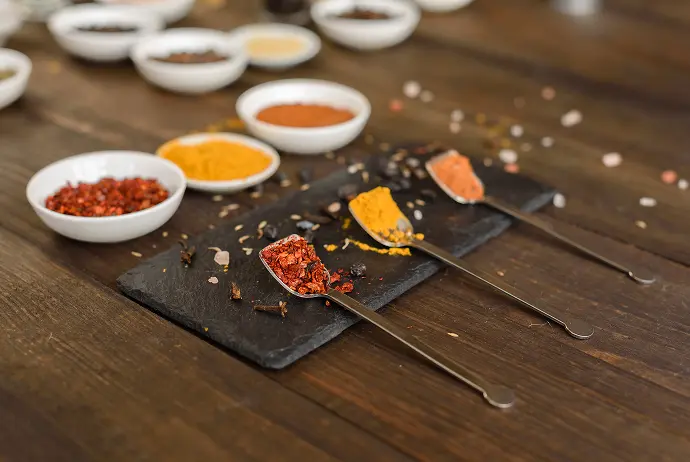
India’s diversity is reflected in its masalas. Northern blends often lean toward warmth and richness, incorporating spices like cloves, cinnamon, and cardamom. Southern blends may emphasise curry leaves, mustard seeds, and dried chilies, creating sharper, more assertive profiles.
Coastal regions introduce coconut and tamarind, while eastern cuisines may use mustard or poppy seeds. These variations are not arbitrary—they respond to local ingredients, climate, and cooking traditions.
This adaptability is what allows masala to travel. It can be adjusted without losing its identity, making it both specific and flexible.
How Masala Is Used in a Professional Kitchen
In a restaurant setting, masala is not just prepared—it is managed. Consistency becomes critical, as each dish must deliver the same balance across multiple servings.
At The Crossing Indian Bistro in Nice, masala is approached with precision. Blends are designed to support the dish rather than define it entirely, allowing ingredients to remain distinct.
This reflects a broader philosophy of restraint. Instead of layering spices to create intensity, the kitchen uses them to create structure. The result is food that feels composed, where flavors unfold gradually rather than all at once.
Final Thought: The Intelligence of Blending
Masala is often described as the heart of Indian cooking, but its real significance lies in its intelligence. It represents a system of balance—where spices are not used for impact alone, but for how they interact.
For diners exploring Indian cuisine in Nice, understanding masala offers a deeper appreciation of what is on the plate. It reveals that complexity in Indian food is not accidental—it is designed.
At The Crossing, this design is evident in every dish. Masala is not treated as a shortcut to flavor, but as a disciplined method of achieving it.


