
Table of Contents
- Introduction: Presentation as a Cultural Language
- Indian Cuisine Beyond Recipes and Ingredients
- The Artisan’s Place in Everyday Indian Dining
- Metal, Clay, and the Intelligence of Materials
- Why Imperfection Matters at the Table
- Parisian Restraint and the Reappraisal of Craft
- Culinary Presentation as Hospitality, Not Display
- The Crossing Nice: Artisanship in Practice
- Why Artisanship Defines the Best Indian Restaurant Experience
- Final Reflections: When Craft Shapes Memory
Introduction: Presentation as a Cultural Language
Before flavour is tasted, it is seen, felt, and anticipated. In Indian cuisine, presentation has never been separate from meaning. The vessels that carry food — their weight, texture, and temperature — communicate as much as the dish itself.
For food lovers seeking the best Indian restaurant experiences in Nice, this awareness is often felt instinctively. A meal that feels grounded, thoughtful, and complete is rarely accidental. It is shaped by choices that extend beyond the kitchen.
Artisans play a central role in this process. Their work frames Indian cuisine not as spectacle, but as lived culture.

Indian Cuisine Beyond Recipes and Ingredients
Indian food is often discussed through recipes, spices, and regional identities. Yet this focus can overlook an essential truth: cuisine is also material culture.
The bowl that holds lentils, the platter that carries bread, the brass vessel that retains warmth — these objects shape how food behaves and how it is received.
For centuries, Indian culinary practice evolved alongside craft traditions. Cooking methods informed vessel design, and vessels influenced how food was eaten.
Understanding Indian cuisine fully requires acknowledging this relationship. It is one reason why the best Indian restaurant experiences feel cohesive rather than assembled.
The Artisan’s Place in Everyday Indian Dining
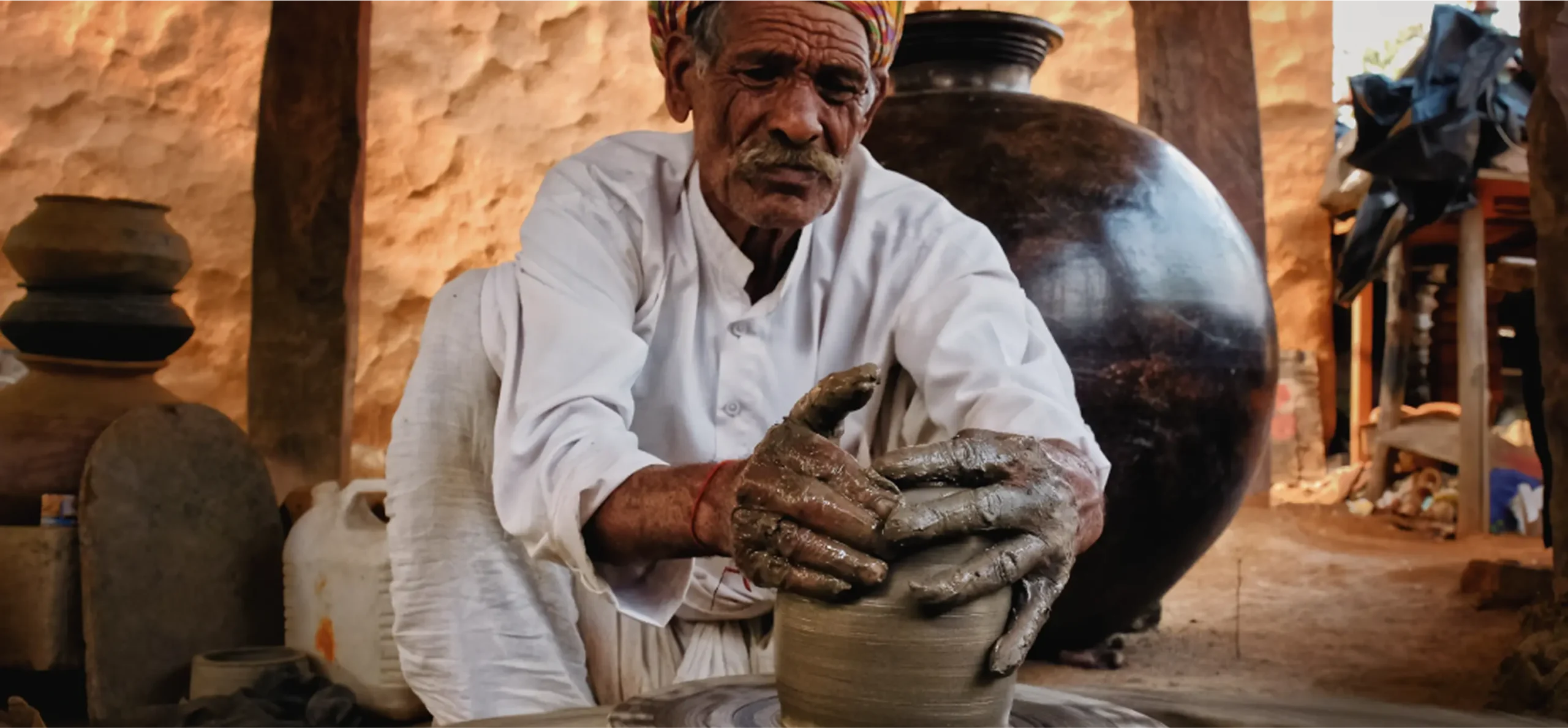
In India, artisans have always worked close to daily life. Their creations were not reserved for ceremony alone.
Potters shaped vessels for cooking and serving. Metalworkers crafted plates and bowls for durability and heat retention. Weavers produced textiles that softened spaces where meals were shared.
These objects were made to be used repeatedly, to age with time, and to carry memory. Wear was not a flaw, but evidence of life.
This tradition informs how Indian dining feels when it is presented with integrity — familiar, generous, and unforced.
Metal, Clay, and the Intelligence of Materials
Materials matter in Indian culinary presentation.
Brass and copper retain heat, keeping food warm longer without reheating. Clay breathes, interacting subtly with moisture and temperature. Stone provides stability and grounding.
These qualities are not decorative. They are functional intelligence developed through repetition and observation.
At the best Indian restaurant tables, such materials support flavour rather than distract from it. They allow dishes to unfold at their own pace.

Why Imperfection Matters at the Table
Handcrafted objects carry variation. No two pieces are identical.
In Indian culture, this irregularity is not corrected. It is accepted as a sign of the hand.
At the table, this imperfection introduces humanity. Meals feel less staged and more personal. Diners sense care rather than polish.
For food lovers accustomed to precision-driven dining, this softness can feel unexpectedly reassuring — a reminder that hospitality is about connection, not perfection.
Parisian Restraint and the Reappraisal of Craft
Parisian dining culture has long valued craftsmanship that does not announce itself. The best objects disappear into use.
This sensibility has influenced how Indian culinary presentation is received in France. Artisanship is appreciated not for ornamentation, but for how it supports the experience.
In Nice, this restraint aligns naturally with Riviera ease. Craft is present, but never theatrical.
Indian culinary presentation, when filtered through this lens, feels calm and assured — a key quality of the best restaurant experiences on the coast.
Culinary Presentation as Hospitality, Not Display
Presentation is often misunderstood as aesthetics alone. In Indian dining, it is an extension of hospitality.
A warm vessel signals care. A well-weighted plate invites sharing. Objects are chosen to support comfort and rhythm.
This approach contrasts with performative plating. Instead of drawing attention to itself, presentation serves the meal.
For diners, this creates trust. The experience feels guided rather than staged.
The Crossing Nice: Artisanship in Practice

At The Crossing Nice, artisanship is integrated into the dining experience with intention.
Tableware crafted by Indian artisans sits naturally alongside cuisine shaped by movement and restraint. Brass retains warmth. Clay introduces softness. Each object has purpose.
Inspired by India’s railway crossings — places where durability and use mattered more than appearance — The Crossing treats presentation as part of the journey.
Under Chef Ankur Chakraborty’s leadership, this philosophy extends from kitchen to table, reinforcing coherence across the experience.
Why Artisanship Defines the Best Indian Restaurant Experience
The best Indian restaurant experiences are not defined by excess, but by alignment.
When food, space, service, and objects speak the same language, dining feels complete. Artisanship plays a crucial role in this harmony.
It grounds cuisine in culture. It signals respect for process. It invites diners to slow down.
At The Crossing, artisanship reinforces trust — an invisible but powerful ingredient.
Final Reflections: When Craft Shapes Memory
Meals linger in memory not only because of flavour, but because of feeling.
Objects touched, weight felt, warmth retained — these details remain long after the table is cleared.
In Indian culinary presentation, artisans give form to these moments. Their work allows cuisine to be experienced fully, not just consumed.
For food lovers seeking the best Indian restaurant experiences in Nice, this understanding deepens appreciation. Because when craft supports cuisine with quiet confidence, dining becomes something to remember rather than simply recall.


