
Table of Contents
- Introduction: Why Railways Matter to Indian Cuisine
- India’s Railways as Places of Shared Life and Food
- How Railway Cooking Shaped Indian Culinary Intelligence
- The Crossing as a Concept: Movement, Pause, and Hospitality
- Parisian Restraint, Riviera Ease, and a Global Railway Legacy
- The Crossing Nice: Translating Railway Values to the Table
- Why This Story Defines the Best Indian Restaurant Experience
- Final Reflections: A Tribute That Continues to Travel
Introduction: Why Railways Matter to Indian Cuisine
India’s railways are more than infrastructure. They are lived spaces — places where millions have eaten, waited, talked, and travelled side by side for generations.
Food has always been central to this experience. Meals were packed at home, cooked on platforms, or prepared in railway kitchens designed to serve everyone without distinction.
For diners encountering The Crossing today, understanding this heritage changes how the restaurant is experienced. The Crossing is not themed. It is informed.
Its story begins with the idea that Indian cuisine learned to move — and to care — through the railway.

India’s Railways as Places of Shared Life and Food
Railway stations in India functioned as temporary communities.
People from different regions, languages, and backgrounds gathered briefly, sharing space and food. A tiffin box opened next to a stranger. A vendor served the same dish to hundreds of travellers.
These moments demanded generosity and restraint. Food needed to comfort without overwhelming, to satisfy without alienating.
This environment shaped how Indian cuisine behaved outside the home. Flavours became inclusive. Spice became measured. Hospitality became instinctive.
Railways taught Indian food how to be shared.
How Railway Cooking Shaped Indian Culinary Intelligence
Railway kitchens imposed discipline.
Meals had to be prepared in advance, reheated gently, and served consistently across long journeys. Ingredients were chosen for stability. Recipes were simplified without losing soul.
Slow cooking, balanced spice, and careful fat usage became essential.
Dishes like railway curries emerged not from luxury, but from necessity. They valued time over intensity, warmth over spectacle.
This intelligence remains foundational to the best Indian restaurant experiences today — where food must please many, repeatedly.
The Crossing as a Concept: Movement, Pause, and Hospitality
The Crossing takes its name from these moments of intersection.
A railway crossing is a place where movement stops briefly, allowing others to pass. It is about patience, awareness, and shared rhythm.
This idea shapes the restaurant’s philosophy. Dining at The Crossing is not meant to interrupt the day, but to belong within it.
Guests arrive from shopping, travel, work, or the sea. They pause. They eat. They continue.
The Crossing honours the railway’s lesson: hospitality exists in how you make people feel during moments of transition.

Parisian Restraint, Riviera Ease, and a Global Railway Legacy
Indian railway food influenced how Indian cuisine travelled globally.
When Indian dining evolved in Paris, restraint became central. Excess was edited. Technique was foregrounded. Flavour was allowed clarity.
This discipline mirrors railway logic — cooking for many without fatigue.
In Nice, this sensibility meets Riviera ease. Light, movement, and calm define the dining culture.
The Crossing sits naturally at this intersection, carrying Indian railway values into a contemporary European context.
The Crossing Nice: Translating Railway Values to the Table
At The Crossing Nice, railway philosophy is expressed quietly.
Menus favour balance over abundance. Spice is aromatic rather than aggressive. Dishes are designed to be shared and revisited.
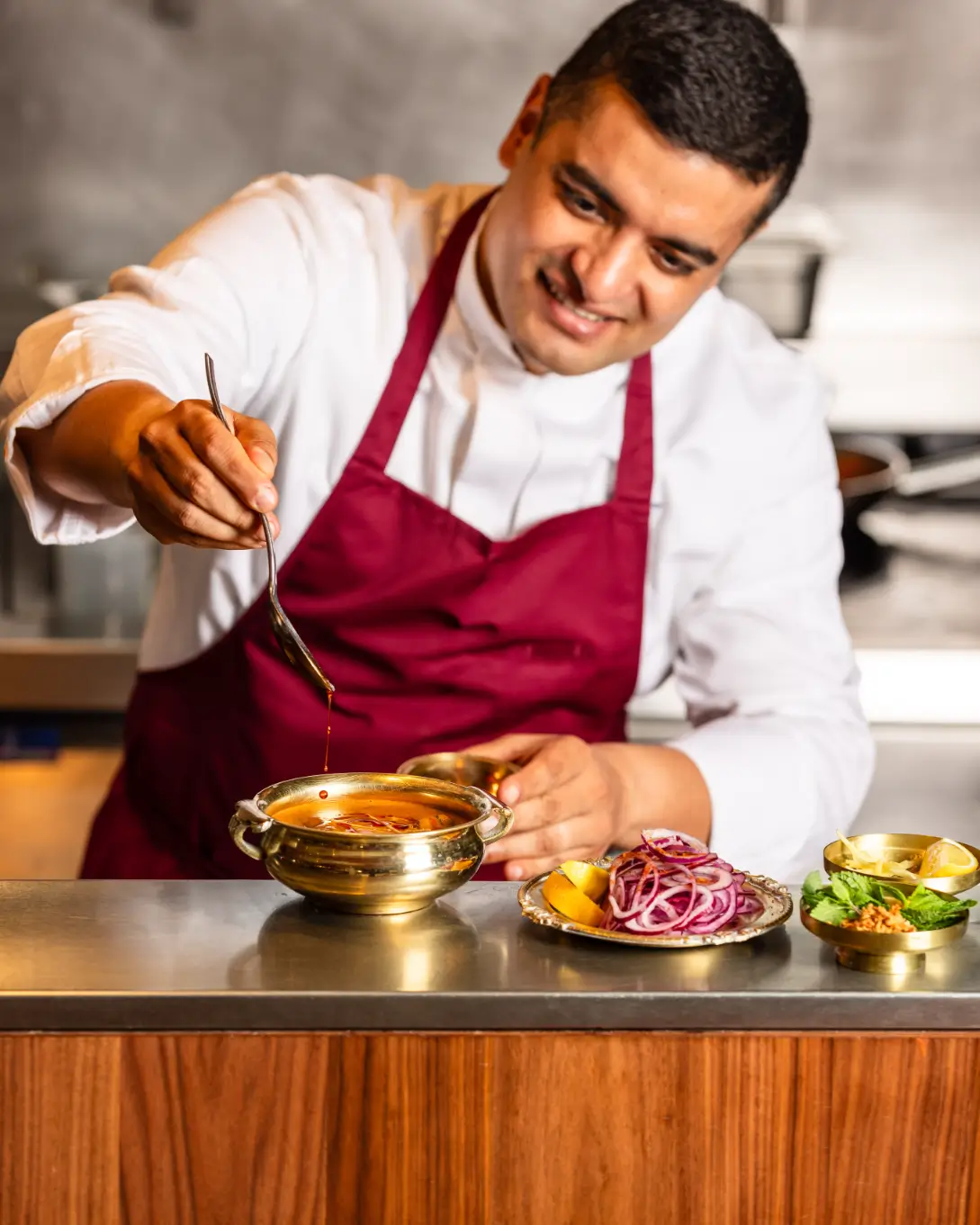
Under Chef Ankur Chakraborty’s leadership, cooking reflects patience and respect for process — principles shaped by railway kitchens.
Service mirrors the same values. Attentive without urgency. Warm without formality.
This coherence places The Crossing among the best Indian restaurant experiences in Nice — not because of concept, but because of understanding.
Why This Story Defines the Best Indian Restaurant Experience
The best Indian restaurant experiences are grounded in philosophy, not performance.
They understand that Indian cuisine was shaped by movement, waiting, and shared space.
By honouring India’s railway culture, The Crossing aligns food, service, and environment into a single narrative.
Guests feel considered rather than impressed. Meals feel grounding rather than demanding.
This is what makes the story behind The Crossing essential, not decorative.
Final Reflections: A Tribute That Continues to Travel
India’s railways continue to move millions every day.
Their influence on Indian cuisine remains quietly present — in balance, patience, and generosity.
The Crossing stands as a tribute to this legacy, not by recreating it, but by living its values.
For diners seeking one of the best Indian restaurant experiences in Nice, this story adds depth to every meal.
Because some journeys do not end. They continue — from platform to table, from memory to moment.


