
Table of Contents
- What Does “GI-Tagged” Actually Mean?
- Why Origin Changes Flavor
- Beyond Authenticity: The Role of Craft and Process
- How GI Spices Shape Indian Cooking
- Why They Matter in a Restaurant Setting
- The Crossing’s Approach to Ingredients
- Final Thought: Understanding Flavor at Its Source
What Does “GI-Tagged” Actually Mean?
The term “GI-tagged” is often associated with authenticity, but its meaning is more precise. A Geographical Indication (GI) tag is a certification that links a product to a specific region, where its quality, reputation, or characteristics are directly tied to its origin. In the context of Indian spices, this means that the ingredient is not just grown in a place—it is shaped by that place.
For diners exploring Indian cuisine, especially outside India, this distinction matters. A spice labeled simply as “cardamom” or “pepper” carries far less information than one identified by its region. The difference is not marketing—it is measurable in aroma, intensity, and structure.

Why Origin Changes Flavor
Spices are agricultural products, and like wine or coffee, their flavor depends on soil, climate, and cultivation methods. GI-tagged spices preserve this connection.
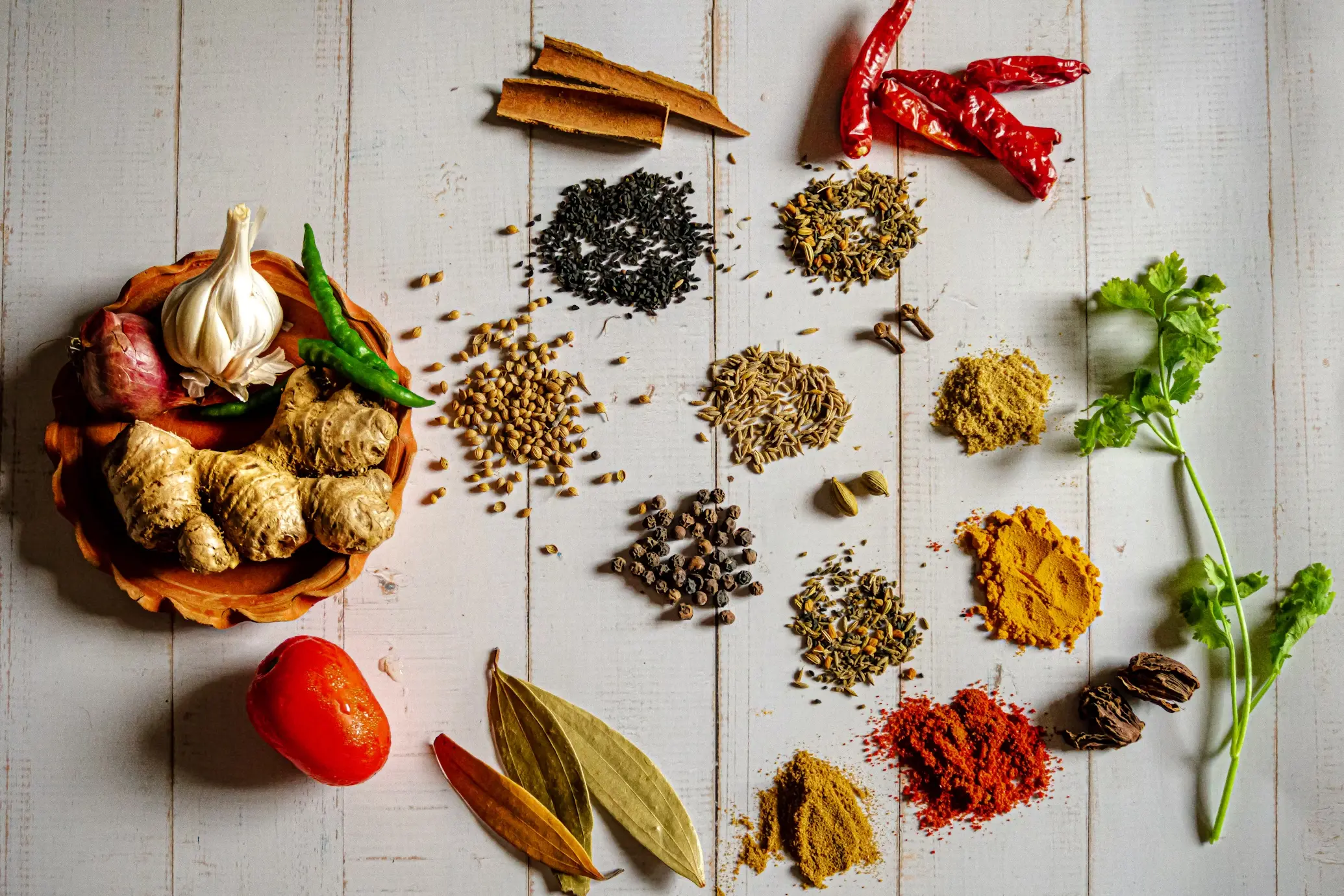
Take black pepper from the Malabar region. Its profile is not just sharp—it carries citrus notes and a layered warmth that develops gradually. Similarly, Kashmiri saffron is valued not for strength alone but for its balance of color, aroma, and subtle sweetness.
These differences are not interchangeable. Substituting a generic version alters the structure of a dish, not just its intensity. Understanding this is key to understanding why certain Indian dishes feel balanced while others feel heavy or one-dimensional.
Beyond Authenticity: The Role of Craft and Process
A GI tag does not only guarantee origin—it also reflects traditional methods of cultivation and processing. These practices are often preserved over generations, ensuring consistency in quality.
For example, spices like cumin or fennel develop their characteristic aroma through careful harvesting and drying techniques. The timing of these processes affects oil content, which in turn influences how the spice behaves during cooking.
This is where the distinction between “authentic” and “accurate” becomes important. Authenticity can be imitated; process cannot. GI-tagged spices carry with them a level of precision that cannot be easily replicated outside their region.

How GI Spices Shape Indian Cooking
Indian cuisine is often described in terms of complexity, but its foundation is structured rather than chaotic. Each spice plays a defined role—heat, aroma, bitterness, sweetness—and the balance between them determines the final dish.
GI-tagged spices reinforce this structure. Because their profiles are consistent, chefs can use them with greater control. Pepper provides warmth without harshness, cardamom adds fragrance without overpowering, and saffron introduces depth without heaviness.
This precision allows dishes to feel layered rather than crowded. It also explains why well-executed Indian food can feel lighter than expected—because the balance is intentional, not accidental.

Why They Matter in a Restaurant Setting
In a professional kitchen, consistency is critical. A dish must taste the same across multiple servings, days, and seasons. GI-tagged spices make this possible by offering reliable flavor profiles.
For diners, this translates into trust. When a restaurant uses high-quality, traceable ingredients, the result is not just better flavor but greater clarity. Each element on the plate can be understood and appreciated individually.
This is particularly important in Indian cuisine, where spices are central to the experience. Without control over their quality, the entire structure of a dish can shift unpredictably.
The Crossing’s Approach to Ingredients
At The Crossing Indian Bistro in Nice, ingredients are treated as the foundation of the menu rather than an afterthought. The use of ethically sourced, GI-tagged spices reflects a broader philosophy: that flavor should be built from origin, not excess. .1
Spices such as saffron, black pepper, cumin, and cardamom are selected not for intensity alone but for their ability to create balance. .1
This approach aligns with the restaurant’s overall style—measured, precise, and focused on clarity. Instead of layering spices to create impact, the kitchen uses them to define structure, allowing each dish to unfold naturally.
Final Thought: Understanding Flavor at Its Source
GI-tagged Indian spices are often described as premium, but their value lies in something more fundamental: traceability. They allow both chefs and diners to understand where flavor begins.
For those exploring Indian cuisine in Nice, this distinction offers a new way to experience the food. It shifts the focus from surface-level richness to underlying structure, from intensity to balance.
At The Crossing, this philosophy is evident in every dish. Flavor is not constructed through excess—it is revealed through precision, beginning with the ingredient itself.


