

Table of Contents
- Why Indian Food in CAP3000 is Worth Exploring
- Start Light: Street-Style Indian Starters
- Understanding the Grill: Tandoor and Charcoal Cooking
- The Core of the Meal: Indian Curries Explained
- Rice Matters: Why Biryani is Not Just Rice
- How to Eat Indian Food the Right Way
- Where to Try It: The Crossing at CAP3000
Why Indian Food in CAP3000 is Worth Exploring
Many travelers assume Indian food is heavy, overly spicy, or difficult to navigate. In reality, Indian cuisine—especially when thoughtfully presented—can be one of the most balanced and structured dining experiences you’ll encounter in Nice.
At CAP3000, where global dining meets Riviera ease, exploring Indian food offers something different: layered flavors, controlled use of spice, and a meal designed to unfold gradually. At The Crossing Indian Bistro, this approach is refined further—focusing on clarity, restraint, and dishes that feel both authentic and accessible.
For first-time visitors, the key is not to try everything, but to understand what each category of dish brings to the table.
Start Light: Street-Style Indian Starters
A common misconception is that Indian meals begin heavy. In fact, they often start with bright, textural dishes inspired by street food.
Dishes like a chaat bowl or dahi puri introduce contrast—crunchy shells, tangy tamarind, cooling yogurt, and fresh herbs. These are not appetizers in the Western sense; they are designed to awaken the palate.
At The Crossing, the Crossing Chaat Bowl stands out for its balance—lentils, chutneys, and crisp elements layered with precision. It’s an ideal entry point for tourists unfamiliar with Indian flavor structures.
If you prefer something warm, aloo tikki (spiced potato patties) offers comfort with subtle spice rather than intensity.
Understanding the Grill: Tandoor and Charcoal Cooking
Indian grilled dishes are often misunderstood as simply “spicy barbecue.” In reality, they rely on marinades, heat control, and timing.
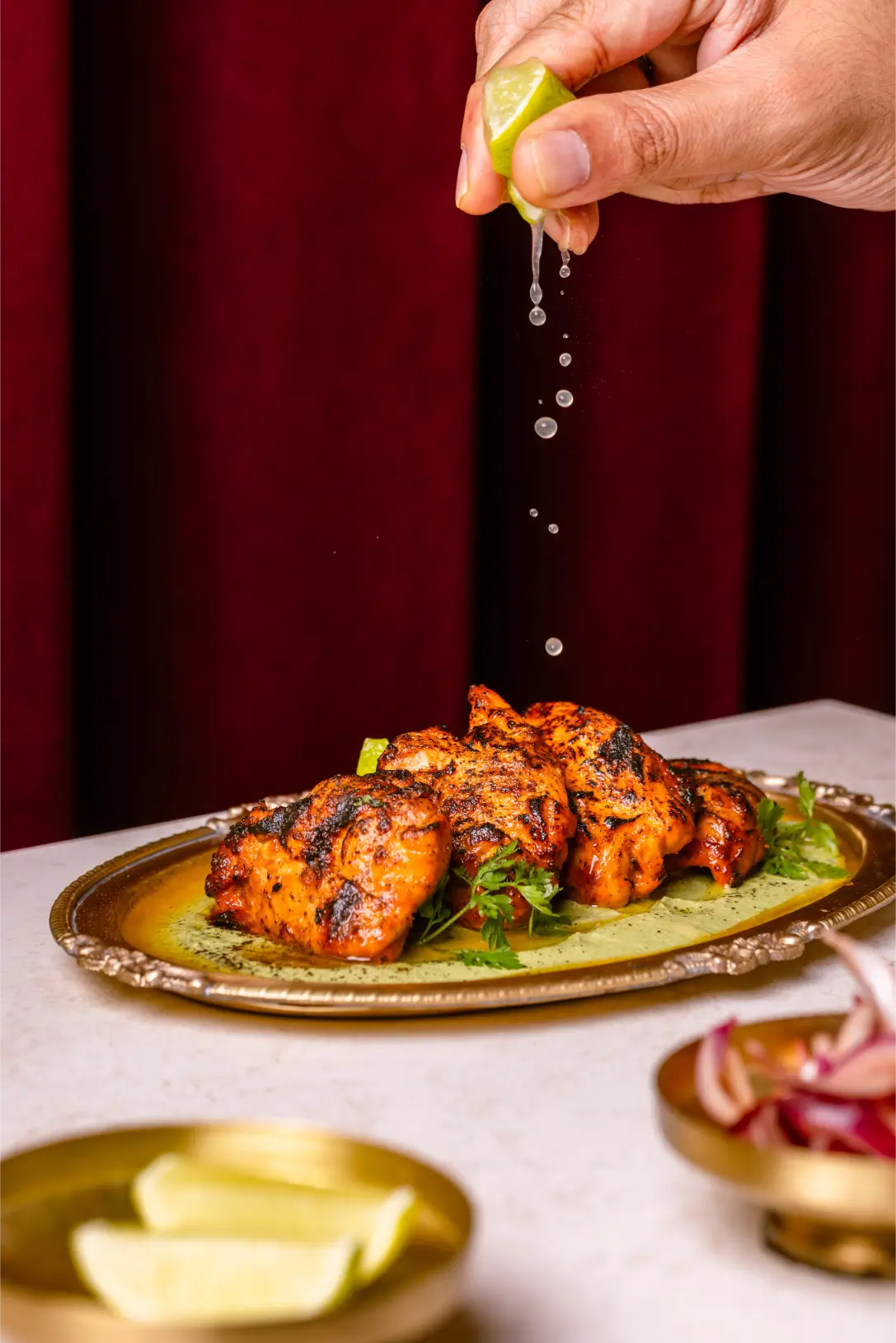
The tandoor—an intense clay oven—creates high heat that seals moisture while adding a smoky edge. Dishes like chicken tikka or paneer tikka are marinated in yogurt and spices, then cooked quickly to retain tenderness.
For seafood lovers, tandoori fish or prawns offer a lighter option, where spice enhances rather than overwhelms. The Gun Powder Prawns, for example, use spice as texture and aroma rather than heat.
This category is ideal for sharing and forms the structural middle of an Indian meal.
The Core of the Meal: Indian Curries Explained
“Curry” is often treated as a single category, but in Indian cuisine, it represents a wide spectrum of techniques and flavor bases.
At The Crossing, curries are defined by balance and time. Butter chicken, for instance, is not just creamy—it’s a slow-cooked tomato base layered with fenugreek and cardamom for depth. Chicken tikka masala offers a slightly sharper, more spiced profile.
For a more traditional experience, the Railway Lamb Curry is essential. Slow-braised and deeply aromatic, it reflects how Indian food developed through movement and time, rather than luxury ingredients.
Vegetarian options like dal makhani or mushroom korma demonstrate that richness in Indian food often comes from technique—not meat.

Rice Matters: Why Biryani is Not Just Rice
Many tourists underestimate biryani, assuming it’s simply spiced rice. In reality, it is one of the most technical dishes in Indian cuisine.
A proper biryani—like the chicken dum biryani at The Crossing—is layered and slow-cooked, allowing rice and protein to absorb flavor without becoming heavy. Saffron, spices, and steam create a dish that is aromatic rather than intense.
Served with cooling raita, biryani balances richness with freshness, making it a complete dish on its own.
How to Eat Indian Food the Right Way
Indian dining is structured around sharing and pacing. Rather than ordering individual plates, the experience improves when dishes are placed at the center and eaten together.
A typical flow would include:
- One or two starters to begin
- A grilled dish for texture and contrast
- One or two curries as the main focus
- Rice or bread to bring everything together
The goal is not speed, but rhythm. Flavors build gradually, and the meal becomes more cohesive over time.
Where to Try It: The Crossing at CAP3000
Located inside CAP3000 in Saint-Laurent-du-Var, just minutes from Nice, The Crossing Indian Bistro offers one of the most refined introductions to Indian cuisine on the French Riviera.
Set against the Mediterranean backdrop, the restaurant brings together regional Indian flavors with a modern, restrained approach. The menu draws from across India—street food, railway recipes, coastal curries—while maintaining clarity and balance in every dish.
For tourists visiting CAP3000, it’s not just a place to eat, but a place to understand Indian food in a way that feels intuitive, structured, and memorable.
Conclusion
Indian food doesn’t need to be overwhelming to be meaningful. When approached with clarity and intention, it becomes one of the most rewarding cuisines to explore while traveling.
At CAP3000, The Crossing offers exactly that: a thoughtful, well-paced introduction to Indian flavors—where every dish is designed not just to impress, but to make sense, even on your first visit.


