

Table of Contents
- Indian Cuisine Is More Diverse Than Many Realise
- Why Butter Chicken Is Only the Beginning
- A Culinary Journey Across India’s Regions
- Regional Cooking at The Crossing
- How to Experience Indian Cuisine Like a Local
- The Value of Authentic Regional Cooking
- Discovering a Bigger Story Through Food
Indian Cuisine Is More Diverse Than Many Realise
Ask someone to name an Indian dish, and the answers are often predictable. Butter Chicken, Chicken Tikka Masala, biryani, or naan usually come to mind first. These dishes have become international ambassadors for Indian cuisine, appearing on menus across Europe and introducing millions of people to the country’s rich culinary traditions.
Yet they represent only a fraction of what India has to offer.
India is home to one of the world’s most geographically and culturally diverse food traditions. Every region has developed its own cooking techniques, spice combinations, staple ingredients, and culinary rituals, shaped by climate, agriculture, history, and migration. To understand Indian cuisine fully is to recognise that there is no single “Indian food”—only a remarkable collection of regional cuisines connected by shared values of hospitality, craftsmanship, and balance.
At The Crossing, located inside Galeries Lafayette Le Gourmet in Paris, this diversity is the foundation of the restaurant’s philosophy. Rather than presenting a narrow selection of familiar classics, the menu celebrates the movement of recipes across India, inspired by the country’s historic railway journeys and the cultural exchanges they made possible.

Why Butter Chicken Is Only the Beginning
Butter Chicken deserves its popularity. Its velvety tomato sauce, gentle spices, and comforting richness have made it one of India’s best-known dishes around the world. It remains an excellent introduction to North Indian cooking and continues to be enjoyed by first-time diners and lifelong enthusiasts alike.
However, treating Butter Chicken as representative of all Indian cuisine would be much like assuming every French meal resembles beef bourguignon or every Italian dinner is pizza.
Across India, flavours change dramatically from region to region. Coastal kitchens favour coconut, tamarind, curry leaves, and seafood. Northern regions rely more heavily on dairy, wheat, and slow-cooked meat dishes. Eastern cuisines often celebrate mustard, freshwater fish, and delicate spice profiles, while western India is renowned for vibrant vegetarian cooking and celebrated street food traditions.
Understanding these differences transforms the dining experience. Meals become explorations of geography, history, and culture rather than collections of familiar recipes.
A Culinary Journey Across India's Regions

Chef Ankur Chakraborty’s inspiration comes from the journeys that first introduced him to India’s extraordinary diversity.
Growing up as the son of an Indian Railways employee, he travelled extensively across the country, discovering how ingredients, cooking styles, and traditions shifted from one station to the next. Those early experiences eventually inspired both the name and philosophy of The Crossing, where railway crossings symbolise the meeting of people, cultures, and recipes.
That journey is reflected throughout the menu.
The Railway Lamb Curry honours recipes that travelled alongside railway communities, slowly braised to develop remarkable depth and balance. Kerala’s coastal influence appears through the Alleppey Prawn Curry, where coconut, ginger, turmeric, mustard seeds, and curry leaves create a lighter, fragrant style of curry distinct from northern traditions. Even the street-food-inspired Dahi Puri introduces diners to another dimension of Indian cuisine through crisp textures, yoghurt, tamarind, and contrasting layers of flavour.
Each dish becomes part of a larger culinary map rather than an isolated speciality.
Regional Cooking at The Crossing
One of the defining characteristics of The Crossing is that regional identity guides the menu more than familiarity.
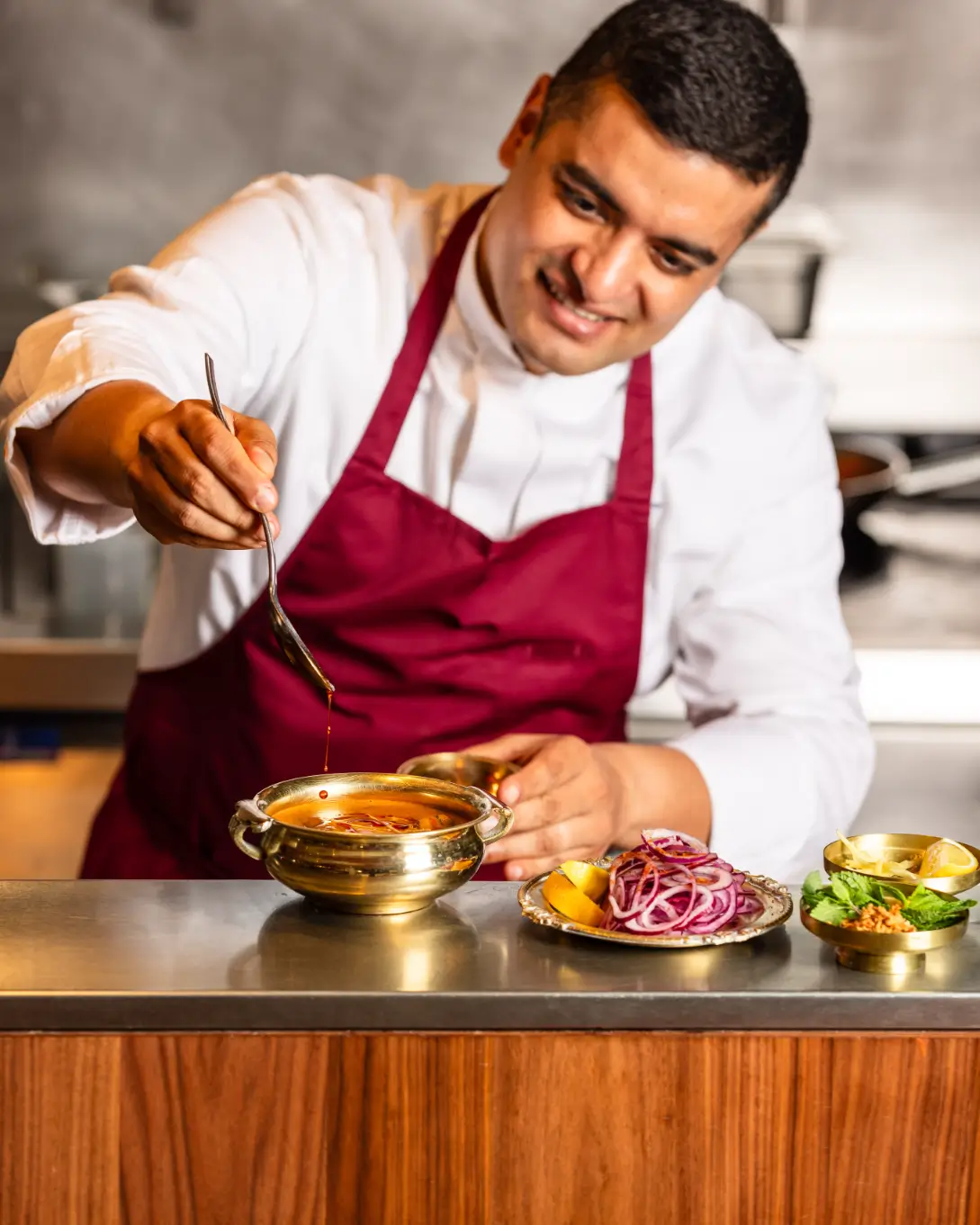
Chef Ankur’s philosophy centres on restraint. Instead of relying on excessive spice or elaborate presentation, he focuses on allowing regional ingredients and traditional techniques to express themselves naturally. Slow cooking, careful tempering, and balanced seasoning reveal the individuality of each recipe without unnecessary embellishment.
This approach is evident throughout the menu. Butter Chicken remains beautifully balanced with fenugreek and cardamom rather than overwhelming richness. Chicken Tikka demonstrates the precision of yoghurt marinades and live-fire cooking, while Mushroom and Vegetable Kurma highlights the elegance of Indian vegetarian cuisine through coconut and seasonal vegetables. Freshly baked naan and fragrant basmati rice complete meals designed to unfold gradually, allowing diners to appreciate how each course contributes something different.
Rather than asking guests to choose a single favourite dish, the restaurant encourages exploration across several regions in one sitting.
How to Experience Indian Cuisine Like a Local
The best way to discover regional Indian cuisine is not by ordering the most recognisable dishes, but by approaching the menu with curiosity.
Begin with a small plate such as Dahi Puri or Junction Aloo Tikki to experience India’s celebrated street-food culture. Continue with a grilled dish like Chicken Tikka or Gunpowder Prawns, where fire, marinade, and careful seasoning demonstrate another important cooking tradition. Then choose a regional curry that differs from your usual preference, pairing it with naan or basmati rice to appreciate the balance of flavours and textures.
Finish with Saffron Kheer, whose understated sweetness reflects the same philosophy of balance found throughout the meal.
Sharing dishes is equally important. Indian dining has always encouraged conversation and communal eating, allowing guests to experience several regions together rather than limiting themselves to a single plate.
The Value of Authentic Regional Cooking
As international interest in Indian cuisine continues to grow, diners are increasingly seeking restaurants that represent its true diversity rather than relying solely on familiar favourites.
Chef Ankur believes authenticity lies not in rigid tradition but in understanding where recipes come from and respecting the principles behind them. His role is not to reinvent Indian cuisine, but to interpret it thoughtfully for contemporary diners while preserving the stories carried within every ingredient and technique.
This commitment extends beyond recipes. Carefully sourced ingredients, handcrafted Indian tableware, and the restaurant’s railway-inspired narrative all contribute to a dining experience that feels culturally grounded rather than simply thematic.
For guests, authenticity becomes something they experience naturally rather than something that needs to be explained.
Discovering a Bigger Story Through Food
Butter Chicken will always have its place in Indian cuisine. It remains a beautifully crafted dish and an enduring favourite around the world. But it is only one chapter in a much larger culinary story.
Regional Indian cooking reveals how geography, migration, climate, and community have shaped thousands of recipes across one of the world’s most diverse nations. Exploring those traditions offers a richer, more rewarding understanding of Indian food than any single signature dish ever could.
At The Crossing in Paris, that journey is thoughtfully brought to life. Located inside Galeries Lafayette Le Gourmet, the restaurant invites guests to move beyond familiar expectations and discover India’s regional flavours through carefully prepared dishes that honour movement, memory, and craftsmanship.
For anyone searching for authentic regional Indian cuisine in Paris, it is an opportunity not simply to enjoy dinner, but to experience the extraordinary diversity that has always defined Indian cooking.


