

Table of Contents
- Why the 9th Arrondissement Rewards Curious Food Lovers
- A Neighbourhood Built Around Culture and Discovery
- Beyond French Classics: A New Culinary Landscape
- The Crossing and the Story of Regional India
- Planning the Perfect Day in the 9th Arrondissement
- What to Order at The Crossing
- A District That Invites You Back
Why the 9th Arrondissement Rewards Curious Food Lovers
Every Paris neighbourhood has its own personality. The Latin Quarter attracts lovers of history, Le Marais celebrates independent boutiques and cafés, while Saint-Germain-des-Prés remains synonymous with literary culture. The 9th arrondissement occupies a different space altogether. It is where elegant boulevards, grand department stores, historic theatres, and contemporary gastronomy intersect, creating one of the city’s most rewarding districts for visitors who enjoy exploring through food.
While many travellers arrive for the famous shopping on Boulevard Haussmann or an evening at the Opéra Garnier, they often discover that the neighbourhood’s dining scene deserves just as much attention. Alongside classic Parisian cafés and long-established brasseries, the district has become home to restaurants that reflect the city’s increasingly international culinary identity.
Among them, The Crossing, located inside Galeries Lafayette Le Gourmet, offers a distinctive perspective by presenting regional Indian cuisine within one of Paris’s most iconic cultural landmarks. As the first Indian restaurant inside Le Gourmet, it represents both the diversity of modern Paris and the enduring appeal of carefully crafted food.
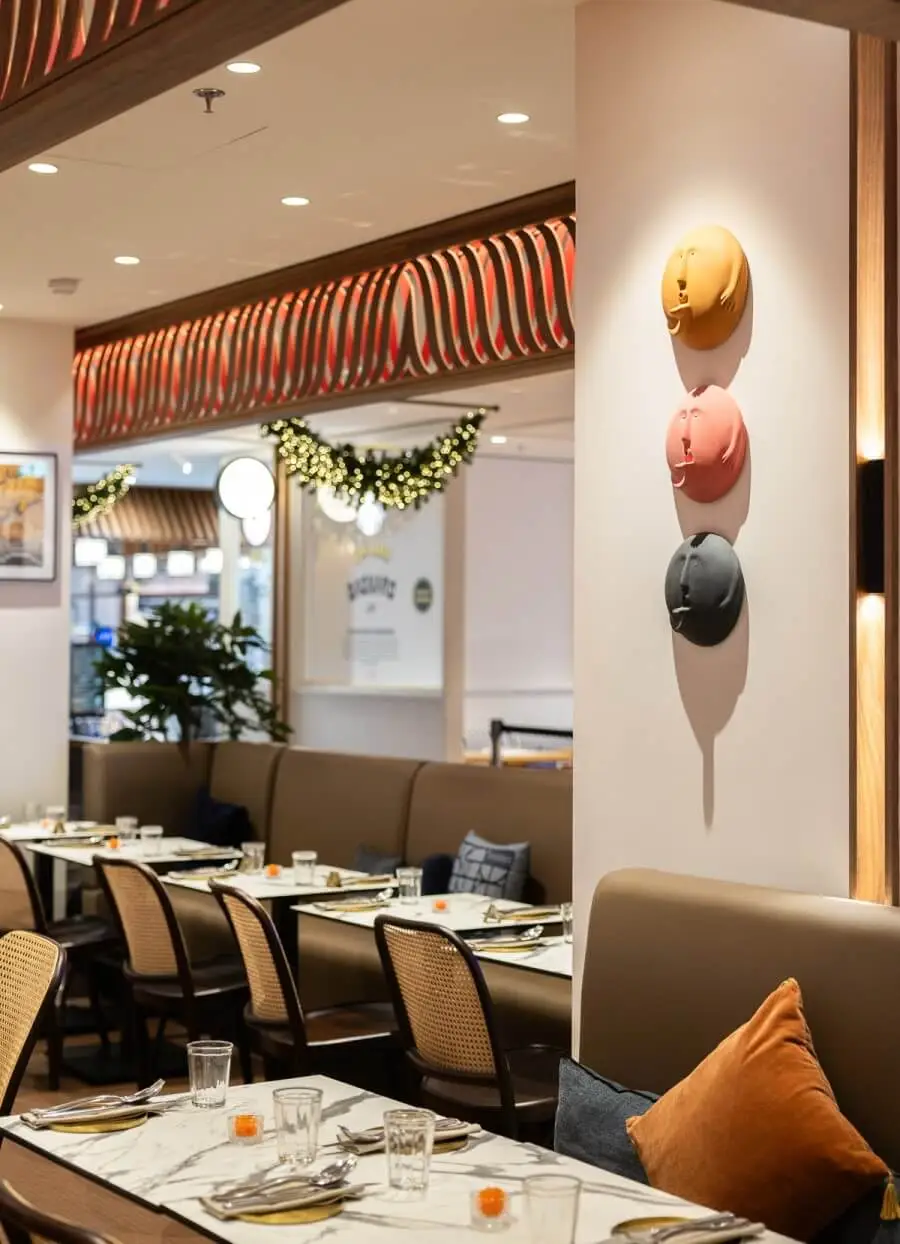
A Neighbourhood Built Around Culture and Discovery
The 9th arrondissement rewards those who prefer to explore on foot.
Its wide boulevards connect some of Paris’s most recognisable destinations. The magnificent Opéra Garnier anchors the district with its extraordinary architecture and cultural programme, while nearby Galeries Lafayette continues to attract visitors beneath its celebrated Art Nouveau glass dome. Historic passages, elegant cafés, theatres, and music venues contribute to an atmosphere that feels energetic without becoming overwhelming.
Because so many attractions lie within walking distance of one another, the neighbourhood naturally encourages slower exploration. Visitors move comfortably between shopping, architecture, museums, and dining without needing to cross the city.
That rhythm makes the district particularly appealing to food lovers. Meals become part of the day’s journey rather than isolated destinations, allowing each experience to complement the next.
Beyond French Classics: A New Culinary Landscape
The reputation of Paris has long been built on French gastronomy, yet today’s dining culture tells a broader story.
International cuisines have become an essential part of the capital’s culinary identity, reflecting generations of cultural exchange and the curiosity of Parisian diners. Rather than replacing French traditions, these restaurants expand the city’s gastronomic landscape by introducing new ingredients, techniques, and regional perspectives.
Indian cuisine has become an increasingly important part of that conversation.
The most interesting restaurants no longer focus exclusively on internationally familiar dishes. Instead, they celebrate India’s extraordinary regional diversity, presenting recipes shaped by geography, migration, and centuries of culinary evolution.
This shift mirrors a wider change in how travellers choose restaurants. Rather than searching only for famous dishes, many now seek places that explain where recipes come from, why ingredients matter, and how food reflects culture.
The Crossing embraces exactly this philosophy.

The Crossing and the Story of Regional India
The restaurant’s name immediately hints at its wider purpose.
Inspired by India’s railway crossings, The Crossing reflects Chef Ankur Chakraborty’s childhood journeys across the country with his father, who worked for the Indian Railways. Every station introduced new flavours, ingredients, and cooking traditions, revealing that Indian cuisine is best understood not through one region but through the connections between many.
That philosophy shapes the menu.
Guests can begin with Dahi Puri, whose crisp textures and tamarind brightness celebrate India’s vibrant street-food culture, before moving to Chicken Tikka or Gunpowder Prawns, where careful marinades and charcoal grilling demonstrate another important culinary tradition. Main courses such as the Railway Lamb Curry, Butter Chicken, and Alleppey Prawn Curry each represent different regional influences, while vegetarian dishes like Mushroom and Vegetable Kurma showcase the remarkable depth of India’s plant-based cooking.
Chef Ankur’s restrained approach allows every ingredient to remain distinct, encouraging diners to appreciate balance rather than intensity.

Planning the Perfect Day in the 9th Arrondissement
One of the greatest advantages of dining at The Crossing is how naturally it fits into a day spent exploring the district.
Begin the morning by admiring the famous dome and designer boutiques inside Galeries Lafayette, then browse the gourmet food halls before enjoying lunch at The Crossing. Afterwards, stroll towards Opéra Garnier, wander along the Grands Boulevards, or continue towards Place Vendôme and the Louvre.
Visitors interested in architecture will appreciate the district’s elegant Haussmannian buildings, while theatre enthusiasts can plan dinner before an evening performance nearby. Because the restaurant sits within one of the arrondissement’s best-connected locations, arriving via Metro, RER, bus, or taxi is remarkably straightforward.
Rather than requiring a detour, lunch or dinner becomes an effortless part of the itinerary.
What to Order at The Crossing
For first-time visitors, the menu offers an ideal introduction to the restaurant’s regional philosophy.
Start with Dahi Puri or Junction Aloo Tikki, both of which showcase contrasting textures and bright, balanced flavours. Continue with Chicken Tikka, where yoghurt and Kashmiri chilli create an elegant marinade, or choose the aromatic Gunpowder Prawns if seafood appeals.
For the main course, the Railway Lamb Curry remains one of the kitchen’s defining dishes, slow-braised to remarkable tenderness and inspired by recipes that travelled along India’s railway routes. Butter Chicken offers a beautifully balanced interpretation of a beloved classic, while the Mushroom and Vegetable Kurma demonstrates why Indian vegetarian cuisine enjoys such a celebrated reputation. Fresh naan, fragrant basmati rice, and Saffron Kheer provide a satisfying conclusion to the meal.
Together, these dishes capture the restaurant’s wider philosophy of regional diversity, careful technique, and understated elegance.
A District That Invites You Back
The most memorable neighbourhoods reveal something new with every visit.
The 9th arrondissement succeeds because it balances history with contemporary culture, luxury shopping with everyday Parisian life, and internationally recognised landmarks with quieter discoveries waiting just beyond the main streets. Food plays an essential role in that experience, offering opportunities to understand the neighbourhood from perspectives that extend beyond architecture and sightseeing.
The Crossing contributes meaningfully to this evolving culinary landscape. Inspired by India’s railway journeys, guided by Chef Ankur Chakraborty’s philosophy of restraint and craftsmanship, and located inside Galeries Lafayette Le Gourmet, it reflects the openness and cultural diversity that define modern Paris.
For anyone exploring the 9th arrondissement, it offers more than an excellent meal. It provides a chance to experience how two great culinary cultures—Indian and French—can meet naturally in one of Paris’s most iconic neighbourhoods, creating a dining experience that feels every bit as memorable as the district itself.


