
Table of Contents
- Why Indian Cuisine in France Is a Story of Movement
- From Mumbai: Where the Journey Begins
- Arrival in France: Adaptation, Not Replication
- Marseille and Port Cities: Gateways of Flavour
- Paris as Refinement: The New Language of Indian Cuisine
- How The Crossing Represents This Journey
- Final Thoughts on a Cuisine in Motion
Why Indian Cuisine in France Is a Story of Movement
Indian cuisine in France is often framed as imported, but that description is incomplete. It suggests a one-time transfer, when in reality the process is ongoing. The presence of Indian food across cities like Marseille and Paris reflects a continuous journey—shaped by migration, trade, and adaptation.
To understand Indian food in France, it must be seen not as a fixed identity arriving intact, but as a system that adjusts to context while retaining its internal logic.
This idea of movement is central to how the cuisine evolves—and why it feels different across regions.

From Mumbai: Where the Journey Begins
Mumbai offers a useful starting point because it represents convergence. As a port city, it has historically absorbed influences from across India and beyond, creating a culinary landscape defined by diversity.
Street food, coastal curries, and layered spice profiles coexist within a single city. This multiplicity becomes the foundation that travels outward.
What leaves Mumbai is not a single style of cooking, but an approach—adaptable, responsive, and built on balance.
This adaptability is what allows Indian cuisine to translate effectively into new environments.
Arrival in France: Adaptation, Not Replication
When Indian food enters France, it does not remain unchanged. Ingredients shift based on availability, techniques adjust to local expectations, and presentation evolves to align with French dining culture.
The key distinction is between adaptation and dilution. Adaptation preserves the logic of the cuisine—its balance of spice, acidity, and texture—while adjusting its expression.
Restaurants that succeed in France understand this difference. They do not attempt to recreate India exactly. Instead, they interpret it in a way that feels natural within the French context.
This is where Indian cuisine begins to integrate rather than remain external.
Marseille and Port Cities: Gateways of Flavour
Marseille, like Mumbai, is a port city. This shared characteristic makes it an important point in the journey of Indian cuisine across France.
Port cities historically act as entry points for ingredients, people, and ideas. In Marseille, Indian flavours intersect with Mediterranean influences, creating subtle shifts in how dishes are perceived and prepared.
Spices meet olive oil, seafood traditions align, and the overall expression becomes lighter, more coastal in tone.
These interactions demonstrate how Indian cuisine does not impose itself—it adapts to its surroundings while maintaining its identity.

Paris as Refinement: The New Language of Indian Cuisine
If Marseille represents entry, Paris represents refinement. The city’s dining culture demands precision, clarity, and consistency.
Here, Indian cuisine undergoes another transformation. Dishes are edited, menus are structured, and flavours are presented with restraint.
This does not reduce the cuisine—it clarifies it. Elements that might feel overwhelming in other contexts are rebalanced, allowing diners to engage more easily.
The result is a version of Indian food that aligns with Parisian expectations while remaining rooted in its origins.
How The Crossing Represents This Journey
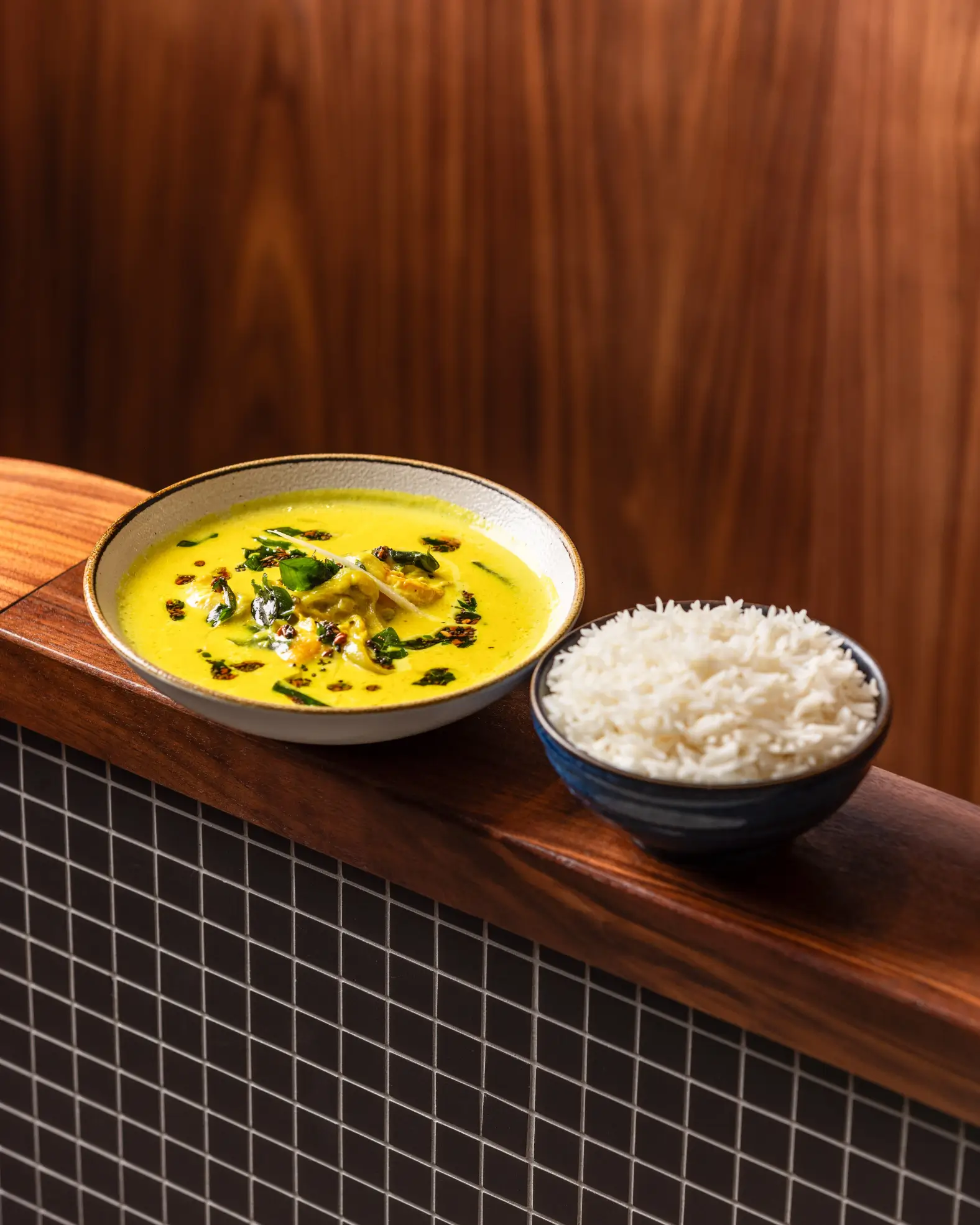
The Crossing, located in Galeries Lafayette Le Gourmet, sits within this final stage of the journey. It does not attempt to represent every regional variation of Indian cuisine. Instead, it presents a focused interpretation shaped by movement, memory, and technique.
Chef Ankur’s philosophy—treating Indian food as something to be translated rather than replicated—guides this approach.
The menu reflects a balance between origin and context. Dishes retain their core structure while being refined for a Parisian setting. This allows the cuisine to feel both authentic and contemporary.
Final Thoughts on a Cuisine in Motion
From Mumbai to Marseille, and ultimately to Paris, Indian cuisine’s journey across France is defined by movement rather than arrival.
Each stage introduces new influences, challenges, and refinements. Yet the core remains consistent: a focus on balance, adaptability, and depth.
For diners, this journey offers a clearer understanding of what Indian food can be. It is not static or singular. It is a living system—one that continues to evolve as it moves.
At its best, this evolution does not dilute the cuisine. It reveals it, allowing its structure and logic to emerge with greater clarity in every new setting.


