
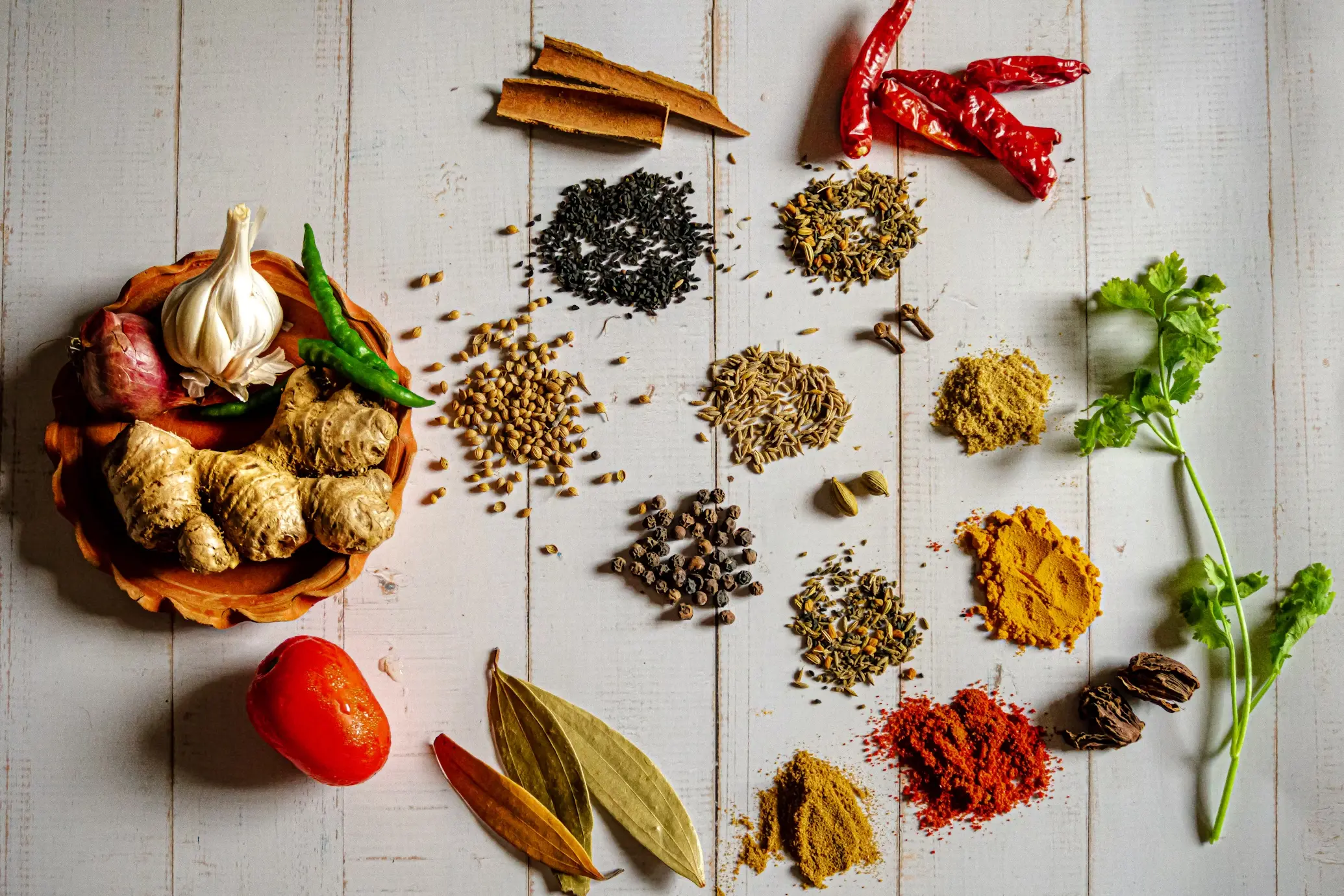
Indian Spice Regionality: North vs South and the Real Difference
Put Butter Chicken and Alleppey Prawn Curry on the same table and the contrast appears quickly. One is carried by tomato, butter, fenugreek and cardamom. The other smells of coconut, ginger, mustard and curry leaves before the first spoonful is taken.
Both are Indian curries. Both contain several spices. They have very little in common on the palate.
This is a more useful starting point for understanding North and South Indian cooking than asking which is hotter. Chilli certainly matters, but so do the fat in the pan, the acidity in the sauce, the spices used whole or ground, and the moment they are added.
Chef Ankur Chakraborty keeps his own explanation fairly simple. He prefers fewer spices used carefully and places more value on timing, heat and cooking method than on sheer complexity. That approach is easy to recognise across the Paris menu.
Table of Contents
- Butter, yoghurt, fennel and the slower warmth of northern dishes
- Coconut, mustard and curry leaves change the mood entirely
- Zeera Aloo and raita: one spice, two completely different impressions
- Tadka is easiest to understand when you can smell it
- North and South on the same table
- Frequently Asked Questions
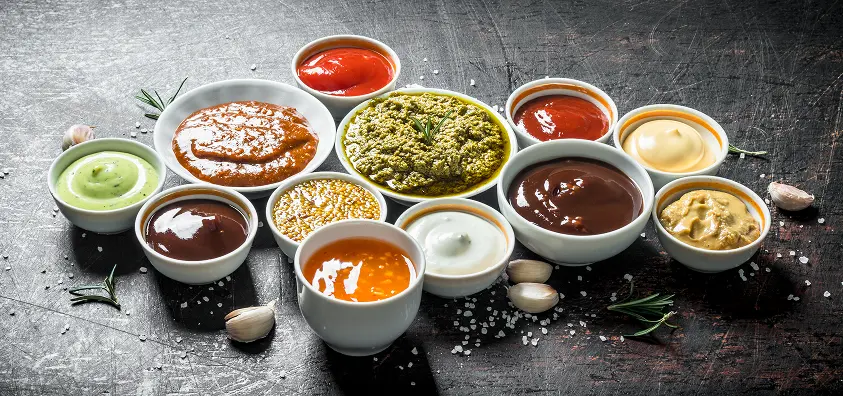
Butter, yoghurt, fennel and the slower warmth of northern dishes
The Butter Chicken arrives with the kind of sauce that clings to the chicken rather than running around it. Tomato and butter form the base, while fenugreek and cardamom sit further back.
Fenugreek has a slightly bitter, savoury aroma that works particularly well with tomato. Cardamom is sweeter and more fragrant. Neither needs to be prominent in every mouthful. After a few bites, they become part of the sauce rather than flavours you keep identifying separately.
Railway Lamb Curry takes a different route. The lamb is slow-braised with yoghurt, fennel and Kashmiri chilli. Fennel gives the curry a gentle sweetness, while yoghurt brings acidity and body. Kashmiri chilli contributes colour and warmth without necessarily making the dish aggressively hot.
The cooking time matters here. After a long braise, the yoghurt, meat juices and spices have had time to settle into one another. There is no sharp burst of fennel followed by a separate hit of chilli. The flavour is softer around the edges.
This style of cooking appears in many northern Indian dishes, especially those built around dairy, onion, tomato or slow-cooked meat. It also explains why richness and chilli heat should not be confused. A curry can be buttery, aromatic and deeply savoury without being especially fiery.
Coconut, mustard and curry leaves change the mood entirely
The Alleppey Prawn Curry smells different before it tastes different.
Curry leaves are usually the first thing to register, followed by ginger and the warmer background note of turmeric. The prawns sit in a coconut-based curry finished with mustard and curry leaves, giving the sauce a lighter feel than the butter-led curries elsewhere on the menu.
Mustard has a sharper presence. Curry leaves bring a fragrance that is difficult to mistake once you know it. Coconut rounds both without making them disappear.
The Kerala Fried Chicken offers the same regional vocabulary in a much drier form. Fried chicken is served with spicy salt, gunpowder aioli and curry leaf. Instead of a sauce bringing everything together slowly, the flavours remain easier to pick apart: crisp chicken, the warmth of the spice mixture, then curry leaf.
Gunpowder Prawns are another example. The prawns come with podi masala and garlic butter, using a roasted spice mixture in a way that feels quite different from the softer aromas of cardamom or fennel.
None of these dishes tastes alike, despite their southern references. Coconut, mustard, curry leaves and podi simply give the kitchen a different set of possibilities.
Zeera Aloo and raita: one spice, two completely different impressions
Cumin is particularly useful because it appears in two very simple dishes on the Paris menu.
In Zeera Aloo, potatoes are sautéed with cumin, ginger and fresh chilli. The cumin cooks in heat and fat alongside the potato, becoming part of the savoury crust and the smell rising from the pan. It is warm, earthy and integrated into the dish.
Then taste the raita.
Whisked yoghurt is seasoned with toasted cumin. There is nowhere for the spice to hide. Against cold yoghurt, its roasted aroma becomes much clearer, and the same cumin that felt deep and savoury with potato suddenly seems almost nutty.
It is a small comparison, but a revealing one. The spice has not changed. The cooking around it has.
The same thing happens constantly in Indian kitchens. Mustard seeds behave differently when cracked in hot oil. Cardamom changes depending on whether it is crushed into a curry, infused into tea or used in a chilled dessert. Chilli can be fresh, dried, powdered, fried in fat or cooked slowly into a sauce.
Looking only at an ingredient list misses most of this.

Tadka is easiest to understand when you can smell it
The clearest distinction between North and South Indian cuisine lies in technique. Northern cooking relies on ground spice blends integrated into sauces, creating a uni
Yellow Dal Tadka gives another clear example.
The lentils themselves are soft and mild, with the comforting thickness that comes from cooking them until they begin to break down. Chilli and garlic are introduced through a tempering, or tadka, which brings a fresher aroma to the finished dal.
When spices and aromatics hit hot oil or ghee, their smell changes almost immediately. Garlic turns sweeter and deeper. Chilli perfumes the fat. Whole spices, when used, begin to crackle and release their oils.
That hot mixture can be stirred through the dish or poured over it towards the end. Either way, the effect is very different from letting the same ingredients cook quietly inside a sauce for an hour.
You usually smell tadka before you think about it.
That immediacy is one reason tempering is so useful in lentil dishes. The dal provides softness and warmth; the finish gives it lift.
fied and slow-developing flavour profile.
Southern cooking uses tempering—whole spices heated in oil—to produce immediate aromatic release and a more segmented, expressive structure. One builds depth over time; the other creates clarity through timing.
Chef Ankur’s approach aligns with this understanding, focusing on restraint and precision—using fewer spices, but applying them with intent rather than excess.
North and South on the same table
North and South are broad terms for cuisines that vary enormously from state to state, but a shared meal can still make the contrast useful.
Butter Chicken gives you tomato, butter, fenugreek and cardamom. Railway Lamb Curry moves into yoghurt, fennel and Kashmiri chilli. Alleppey Prawn Curry changes direction with coconut, mustard and curry leaves. Yellow Dal Tadka puts the aroma of chilli and garlic closer to the surface.
Keep Zeera Aloo and raita alongside them. The cumin comparison alone is worth paying attention to.
The menu at The Crossing moves between these regions partly because Chef Ankur’s own experience of Indian food was shaped by travelling through the country with his father, who worked for the Indian Railways. Different stations meant different food, ingredients and habits. That memory sits quietly behind the restaurant rather than needing to explain every dish.
At the table, the differences are easier to understand through eating anyway.
A spoonful of buttery tomato curry feels very different from coconut scented with curry leaves. Cumin in hot potatoes tastes nothing like cumin in cold yoghurt. Garlic and chilli poured over dal announce themselves immediately.
That is Indian spice regionality in its most useful form: something you can smell and taste before you ever need to name it.
Frequently Asked Questions
What is the main difference between North and South Indian spices?
Northern dishes often feature yoghurt, butter, fennel, cardamom and fenugreek, while southern cooking frequently uses coconut, mustard, curry leaves and tempering. Regional variations are extensive.
Is South Indian food always hotter?
No. Chilli levels vary widely. Cooking method, fat and acidity also affect how hot a dish feels.
What is tadka?
Tadka is a technique in which spices or aromatics are heated in oil or ghee before being added to a dish.
Which dishes at The Crossing Paris show these differences?
Butter Chicken, Railway Lamb Curry, Alleppey Prawn Curry, Yellow Dal Tadka, Zeera Aloo and raita offer useful contrasts.


