

Table of Contents
- Introduction
- Modern Indian Dining Starts with a Different Philosophy
- The Structure Behind a Good Masala
- Fresh vs Roasted: Two Approaches to Flavor
- Regional Variation and Adaptability
- How Masala Is Used in a Professional Kitchen
- Final Thought: The Intelligence of Blending
Introduction
Paris has always rewarded restaurants that know exactly who they are. In a city celebrated for culinary excellence, diners increasingly seek authenticity without clichés, craftsmanship without excess, and experiences that feel rooted rather than performative.
That shift helps explain why The Crossing has quickly become one of the most talked-about destinations for Indian food in Paris. Located inside Galeries Lafayette Le Gourmet, the restaurant offers something increasingly rare: a modern interpretation of Indian cuisine that remains deeply connected to its origins. Rather than reinventing tradition, The Crossing refines it.

Modern Indian Dining Starts with a Different Philosophy
Many diners still associate Indian cuisine with abundance, heavy spice blends, and familiar restaurant staples. While those dishes remain important, modern Indian dining asks a different question: what happens when exceptional ingredients, regional traditions, and technical precision are allowed to speak for themselves?
Chef Ankur Chakraborty’s philosophy is built around restraint. Rather than adding complexity, he focuses on clarity. Spices are used with purpose. Cooking techniques are respected. Time becomes an ingredient in itself, whether through slow braising, careful marination, or patient preparation.
The result is food that feels balanced, nuanced, and remarkably light—often surprising guests encountering contemporary Indian cuisine for the first time.
A Menu That Travels Across India
What distinguishes The Crossing from many Indian restaurants in Paris is its commitment to regional storytelling.
The restaurant takes its name from India’s railway crossings, places where cultures, ingredients, and traditions intersect. That idea extends throughout the menu, which celebrates flavours from across the country rather than focusing on a single culinary tradition.
Guests might begin with Dahi Puri, a classic street-food favourite layered with tamarind, spiced yoghurt, and crisp textures. The Kerala Fried Chicken introduces the aromatic influence of South India through curry leaves and black garlic chutney. Meanwhile, the Railway Lamb Curry reflects the restaurant’s heritage-inspired approach, combining slow-braised lamb with Kashmiri chilli, yoghurt, and fennel.
Each dish feels connected to a larger story about movement, migration, and the evolution of Indian food.
Why Ingredients Matter More Than Ever
Great restaurants often reveal themselves through sourcing.
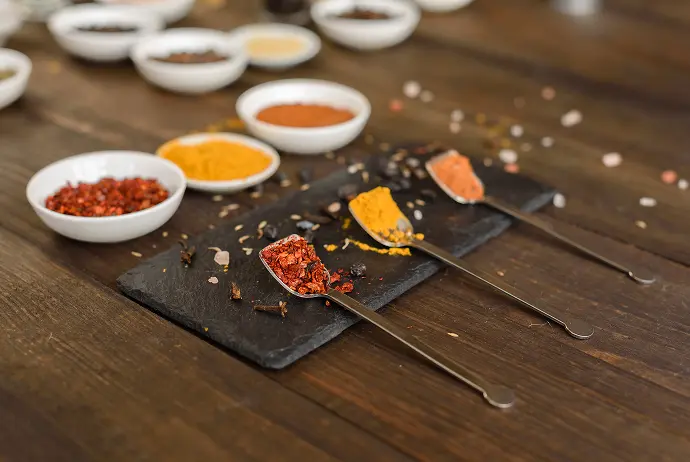
At The Crossing, ingredients are treated as cultural artefacts as much as culinary tools. The kitchen highlights products that have shaped India’s food traditions for centuries, from Kashmiri saffron and Malabar black pepper to Kerala cardamom and coastal coconut. These ingredients are chosen not simply for flavour, but for the stories they carry.
This attention to provenance creates depth without unnecessary complexity. Diners experience flavours that feel authentic because they are rooted in place, history, and technique.
Dining in One of Paris's Most Iconic Food Destinations
Location plays a role in the experience as well.
As the first Indian restaurant inside Galeries Lafayette Le Gourmet, The Crossing occupies a unique position within one of Paris’s most celebrated culinary destinations. Surrounded by some of the world’s most respected food concepts, it introduces a contemporary Indian voice to a setting known for innovation and excellence.
For visitors exploring Boulevard Haussmann, the restaurant offers a welcome alternative to predictable tourist dining. For locals, it has become a destination for reliable quality, thoughtful cooking, and genuine hospitality.
The Future of Indian Cuisine in Paris
The success of The Crossing reflects a broader evolution in how Indian food is understood internationally.
Today’s diners are increasingly interested in regional identity, ingredient integrity, and culinary narratives. They want food that tells a story while remaining approachable. The Crossing answers that demand by presenting Indian cuisine not as a collection of stereotypes, but as a living, evolving tradition shaped by movement, memory, and craft.
For anyone searching for the best Indian restaurant in Paris, the answer increasingly lies not in spectacle but in substance. At The Crossing, every dish demonstrates that modern Indian dining is at its most compelling when heritage and precision work together—quietly, confidently, and with purpose.


