

Prelude: A New Kind of Parisian Ritual
Tea time in Paris has always carried an air of refinement — porcelain cups, delicate pastries, quiet conversation. But now, tucked within the hallowed walls of Galeries Lafayette Le Gourmet, a new ritual is brewing. At The Crossing, the best Indian restaurant in Paris, afternoon tea isn’t just a pause — it’s a passage between worlds. Between Darjeeling and Dijon, Mumbai and Montmartre. Between spice and serenity.
This is not tea as the Parisians know it — this is Indian Afternoon Tea, served with the grace of Paris and the soul of India.
Table of Contents
- The Origin of Indian Tea Culture
- The Parisian Art of the Pause
- The Crossing’s Afternoon Tea Experience
- Chai, Conversations, and Culinary Craft
- The Samosa and the Madeleines: A Tale of Two Snacks
- What Makes It the Best Tea Experience in Paris
- Why Indian Tea Feels Right at Home in the City of Lights
The Origin of Indian Tea Culture
India’s love affair with tea began under colonial influence, but it quickly became something far more profound — a national heartbeat. From the steaming stalls of Kolkata to the misty hills of Assam, tea is both daily ritual and social glue. The spices — cardamom, cinnamon, clove — aren’t just flavoring; they’re memories steeped in water.
At The Crossing, this centuries-old tradition meets the precision of Parisian gastronomy. The result? A teatime that is both comforting and elevated, traditional yet unexpected.
The Parisian Art of the Pause
Parisians understand the sacred art of slowing down. A cup of coffee on a terrace, a shared pastry at three in the afternoon — these are moments of stillness that define the city’s rhythm. The Crossing has simply reimagined that ritual through an Indian lens.
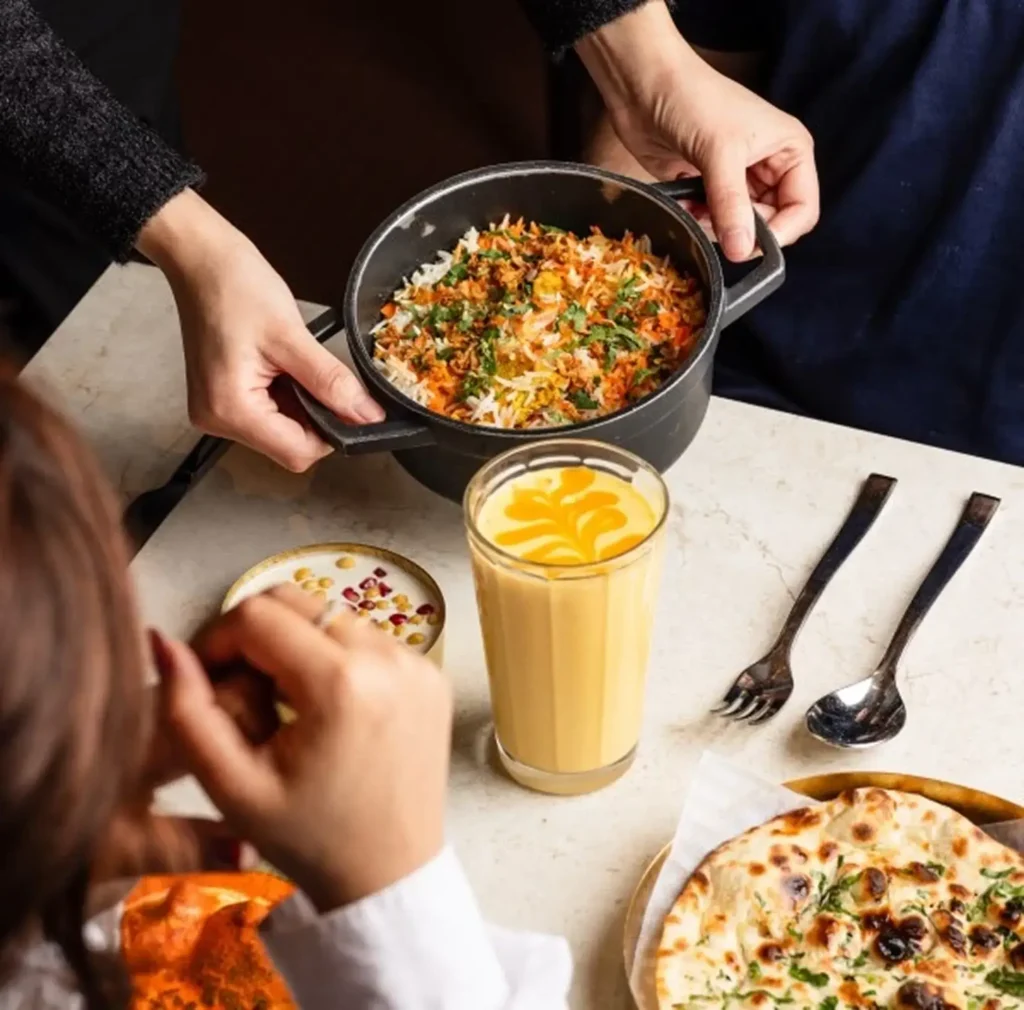
Here, tea time becomes an immersive experience — a fusion of chai spices, delicate bites, and stories told in sips. Available daily from 15h to 18h, it turns the afternoon lull into an awakening of senses.
The Crossing’s Afternoon Tea Experience
The Crossing’s Afternoon Tea menu offers an elegant set: a pot of tea or coffee, served alongside samosas for two. But what seems simple at first is transformed through detail. The chai is brewed with saffron and cardamom — aromatic, layered, and deeply soothing. The samosas arrive golden and crisp, filled with spiced potato and peas, their warmth balanced by a hint of tamarind.
Guests can choose from a variety of teas — Jasmine, Assam, or Mango Rooibos — or opt for a cup of Karak Chai, a spiced milk tea infused with memory and nostalgia.
And for those who seek refreshment, the Rose Iced Tea, with its infusion of rose petals and black tea, feels like drinking Paris in spring.

Chai, Conversations, and Culinary Craft
Afternoon tea at The Crossing isn’t just about flavor — it’s about connection. Friends gather around small tables, steam rising between conversations. The chai arrives in glass cups that warm the hands, the aroma of ginger and cardamom filling the air. Each sip tells a story — one of comfort, community, and craft.
The chef describes it best: “Tea time is not about hunger; it’s about humanity. It’s where pauses become memories.”
That philosophy infuses every element — from the handcrafted chutneys served with samosas to the perfect sweetness of mango lassi for those who want a tropical twist.
The Samosa and the Madeleines: A Tale of Two Snacks
If France’s madeleine is a symbol of nostalgia, India’s samosa is its savory counterpart. Both evoke memory, both comfort the soul. At The Crossing, these two icons meet on the same table. One buttery and soft, the other crisp and spiced — together, they embody the union of two culinary worlds.
This isn’t a forced pairing; it’s a celebration of parallels. The samosa becomes Parisian in its presentation, served on fine china beside elegant tea pots. And yet, its essence remains unmistakably Indian — humble, hearty, and whole.
What Makes It the Best Tea Experience in Paris
In a city known for its patisseries and salon de thés, The Crossing’s afternoon tea stands apart. It offers something Paris didn’t know it needed — warmth that lingers beyond the cup. It’s not about opulence; it’s about authenticity. The flavors are soulful, the setting intimate, the service quietly exceptional.
Why Indian Tea Feels Right at Home in the City of Lights
Paris and India share an invisible thread — a devotion to ritual and refinement. Both cultures understand that luxury is not in excess but in essence. At The Crossing, afternoon tea becomes a bridge between those philosophies. The clink of porcelain mingles with the scent of spice, and somehow, it all feels inevitable.
In that golden hour between day and evening, as sunlight filters through Haussmann windows, The Crossing’s Indian tea service becomes more than a meal — it becomes a moment. A Parisian ritual, reborn.


