

The Railway Ingredient Map: How Stories Travel Through Flavour
In India, ingredients have never stayed still.
Long before modern logistics or written cookbooks, flavours travelled through people — in cloth bundles, tiffin boxes, and memory. Nowhere was this movement more visible than on the Indian railways. Trains stitched together climates, dialects, and agricultural landscapes, creating a living map of flavour that evolved quietly over time.
This Railway Ingredient Map is not a literal chart. It is a cultural understanding — a way of tracing how spices, grains, and techniques moved across the country, adapting subtly as they went. Each ingredient carries not just taste, but story: where it came from, how it travelled, and how it learned to belong somewhere new.
Today, this philosophy offers a lens through which Indian cuisine can be understood with clarity and depth — particularly when presented thoughtfully in global cities like Paris.
Table of Contents
- Railways as Culinary Corridors
- Pepper Before Chili: A Map of Heat
- Cumin: The Quiet Backbone
- Saffron: From Fields to Compartments
- Tamarind: The Sour That Travelled Inland
- Coconut: A Coastal Ingredient Learns Restraint
- Ingredients as Memory Carriers
- The Railway Ingredient Map in a Global Context
- The Crossing Paris: Translating the Ingredient Map
- Why This Philosophy Endures
- Final Thoughts: When Ingredients Become Storytellers
Railways as Culinary Corridors
When the Indian railways expanded across the subcontinent, they did more than transport people.
They created corridors of exchange. Vendors adapted their food to suit travellers. Home cooks learned to prepare dishes that could withstand time and distance. Ingredients once regional found new audiences, carried inland or across climates where they were unfamiliar.
Stations became informal test kitchens. A spice blend from one region might be softened to suit another. A cooking fat changed due to availability. Yet the core identity of the ingredient remained intact.
This is how Indian cuisine developed its remarkable coherence without uniformity. The railways allowed ingredients to migrate without losing their emotional grounding.
Pepper Before Chili: A Map of Heat
One of the clearest examples of the Railway Ingredient Map is heat itself.
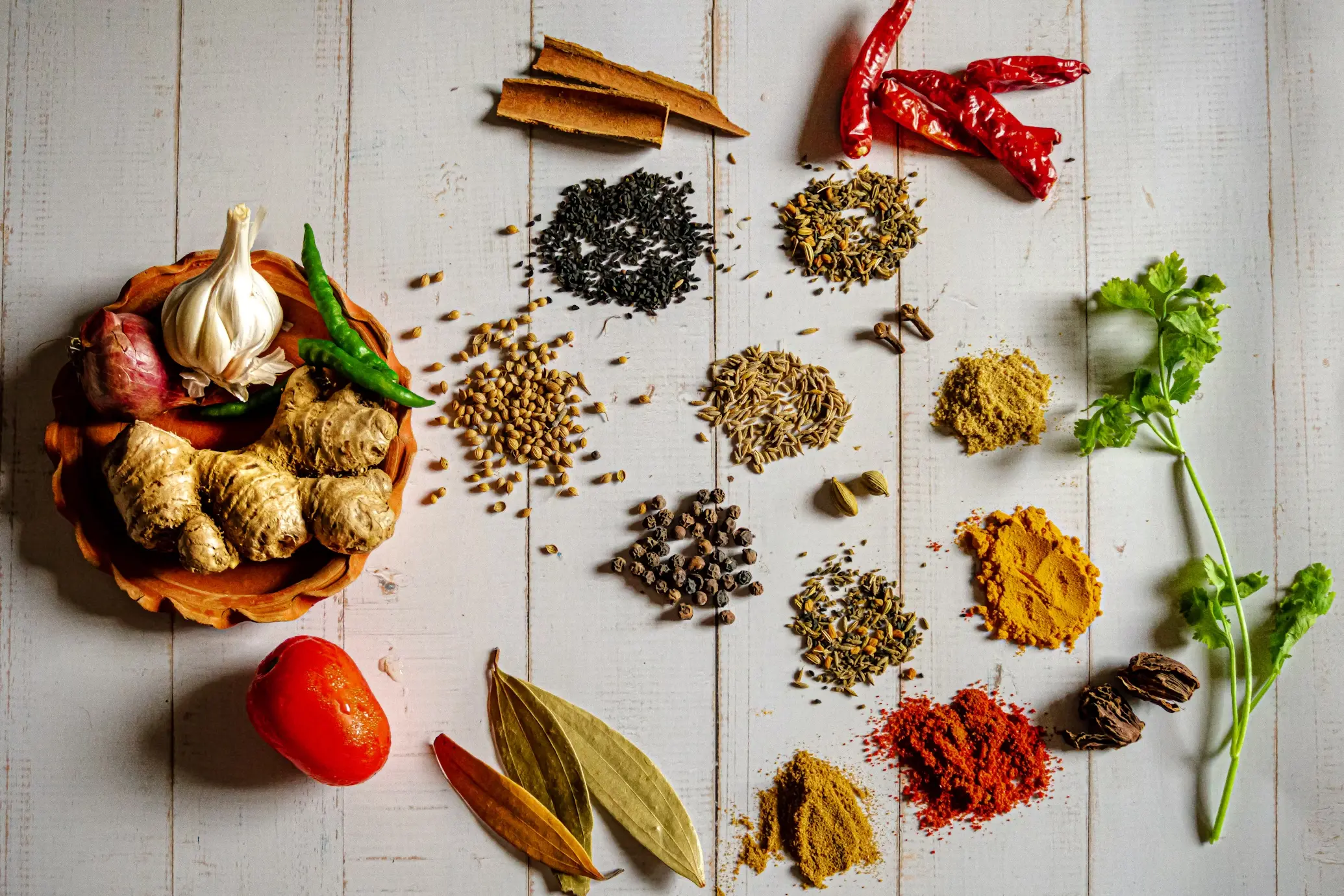
Before chilies arrived from the Americas, India’s heat came from black pepper. Grown primarily along the Malabar Coast, pepper travelled inland through trade routes and later by rail, shaping regional cuisines long before chili became dominant.
As chilies spread, they did not replace pepper uniformly. Instead, they layered onto existing systems. Some regions embraced sharp heat; others retained warmth without fire.
This layered heat map — pepper beneath chili — still defines Indian cooking today. It reflects a cultural preference for depth over intensity, a philosophy shaped by gradual movement rather than abrupt change.
Cumin: The Quiet Backbone
Cumin rarely announces itself.
Yet across India’s railway routes, it became one of the most reliable culinary constants. Easily transported, adaptable to different fats and techniques, cumin grounded dishes wherever it went.
In northern regions, it crackles in ghee at dawn. In western cooking, it anchors vegetables and lentils. In railway tiffin food, it provided familiarity — a scent that signalled nourishment regardless of location.
Cumin’s role in the Railway Ingredient Map is subtle but profound. It does not dominate flavour; it stabilises it. In doing so, it exemplifies how Indian ingredients travel not to impress, but to belong.

Saffron: From Fields to Compartments
Saffron’s journey is one of fragility and precision.
Harvested in Kashmir’s Pampore fields, its few crimson threads travelled carefully — first through traders, later by rail — reaching kitchens far from their origin. On trains, saffron flavoured rice dishes prepared for long journeys, offering warmth and reassurance.
Unlike ingredients that adapted freely, saffron retained its identity wherever it went. Its restraint demanded respect. Used sparingly, it became a marker of care rather than luxury.
On the Railway Ingredient Map, saffron represents how ingredients can move across geography while maintaining discipline — a principle still reflected in refined Indian cooking today.
Tamarind: The Sour That Travelled Inland
Tamarind’s origins lie in coastal and tropical regions, yet its presence is felt across India.
Railways carried tamarind inland, where it softened or sharpened dishes depending on context. In some regions, it replaced citrus. In others, it balanced heat. Railway snacks adopted tamarind chutneys because they travelled well, retained brightness, and refreshed the palate.
This adaptability made tamarind indispensable. It taught Indian cuisine an important lesson: balance travels better than intensity.

Coconut: A Coastal Ingredient Learns Restraint
Coconut, in its many forms — milk, oil, flesh — is inseparable from India’s southern and coastal cuisines. Yet railway movement encouraged its selective use elsewhere.
Inland kitchens learned to treat coconut with restraint, borrowing texture or aroma rather than richness. Coconut milk became lighter, oil more aromatic than dominant.
This adaptation reflects the Railway Ingredient Map’s core philosophy: ingredients evolve not by dilution, but by editing.
Ingredients as Memory Carriers
Indian ingredients do not travel alone. They carry memory.
A pinch of fennel recalls the end of a long journey. Fenugreek evokes early mornings and tiffin boxes. Cardamom lingers like a station announcement — brief, fragrant, unmistakable.
These memories attach themselves to ingredients through repetition. Over time, taste becomes recognition. This is why Indian food feels familiar even when encountered far from home.

The Railway Ingredient Map in a Global Context
When Indian cuisine travels internationally, this ingredient philosophy becomes even more important.
In cities like Paris, where diners value clarity and restraint, Indian food must translate without spectacle. Ingredients must speak quietly, but clearly. Their journeys must be honoured, not obscured.
This is where the Railway Ingredient Map becomes a guiding framework rather than a theme. It encourages chefs to respect how ingredients arrived at the table — historically, culturally, and emotionally.
The Crossing Paris: Translating the Ingredient Map
At The Crossing Paris, the Railway Ingredient Map informs cooking decisions rather than menu descriptions.
Inspired by India’s railway journeys, the restaurant approaches ingredients as carriers of story. GI-tagged spices, slow-cooked lentils, balanced heat, and edited gravies reflect an understanding of how flavours move and settle.
Consistently rated among the best Indian restaurants in Paris, The Crossing does not aim to showcase ingredients in isolation. Instead, it allows them to coexist — much like they did on railway routes — shaping dishes that feel composed and emotionally grounded.
Railway-inspired dishes reflect patience and repetition. Ingredient choices prioritise provenance and restraint. The result is Indian cuisine that feels natural in a Parisian context without losing its internal logic.
Why This Philosophy Endures
The Railway Ingredient Map endures because it mirrors how people live.
Movement, adaptation, memory, and return define both travel and cooking. Indian cuisine internalised these ideas long before they became culinary talking points.
Today, as global diners seek authenticity without excess, this philosophy offers guidance. It reminds us that flavour travels best when it respects where it comes from — and understands where it arrives.
Final Thoughts: When Ingredients Become Storytellers
The Railway Ingredient Map is not about nostalgia. It is about continuity.
It shows how Indian cuisine absorbed movement without losing itself. How ingredients learned new languages without forgetting their own. How food became a record of journeys rather than destinations.
In Paris, where food is treated as culture rather than consumption, this philosophy finds resonance. The best Indian restaurant experiences honour ingredients not as trends, but as storytellers.
When flavour carries memory, it does more than satisfy. It connects. And that connection is what allows stories to keep travelling — one ingredient at a time.


