

Inside the Tandoor: The Science Behind India’s Most Powerful Cooking Technique
The tandoor is often described in romantic terms — ancient, primal, elemental. Yet beneath its clay walls lies one of the most sophisticated cooking systems ever developed. Long before modern kitchens spoke of convection, radiant heat, or controlled combustion, the tandoor mastered all three simultaneously.
Tandoor cooking is not rustic improvisation. It is precision shaped by physics, material science, and time. Its flavours are not accidental, nor are they the result of excess spice or smoke. They are created through an exact interplay of heat, moisture, fermentation, and airflow.
In modern Indian dining — particularly in cities like Paris, where technique is scrutinised — understanding the science of the tandoor reveals why this method remains unmatched, and why it continues to define some of the best Indian restaurant experiences today.
Table of Contents
- What a Tandoor Really Is
- Extreme Heat and Controlled Combustion
- Radiant vs Convective Heat
- Clay as a Cooking Medium
- Fermentation and Surface Chemistry
- Smoke, Maillard Reaction, and Depth of Flavour
- Moisture Retention and Texture
- Why Tandoor Cooking Cannot Be Replicated
- Tandoor Cooking in a Modern Indian Bistro
- Final Thoughts: Where Science Becomes Instinct
What a Tandoor Really Is
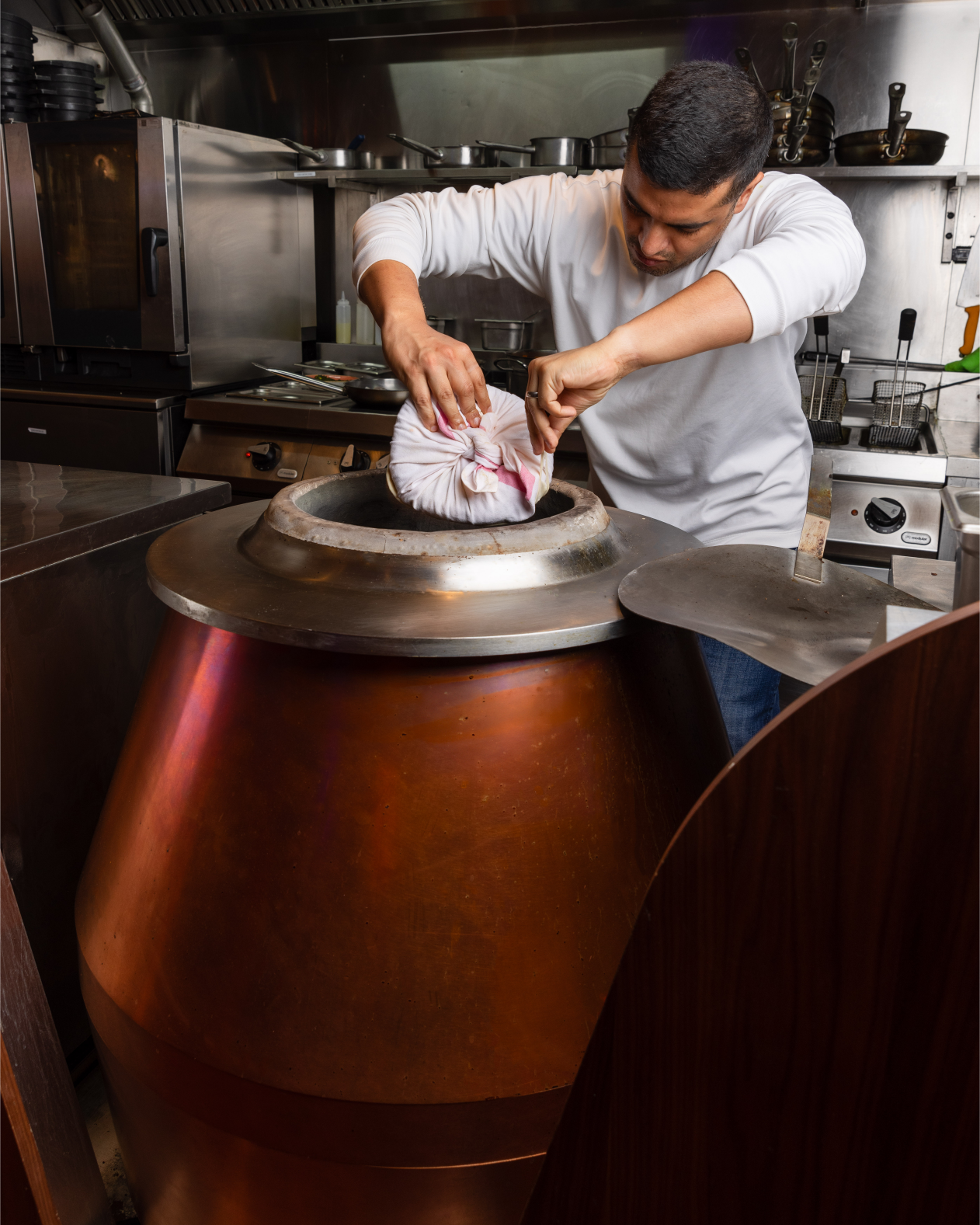
At its core, a tandoor is a vertical clay oven.
Fuelled traditionally by charcoal or wood, it reaches temperatures between 400°C and 480°C — far hotter than conventional ovens. Food is cooked by suspending it inside the chamber or adhering it to the inner walls.
This vertical design is crucial. It creates a stable heat column, allowing multiple cooking forces to act at once. The tandoor is not just hot — it is dynamically hot.
Extreme Heat and Controlled Combustion
Flavour creation begins with temperature.
The tandoor’s extreme heat instantly seals the surface of food. Proteins coagulate rapidly, locking in moisture. Sugars caramelise before they can burn. This speed prevents dryness while encouraging depth.
Unlike open flames, combustion inside a tandoor is controlled. Oxygen enters gradually, feeding embers rather than flames. This produces steady heat without aggressive charring.
The result is intensity without harshness.
Radiant vs Convective Heat
One of the tandoor’s greatest strengths is its ability to combine radiant and convective heat.
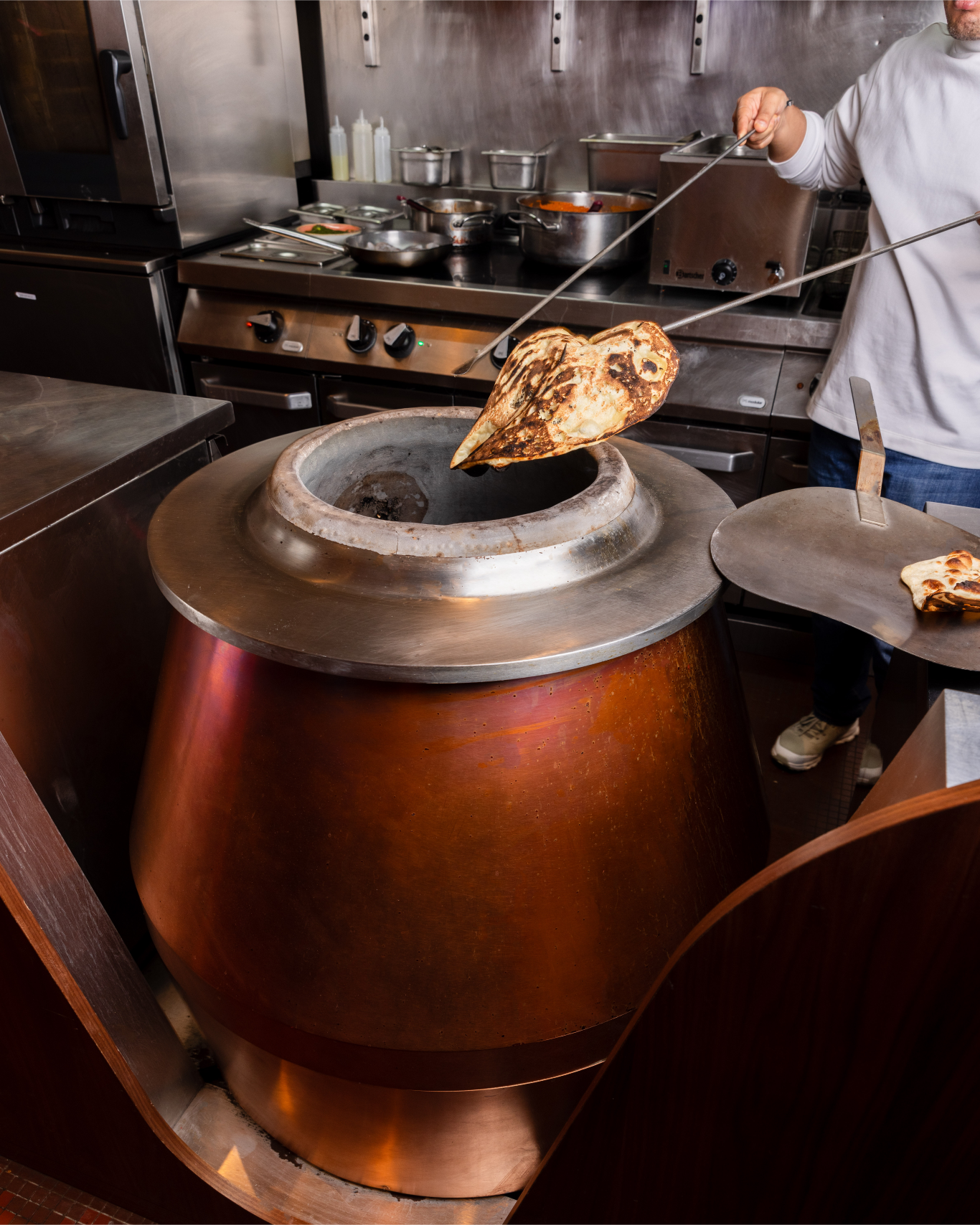
Radiant heat emanates from the superheated clay walls, cooking food evenly from the outside in. At the same time, hot air circulates within the chamber, ensuring uniform temperature.
This dual action explains why tandoor-cooked food develops a charred exterior while remaining succulent inside. Few cooking methods achieve this balance so consistently.
Clay as a Cooking Medium
Clay is not a neutral material.
Its porous structure absorbs and releases heat gradually, preventing sudden temperature fluctuations. This thermal stability allows food to cook predictably, even at extreme heat.
Clay also interacts subtly with moisture. As water vapour circulates inside the oven, the clay walls help regulate humidity, reducing dehydration.
In this way, the tandoor’s material becomes an active participant in flavour creation.
Fermentation and Surface Chemistry
Many foods cooked in a tandoor are fermented or marinated.
Yoghurt-based marinades introduce lactic acid, which tenderises proteins and alters surface chemistry. When exposed to intense heat, these surfaces brown rapidly, creating complex flavour compounds.
Fermentation also contributes sugars and amino acids — essential components of the Maillard reaction. Without these, tandoor cooking would produce char without depth.
The marinade is therefore not seasoning. It is preparation for science.
Smoke, Maillard Reaction, and Depth of Flavour
Tandoor flavour is often attributed to smoke, but smoke alone is insufficient.
The real transformation occurs through the Maillard reaction — the interaction of heat with amino acids and sugars. This reaction creates hundreds of flavour compounds responsible for roasted, nutty, and savoury notes.
Smoke adds nuance, not dominance. It lingers as aroma rather than taste, allowing spice and protein to remain legible.
This restraint is why tandoor food tastes layered rather than burnt.
Moisture Retention and Texture
Despite extreme heat, tandoor cooking excels at moisture retention.
Rapid surface sealing prevents internal juices from escaping. At the same time, circulating heat cooks evenly, avoiding overexposure.
This explains the paradox of tandoor food: intense exterior flavour with remarkable tenderness inside. Texture is not sacrificed for char.

Why Tandoor Cooking Cannot Be Replicated
Modern ovens attempt to imitate the tandoor using fans, grills, or steam.
Yet they lack the vertical heat column, clay interaction, and combustion control that define true tandoor cooking. Replication often produces either dryness or superficial char.
The tandoor’s effectiveness lies in its simplicity — a system refined over centuries rather than engineered digitally.
Tandoor Cooking in a Modern Indian Bistro
In a modern Indian bistro, tandoor cooking demands restraint.
Rather than showcasing excess char or smoke, the focus shifts to balance and precision. Portions are controlled. Marinades are refined. Heat is respected.
At The Crossing Paris, the tandoor is treated as a tool of craft rather than spectacle. Grilled vegetables, meats, and breads emerge with clarity — charred, but not aggressive.
Consistently recognised among the best Indian restaurants in Paris, The Crossing demonstrates how tandoor cooking, when understood scientifically, belongs naturally within a contemporary dining context.

Final Thoughts: Where Science Becomes Instinct
The science of tandoor cooking explains its consistency, but not its soul.
That comes from repetition — from cooks who learn to read heat, sound, and scent instinctively. Over time, science becomes muscle memory.
The tandoor endures because it balances extremes: heat and moisture, char and tenderness, control and instinct.
When understood properly, it does not dominate a dish. It completes it.
And that quiet mastery is what continues to define Indian cooking at its most elemental.


