

Table of Contents
- Why Ingredients Disappear Over Time
- What “Forgotten” Really Means in Indian Cuisine
- The Role of Movement in Preserving Ingredients
- Rediscovering Ingredients Through Technique
- How The Crossing Brings Ingredients Back to the Table
- Why These Ingredients Matter to the Dining Experience
- Final Thoughts on Revival and Continuity
Why Ingredients Disappear Over Time
Ingredients rarely disappear because they lose value. More often, they fade because systems change—supply chains simplify, cooking speeds up, and preferences shift toward convenience.
In Indian cuisine, this has led to a narrowing of what is commonly used. Complex spice blends are reduced to a few dominant flavours. Slow techniques that once defined dishes are replaced by faster methods. Over time, certain ingredients simply fall out of daily use.
This creates a gap between what the cuisine is capable of and what is commonly experienced.
What “Forgotten” Really Means in Indian Cuisine
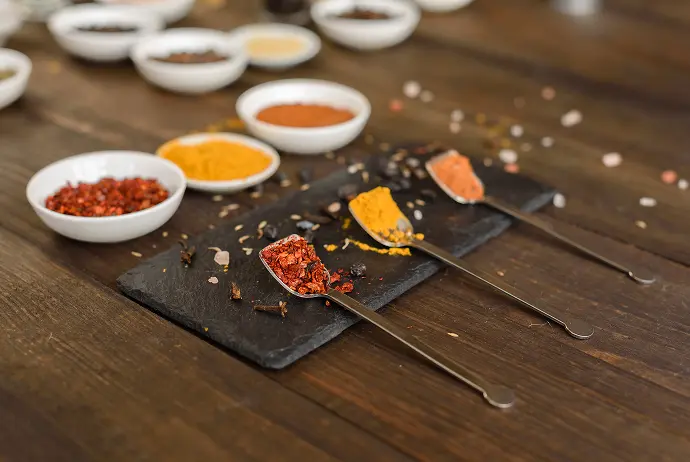
A forgotten ingredient is not extinct. It exists in memory, in regional cooking, or in recipes passed through families rather than written records.
Ingredients like fenugreek leaves, regional peppers, or specific forms of ghee have always remained part of India’s culinary fabric. What changes is visibility. At The Crossing, the focus is on bringing these elements back into a contemporary context—not as nostalgia, but as functional components of flavour.
This distinction is important. Revival is not about recreating the past exactly, but about understanding what these ingredients contribute and why they matter.
The Role of Movement in Preserving Ingredients
Indian food has always evolved through movement—across regions, trade routes, and cultural exchanges. Ingredients travelled with people, adapting to new climates and cuisines.
Railways, in particular, played a significant role in this exchange. Spices, herbs, and cooking methods moved between regions, allowing ingredients to gain new contexts rather than disappear.
This constant movement is why many ingredients never truly vanish. They shift location, change form, or become associated with different dishes.
Understanding this movement helps explain how revival happens—it is less about rediscovery and more about recontextualisation.
Rediscovering Ingredients Through Technique
An ingredient only becomes meaningful when paired with the right technique. Without proper handling, its value remains hidden.
Take cumin, for example. Its role is not simply to add flavour, but to form the base of many dishes when tempered correctly. Similarly, fenugreek introduces bitterness that deepens over time, balancing richer elements.
At The Crossing, technique is used to reveal these qualities. Spices are layered carefully, heat is controlled, and time is respected as part of the process.
This approach allows lesser-emphasised ingredients to re-emerge—not as additions, but as essential components.
How The Crossing Brings Ingredients Back to the Table
The Crossing’s menu reflects a deliberate effort to highlight ingredients that carry history and function.
Dishes are built around balance rather than excess, allowing individual elements to be recognised. Whether it is the use of cardamom for aromatic lift or coconut for structure, each ingredient is placed with intention.
Chef Ankur’s philosophy reinforces this approach. By focusing on editing rather than adding, the kitchen creates space for ingredients to express themselves fully.
This results in food that feels both familiar and newly understood.
Why These Ingredients Matter to the Dining Experience
For diners, the return of these ingredients changes how Indian food is perceived. Flavours become more distinct, dishes feel more balanced, and the overall experience gains clarity.
Rather than relying on intensity, the meal builds through subtlety—each ingredient contributing to a larger structure.
This shift also makes the cuisine more accessible. When flavours are defined and controlled, they are easier to understand, even for those unfamiliar with Indian food.
Final Thoughts on Revival and Continuity
The story of forgotten ingredients is not about loss—it is about continuity. These elements have always existed within Indian cuisine, waiting to be reinterpreted.
In modern kitchens like The Crossing, their return reflects a broader shift toward precision, restraint, and understanding.
By bringing these ingredients back into focus, the cuisine becomes clearer, more expressive, and more aligned with its own depth—offering diners not something new, but something more complete.


