

Table of Contents
- How Railway Stations Became India’s Food Hubs
- Railways Connected More Than Cities
- Why Railway Platforms Became Natural Food Markets
- The Birth of Railway Cuisine
- How Regional Flavours Travelled Across India
- The Inspiration Behind The Crossing
- More Than a Means of Travel
How Railway Stations Became India’s Food Hubs
Before social media made food travel across continents in seconds, India had another system carrying recipes, ingredients, and culinary ideas from one region to another: the railways.
For generations, Indian railway stations were more than transport hubs. They were gathering points where cultures intersected, conversations unfolded, and food became a common language between strangers. Every platform offered a glimpse into the region beyond it. Every stop presented an opportunity to taste something new.
Today, many of India’s most beloved food traditions remain deeply connected to the railway network that helped spread them.

Railways Connected More Than Cities
When the Indian railway system expanded across the country during the nineteenth and twentieth centuries, it did something remarkable. It connected regions that had previously remained separated by geography, language, and local customs.
With people came food.
Vendors adapted their offerings to travelers passing through stations. Families carried recipes as they migrated for work. Railway workers introduced regional dishes to communities hundreds of kilometers from their origins. Over time, stations became informal cultural exchanges where culinary traditions moved alongside passengers.
A traveler departing Kolkata might encounter spiced snacks in Bihar, fragrant chai in Uttar Pradesh, and coconut-rich dishes further south. The journey itself became a lesson in India’s extraordinary diversity.
Why Railway Platforms Became Natural Food Markets
Travel creates hunger, but railway stations offered more than convenience.
Unlike modern airports, India’s railway platforms were woven directly into everyday life. Vendors prepared food close to the tracks, often using recipes that reflected local ingredients and family traditions. Travelers weren’t eating generic meals; they were eating the flavors of the communities surrounding the station.
This created a uniquely regional food culture.
At some stations, steaming cups of chai became synonymous with arrival. Elsewhere, freshly fried snacks, lentil dishes, stuffed breads, or rice preparations became local signatures. Certain foods became so closely associated with specific stops that travelers planned journeys around them.
The station itself became part of the recipe.
The Birth of Railway Cuisine
Over time, a distinct category of food emerged: railway cuisine.
Perhaps the most famous example is Railway Curry, a dish believed to have evolved during the colonial railway era. Designed to travel well and satisfy diverse tastes, it balanced spice, acidity, and richness in a way that appealed to passengers from different backgrounds.
But railway cuisine was never defined by one recipe.
Instead, it reflected a broader philosophy of adaptation. Dishes evolved as they moved between regions. Ingredients changed according to availability. Techniques shifted as cooks responded to new audiences. What remained constant was the idea that food could connect people who might otherwise have little in common.
That idea continues to shape Indian dining today.
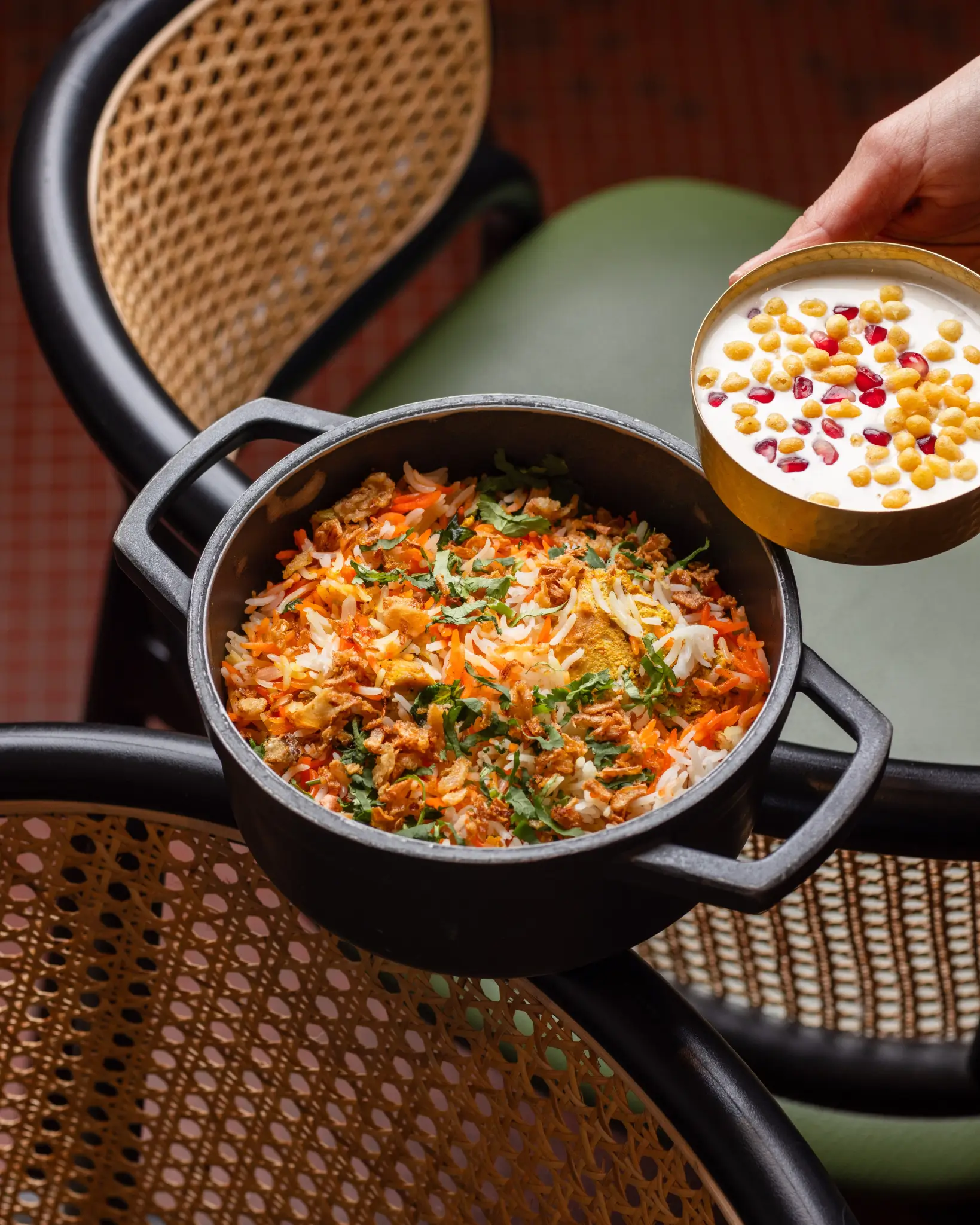
How Regional Flavours Travelled Across India
One of the railways’ greatest contributions to Indian food culture was visibility.
Many regional cuisines remained local for centuries. Rail travel exposed them to broader audiences. A spice blend from Kashmir, a coastal ingredient from Kerala, or a cooking technique from Rajasthan could travel alongside merchants, workers, and families moving across the country.
The result was not uniformity but appreciation.
India’s culinary identity became richer precisely because regional differences remained intact. Railways encouraged discovery rather than standardisation. Travelers learned that Indian cuisine could not be reduced to a handful of dishes. Instead, it represented hundreds of local traditions, each shaped by geography, climate, and community.
The Inspiration Behind The Crossing
One of the railways’ greatest contributions to Indian food culture was visibility.
Many regional cuisines remained local for centuries. Rail travel exposed them to broader audiences. A spice blend from Kashmir, a coastal ingredient from Kerala, or a cooking technique from Rajasthan could travel alongside merchants, workers, and families moving across the country.
The result was not uniformity but appreciation.
India’s culinary identity became richer precisely because regional differences remained intact. Railways encouraged discovery rather than standardisation. Travelers learned that Indian cuisine could not be reduced to a handful of dishes. Instead, it represented hundreds of local traditions, each shaped by geography, climate, and community.
More Than a Means of Travel
The history of Indian railway food is ultimately a story about people.
Trains carried passengers, but they also carried memories, recipes, ingredients, and traditions. Railway stations became food hubs because they reflected the very nature of India itself—diverse, dynamic, and constantly in motion.
Long before culinary tourism became a trend, millions of travelers were already discovering India’s regional cuisines one station at a time.
And in many ways, they still are.


