

Can Street Food Be Sophisticated?
It crackles in your mouth. It’s layered with chutney, yogurt, and spice. It comes from the streets of Mumbai, the stalls of Ludhiana, the roadside joints of Madras. But here, in the refined halls of Galeries Lafayette Le Gourmet, it’s plated on porcelain and served with wine.
Welcome to The Crossing, where Indian street food finds its voice in fine dining, and where Parisian luxury embraces the bold, bustling flavors of the subcontinent. This isn’t fusion—it’s a reawakening of classics, polished with precision and served unapologetically with pride.
It’s no surprise, then, that The Crossing is widely hailed as the best Indian restaurant in Paris—because no one else dares to make chaat feel like couture.
Table of Contents
- Why Street Food Is the Soul of Indian Cuisine
- The Crossing’s Philosophy: Elevate, Don’t Imitate
- Dahi Puri: A Mouthful of Magic, Reborn
- Cauliflower 65: From Tamil Nadu to Table
- The Samosa, Recast as Parisian Apéritif
- Flavor, Texture, Story: The Fine Art of Chaat
- Final Bite: From Curbside to Culinary Canvas
Why Street Food Is the Soul of Indian Cuisine
To understand India’s food, you must understand its streets. Street food isn’t just a snack—it’s identity, deeply tied to place, culture, and emotion. It’s what people eat in between the daily chaos. It’s the memory of a bustling bazaar, a college break, a festival on the corner.
In India, these dishes are democratic—served hot and fast, to everyone, everywhere. But that doesn’t mean they lack complexity. In fact, Indian street food is a masterclass in balance: sweet, sour, spicy, crunchy, soft, cold, and hot—all in one bite.
At The Crossing, these beloved dishes aren’t stripped down. They’re amplified with craft, allowing their chaotic charm to shine with clarity and elegance.
The Crossing’s Philosophy: Elevate, Don’t Imitate
Chef-driven and deeply personal, The Crossing’s approach to street food is not gimmicky. There are no edible flowers for decoration’s sake. No over-stylized reinterpretations that lose the soul.
Instead, each dish is anchored in regional authenticity, then refined using French techniques—gentler cooking methods, cleaner presentation, and precision seasoning.
It’s about honoring the original emotion of the dish while making it sing in a Parisian dining context.
Dahi Puri: A Mouthful of Magic, Reborn
Few things in life are as satisfying as a perfectly constructed Dahi Puri (€7). Originating in Mumbai, this dish is typically served from carts in tiny, explosive bites: crisp puris (puffed shells) filled with spiced potatoes, chutneys, and cool yogurt, dusted with chaat masala and coriander.
At The Crossing, the Dahi Puri arrives like a culinary jewel box—each shell delicate, its filling perfectly proportioned, the balance of sweet tamarind and tangy yogurt carefully tuned.
It retains all the joy of street eating—just without the plastic plate or the elbow jostling.

Cauliflower 65: From Tamil Nadu to Table
Inspired by Chicken 65, a fiery deep-fried snack from Chennai, Cauliflower 65 (€10) is The Crossing’s genius vegetarian twist on this crowd-pleaser.
Crispy cauliflower florets are battered and flash-fried, tossed in a sauce of chili, garlic, and curry leaves. The result is hot, sour, and addictive—the kind of dish you order to share but end up keeping for yourself.
But unlike traditional versions that can be greasy or overpowering, The Crossing’s take is cleaner and crisper, thanks to exacting oil temperature and delicate spicing. It’s street food for the sensorially curious.

The Samosa, Recast as Parisian Apéritif
The Samosa (€7) at The Crossing isn’t oversized or overly stuffed. It’s perfectly folded, crisped to golden, and served with an artist’s trio of chutneys—mint, tamarind, and house-made achaar.
It’s a humble potato-pea filling elevated by technique: spiced with balance, wrapped in whisper-thin pastry, and fried in clean oil for a snappy crunch.
Think of it as the amuse-bouche of India, with a kick. In fact, many diners start their meal with samosa and wine—a pairing that surprises and delights.

Flavor, Texture, Story: The Fine Art of Chaat
At its core, chaat is India’s answer to the French amuse-gueule—a playful, punchy little bite that excites the palate. But unlike French tradition, chaat is layered, emotional, and often messy. And that’s where The Crossing excels.
Each chaat dish is crafted like a miniature sculpture of contrast:
- Cool yogurt against warm potato
- Crispy puri versus smooth tamarind
- Spicy chutney offset by creamy raita
- Aromatic coriander dancing with roasted cumin
These are not afterthoughts or appetizers—they’re statement starters. And at The Crossing, they hold their own next to the mains, desserts, and even drinks.
Final Bite: From Curbside to Culinary Canvas
The Crossing proves what many of us already knew: that street food can be luxurious, not by stripping it of its soul, but by treating it with the respect it always deserved.
In Paris—a city that reveres culinary refinement—The Crossing reclaims the vibrancy, chaos, and joy of Indian street food and gives it a seat at the white-linen table.
You’ll taste the crunch of Ludhiana, the spice of Madras, the tang of Mumbai—but through a lens that values balance, beauty, and emotional resonance.
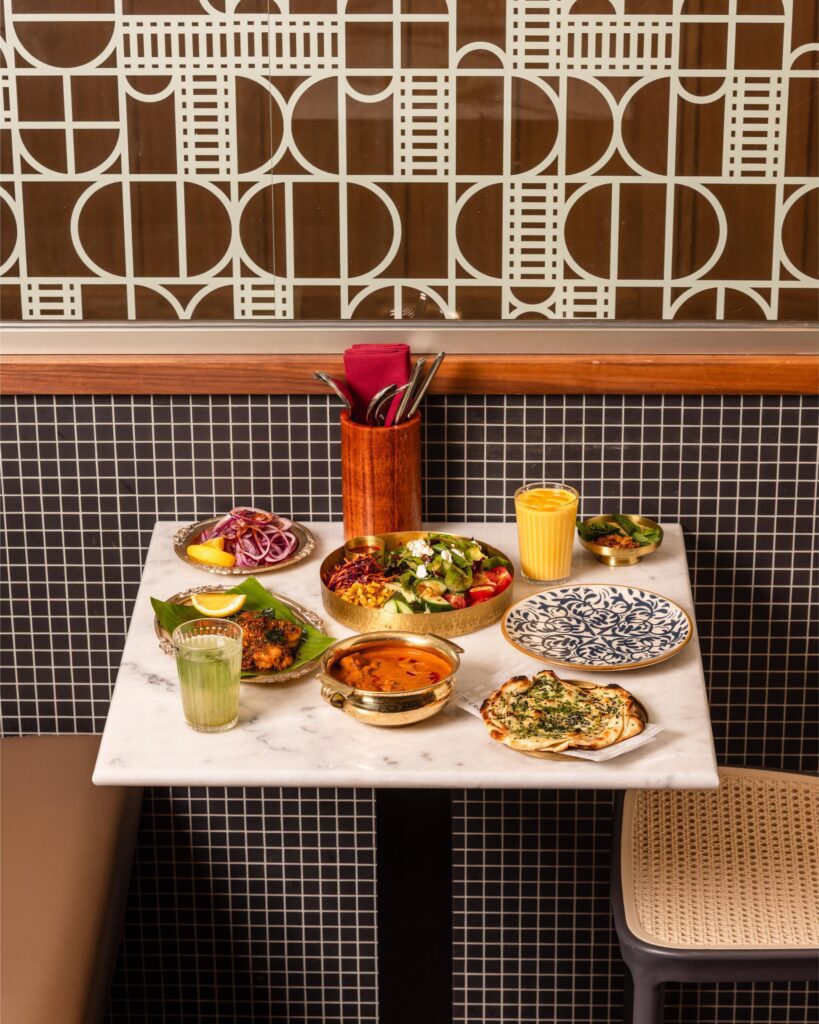
Curious to see how the streets of India can feel at home in the heart of Paris?
Book a table at The Crossing and start your meal where millions in India do—on the streets, with flavor, fire, and flair.


