

Table of Contents
- The Crossing’s Commitment to Sustainability
- Sustainability Begins with Respect for Ingredients
- Celebrating India’s Exceptional Producers
- Preserving Craft Through Artisan Partnerships
- A Menu Designed Around Thoughtful Choices
- Preserving Culinary Heritage Is Sustainability Too
- Looking Beyond Today’s Meal
The Crossing’s Commitment to Sustainability
Sustainability has become one of the most frequently used words in hospitality. Yet its meaning often varies from one restaurant to another.
For some, it begins and ends with sourcing. For others, it involves reducing waste or shortening supply chains. While all of these efforts matter, genuine sustainability requires a broader perspective—one that considers not only environmental impact but also cultural preservation, craftsmanship, and long-term responsibility.
At The Crossing, sustainability is not a standalone initiative. It is part of how we think about food, ingredients, people, and the traditions that shape our menu.

Sustainability Begins with Respect for Ingredients
Every meaningful food culture begins with respect for ingredients.
India’s culinary traditions evolved around local harvests, regional produce, and generations of knowledge about how ingredients should be grown, prepared, and enjoyed. Rather than treating ingredients as commodities, these traditions viewed them as carriers of place, identity, and heritage.
That philosophy continues to guide our kitchen.
Chef Ankur Chakraborty’s approach prioritises quality over excess and technique over unnecessary complexity. By allowing ingredients to speak clearly through careful preparation, the kitchen avoids the waste that often accompanies overcomplicated cooking.
Sustainability starts with using ingredients thoughtfully—and valuing them enough not to disguise them.
Celebrating India's Exceptional Producers
Many of the ingredients featured at The Crossing have deep cultural and agricultural significance.
From Kashmiri saffron and Malabar black pepper to Kerala cardamom, fennel, tamarind, and coconut, these ingredients represent generations of farming knowledge and regional expertise. They are more than flavouring agents; they are part of India’s culinary heritage.
By highlighting ingredients with strong regional identities, we help support food traditions that might otherwise become diluted in an increasingly standardised global food system.
Choosing authenticity is also a form of sustainability.
It ensures that culinary knowledge remains connected to the communities that developed it.
Preserving Craft Through Artisan Partnerships
Sustainability is not only about what appears on the plate.
It is also about supporting the people whose skills and craftsmanship contribute to the dining experience.
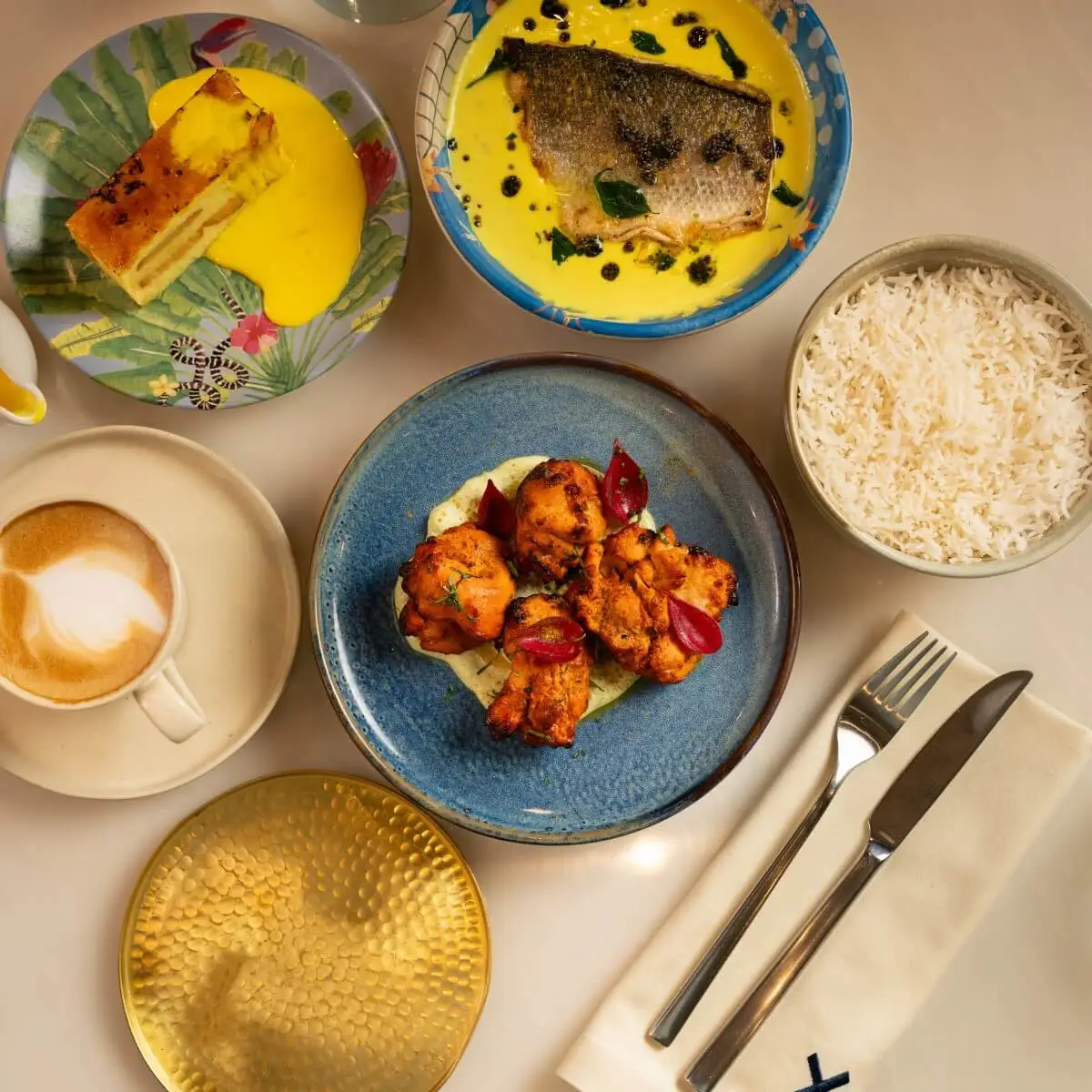
At The Crossing, much of our brass tableware is handcrafted by artisans in Moradabad, a city renowned for its centuries-old metalworking traditions. Each piece requires extensive manual craftsmanship, often taking weeks to complete.
Similarly, selected ceramic pieces at our Paris location come from Claymen, a contemporary Indian studio that celebrates handmade design and the beauty of artisanal production.
Supporting these makers helps preserve traditional skills while ensuring that craftsmanship remains economically viable for future generations.
A Menu Designed Around Thoughtful Choices
Responsible dining often comes down to balance.
Indian cuisine naturally offers a wide range of plant-forward dishes, many of which have been part of regional cooking traditions for centuries. From lentils and seasonal vegetables to coconut-based curries and vegetarian specialties, Indian food demonstrates that flavour and sustainability frequently go hand in hand.
At The Crossing, dishes such as Mushroom and Vegetable Kurma, Dal Makhani, Yellow Dal Tadka, Tandoori Cauliflower, and Corn Bhutta Salad reflect the richness of ingredient-driven cooking without relying heavily on resource-intensive ingredients.
Offering choice is an important part of sustainable dining.
Guests can enjoy a meal that aligns with their preferences while discovering the remarkable diversity of Indian cuisine.
Preserving Culinary Heritage Is Sustainability Too
Environmental responsibility is only one side of sustainability.
The other is cultural continuity.
The Crossing was created to celebrate the stories, recipes, and regional traditions that travelled across India’s railway networks. Many of these culinary traditions have historically been shared through families, communities, and lived experience rather than formal documentation.
By bringing these stories to Paris, we contribute to preserving culinary knowledge that might otherwise fade with time.
For us, sustainability means protecting not only ingredients but also the memories, techniques, and traditions connected to them.
Looking Beyond Today's Meal
The most meaningful definition of sustainability asks a simple question: what are we leaving behind?
A responsible restaurant should create value beyond the dining room. It should support producers, celebrate craftsmanship, respect ingredients, and contribute positively to the cultural traditions that inspire its food.
At The Crossing, sustainability is ultimately about stewardship.
It is about ensuring that the ingredients, artisan skills, and culinary stories we cherish today remain available for future generations to discover, enjoy, and continue.
Because great food should not only nourish the present—it should help preserve the future.


