If you walked into my kitchen and asked me what you needed to begin cooking Indian food, I would not hand you a shopping list of fifty spices. I would start with a much smaller group and explain what each one does.
A masaladani, the round spice box found in many Indian homes, is really about convenience. It keeps the spices you reach for most often close to the stove. What sits inside changes from one home to another. My list below is therefore not a rule. It is the pantry I would suggest to someone who wants enough range to begin cooking confidently.
My everyday essentials
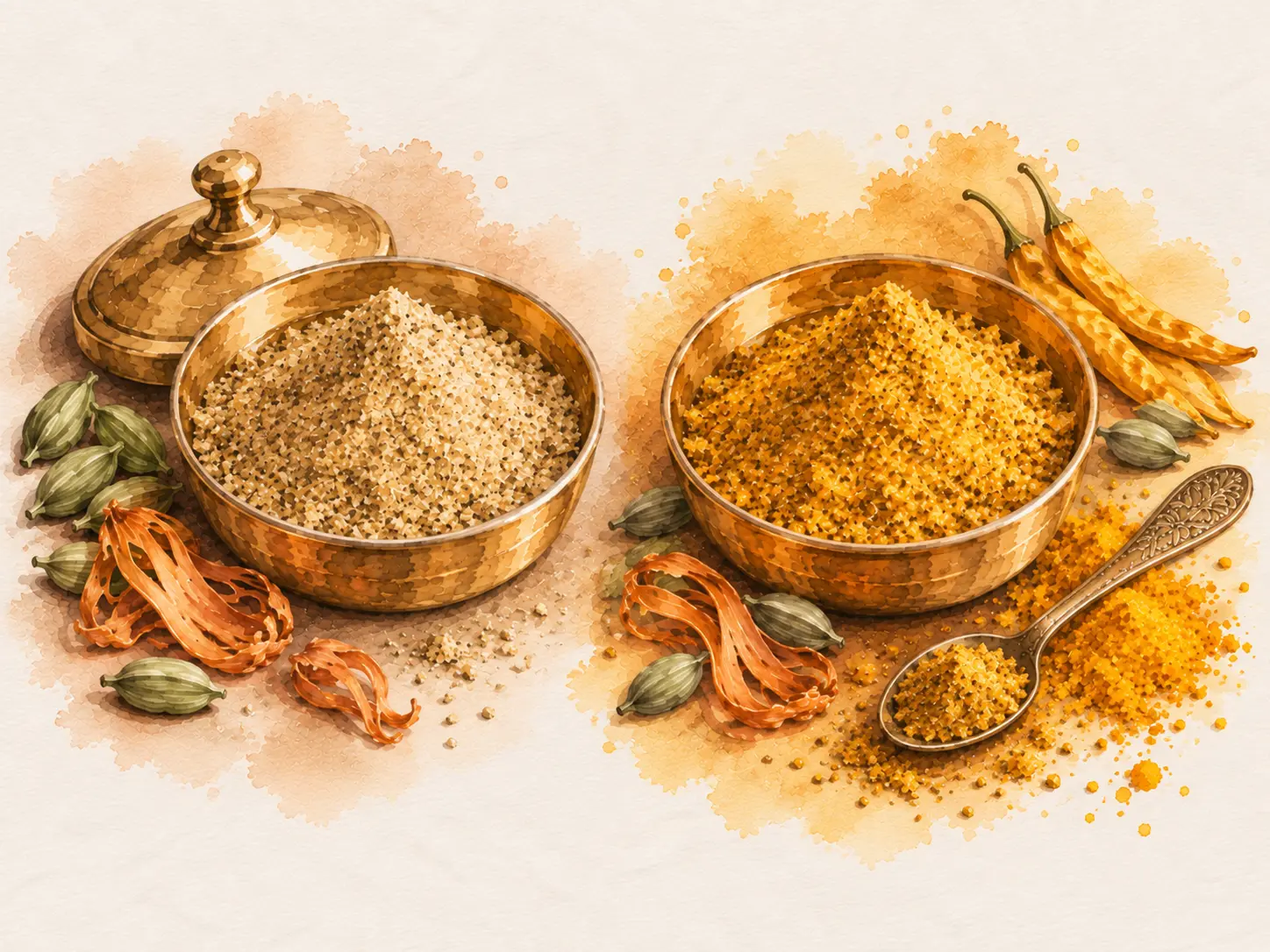
Turmeric powder: Earthy, warm and used in small quantities for colour and background flavour.
Kashmiri chilli powder: Useful when I want colour and gentle chilli character without making everything aggressively hot.
Coriander powder: One of the most useful ground spices for everyday savoury cooking.
Cumin powder: Warm and earthy; useful when a recipe needs cumin flavour without the texture of seeds.
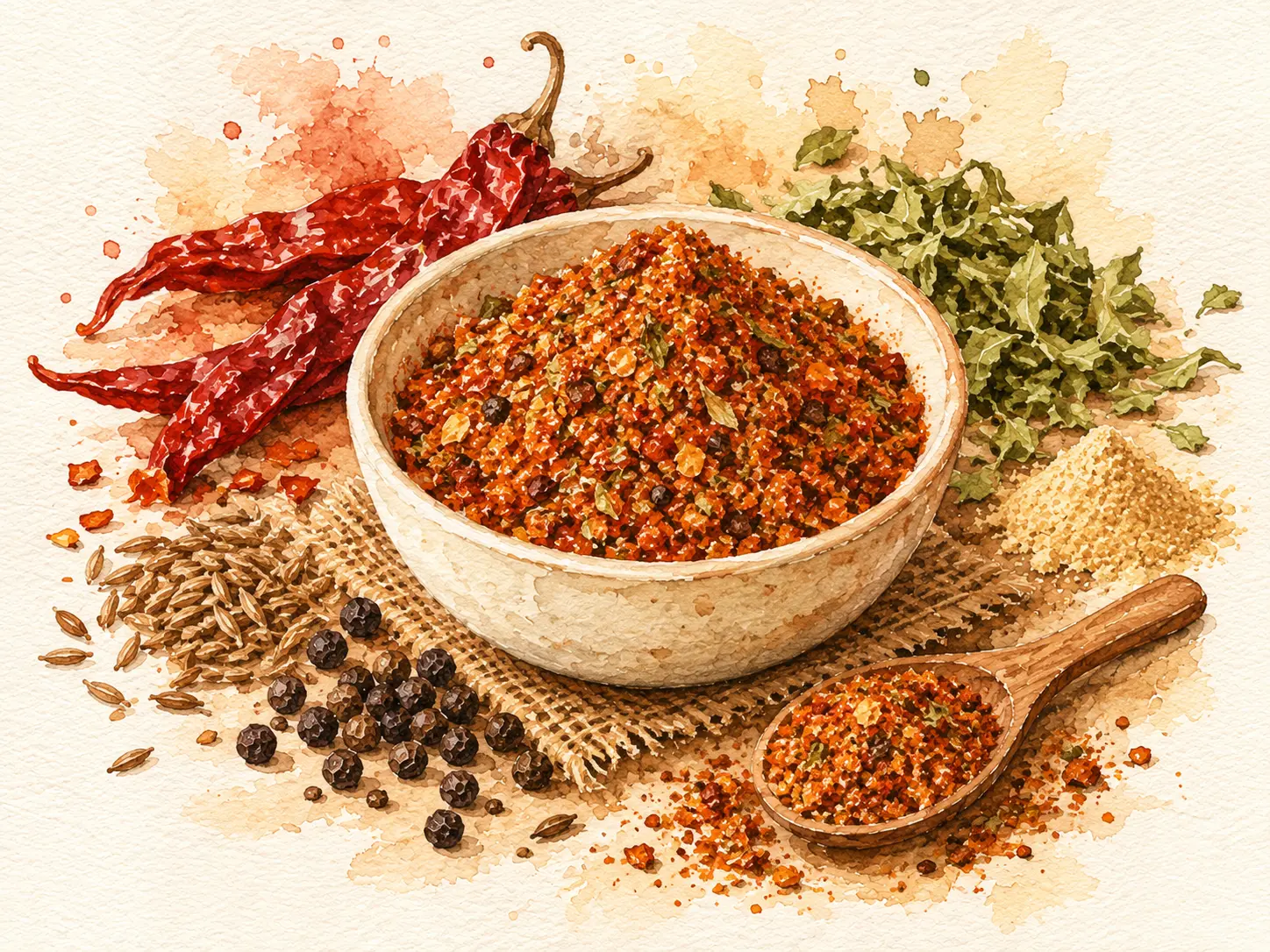
Whole cumin seeds: One of my most-used starting spices for tempering hot oil or ghee.
Mustard seeds: Especially useful in tempering, where the seeds are allowed to crackle in hot fat.
Kasuri methi: Dried fenugreek leaves. A small amount, rubbed between the palms, can add a distinctive savoury aroma.
Dried whole red chillies: Useful in tadkas and for adding chilli aroma to hot fat.
Cinnamon: A warming whole spice for rice, dals, braises and spice blends.
Green cardamom: Highly aromatic; useful in rice, desserts and spice blends.
Fenugreek seeds (methi dana): Quite bitter when overused, but valuable in small quantities in pickles and certain regional preparations.
Asafoetida (hing): Used in tiny quantities, often in tempering, particularly with lentils and vegetarian dishes.
Salt: Not a spice, but the most important seasoning to understand.
Sugar: Again, not a spice. A pinch can sometimes be used to balance acidity or bitterness; it should not automatically make a savoury dish sweet.

How I would use it
Once you are comfortable, expand slowly: black cardamom, cloves, mace, fennel seeds, ajwain, black peppercorns and perhaps amchur (dried mango powder). Buy what you will actually use. Spices are at their best when fresh, not when forgotten at the back of a cupboard for years.
My note
The important thing is not to own every Indian spice. It is to understand the ones you have. Learn how cumin smells when it hits hot ghee. Taste the difference between coriander and cumin powder. Rub kasuri methi between your palms before adding it. That is where cooking begins.