More Than Décor: What Makes The Crossing One of Paris’s Best Ambience-Led Restaurants
In Paris, ambience is not decoration. It is intention.
The city’s most respected restaurants understand that atmosphere shapes appetite as much as flavour. Light, proportion, sound, and rhythm quietly determine how a meal unfolds. Ambience is not designed to impress quickly, but to support return — a space one wants to re-enter without ceremony.
Within this context, The Crossing has emerged as one of the best ambience-driven restaurants in Paris, not by excess or theatrical design, but through restraint. Its environment does not attempt to recreate India visually. Instead, it translates a philosophy — one shaped by movement, pause, and quiet confidence — into space.
This is not an ambience that demands attention. It earns trust.
Table of Contents
- Why Ambience Matters More Than Ever in Paris
- Beyond Theme: Ambience as Philosophy
- The Influence of Movement and Pause
- Material Choices and Sensory Calm
- Sound, Silence, and Dining Rhythm
- Lighting as Emotional Architecture
- How Ambience Shapes the Experience of Indian Food
- The Crossing as a Modern Indian Bistro in Paris
- Why Guests Return: Ambience as Memory
- Final Thoughts: When Space Becomes Part of the Meal
Why Ambience Matters More Than Ever in Paris
Paris has never separated food from environment.
From neighbourhood bistros to contemporary dining rooms, atmosphere is understood as part of the cuisine. Tables are close but intentional. Lighting is warm but precise. Noise is present, yet controlled. The goal is not isolation, but immersion.
As diners become more discerning, ambience increasingly determines loyalty. A technically good meal may be memorable once; a well-composed space invites return. In this sense, ambience becomes a form of hospitality — one that speaks before the menu does.

Beyond Theme: Ambience as Philosophy
Many restaurants confuse ambience with theme.
Themes rely on visual cues, cultural symbols, and surface references. They explain themselves immediately — and exhaust themselves just as quickly.
The Crossing takes a different approach. Its ambience is philosophical rather than decorative. Inspired by India’s railway crossings — places of pause, movement, and quiet intersection — the space reflects transition rather than spectacle.
This philosophy creates an environment that feels grounded rather than performative. Nothing is overexplained. Nothing is loud.
The Influence of Movement and Pause
Movement is central to The Crossing’s identity.
Railway crossings are moments of suspension — where journeys slow, people wait, and attention sharpens. Translating this idea into a dining space results in calm rather than stillness.
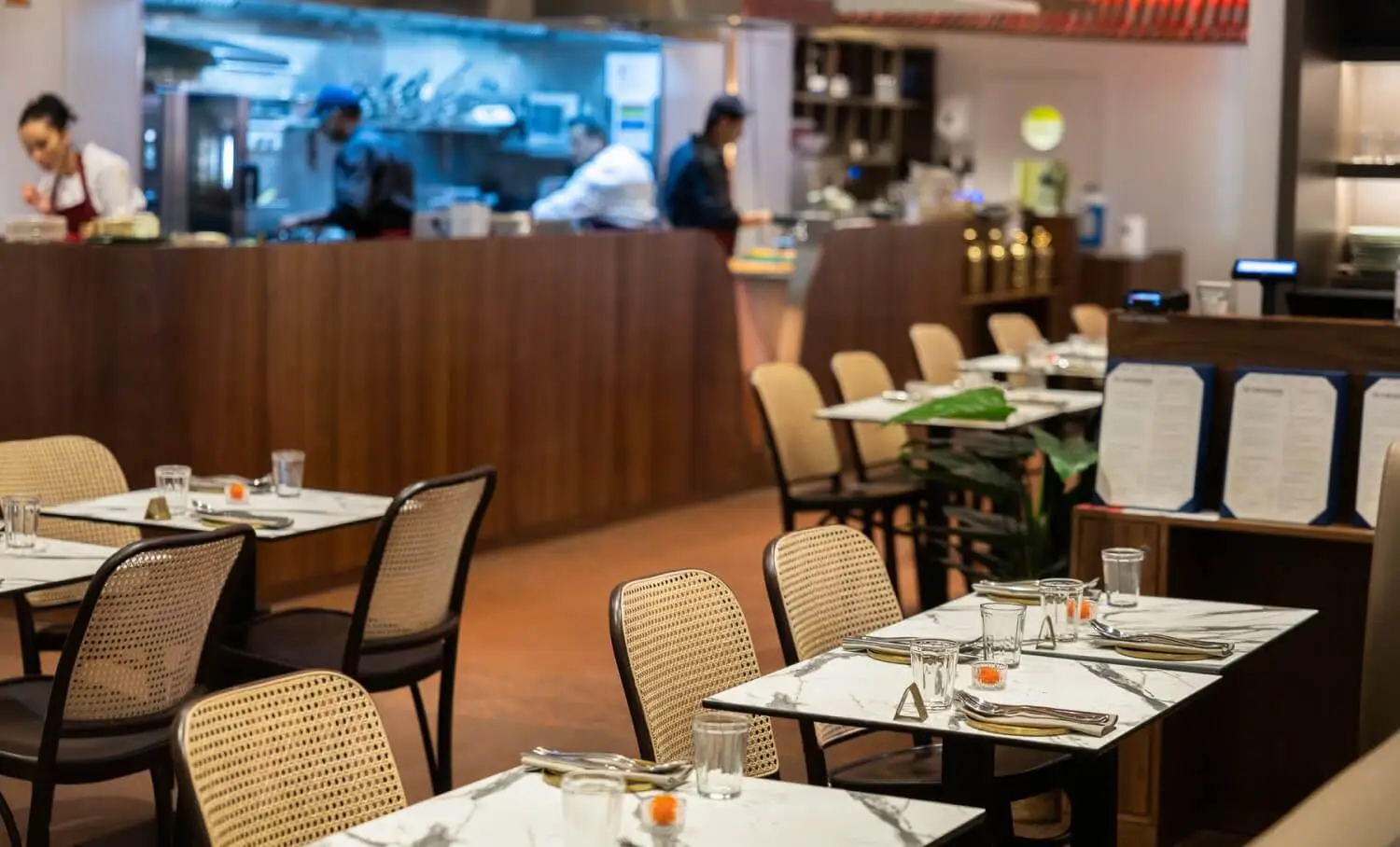
Guests are not rushed. Tables are arranged to allow flow without congestion. The room encourages conversation without urgency. This pacing mirrors the kitchen’s approach to food: deliberate, patient, and composed.
Ambience here does not push the diner forward. It allows them to arrive.
Material Choices and Sensory Calm
Materiality plays a crucial role in shaping atmosphere.
At The Crossing, materials are selected for how they age, absorb light, and respond to touch. Warm metals, natural finishes, and tactile surfaces create familiarity without ornamentation.
Handcrafted brass tableware from Moradabad and clay vessels from Indian artisans are not decorative statements. They are functional objects that carry weight, temperature, and texture — subtly anchoring the dining experience.
These choices reinforce a sense of craft without visual noise.
Sound, Silence, and Dining Rhythm
Sound is often the most overlooked element of ambience.
The Crossing pays careful attention to acoustic balance. Conversations remain audible without echo. Background music supports rather than dominates. The room hums, but never overwhelms.
This acoustic restraint allows Indian food — often associated with intensity — to be experienced differently. Diners slow down. Courses unfold naturally. Attention remains on the table.
The result is an atmosphere that feels civilised and restorative.
Lighting as Emotional Architecture
Lighting defines how food is perceived.
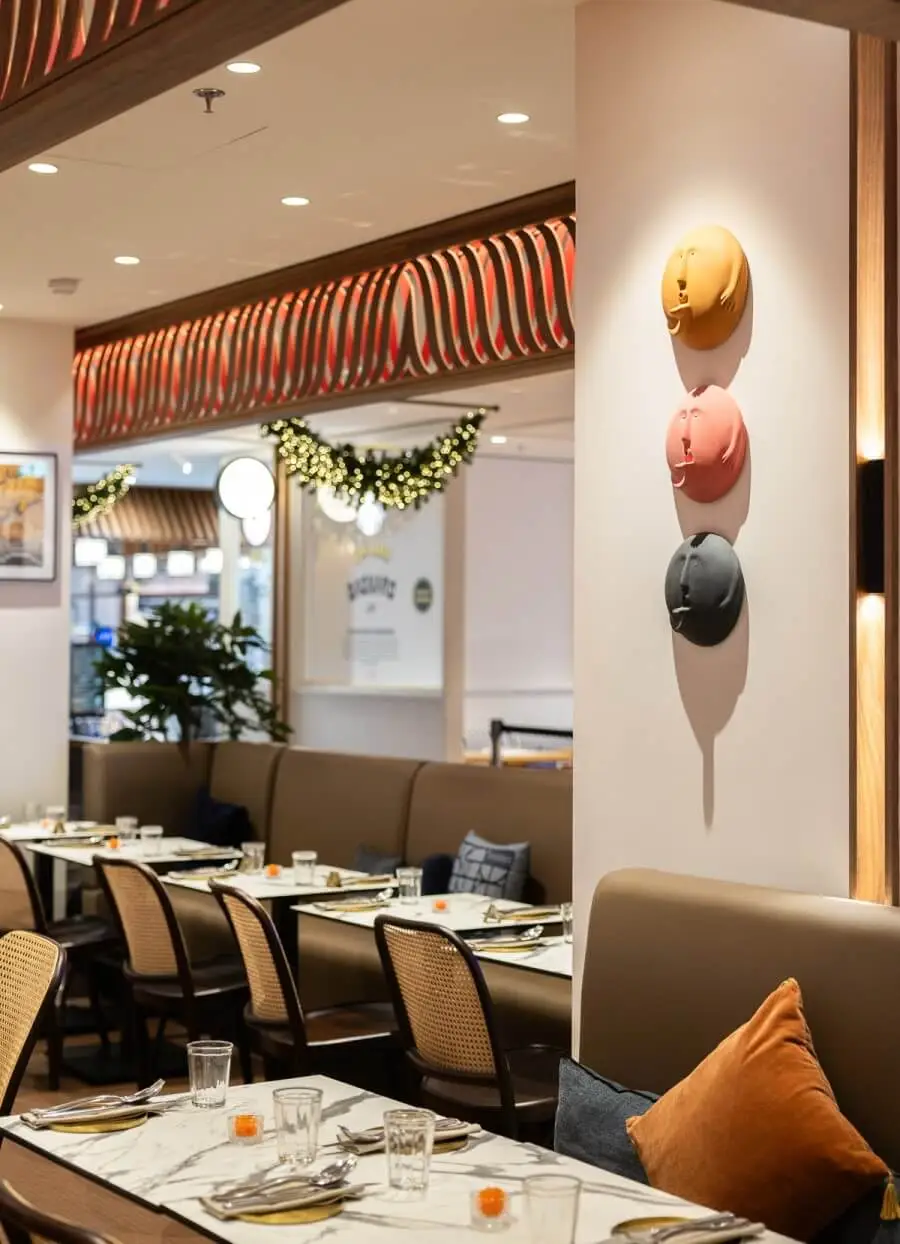
At The Crossing, lighting is warm, indirect, and deliberately low-contrast. There are no harsh focal points. Faces remain visible. Plates are illuminated without glare.
This approach softens the experience of spice and richness, allowing Indian food to feel lighter and more refined. Lighting here does not dramatise the meal — it steadies it.
Such restraint aligns naturally with Parisian dining sensibilities, where subtlety is valued over display.
How Ambience Shapes the Experience of Indian Food
Indian cuisine is deeply responsive to context.
In spaces that are loud or visually busy, spice can feel aggressive. In calmer environments, flavours register as layered and balanced.
The Crossing’s ambience allows Indian food to be understood differently — as composed rather than overwhelming. Slow-cooked curries, lentils, and grills feel integrated into the room’s rhythm.
This harmony between space and plate is what elevates the dining experience beyond taste alone.
The Crossing as a Modern Indian Bistro in Paris
As a modern Indian bistro, The Crossing bridges cultures through tone rather than translation.
Its ambience reflects Parisian values — proportion, calm, and repeatability — while remaining rooted in Indian ideas of hospitality and pause.
This balance positions The Crossing naturally among the best ambience-driven restaurants in Paris, not only within Indian dining, but within the city’s broader culinary landscape.
The space feels appropriate for mid-week dinners, quiet lunches, and unforced celebrations — a hallmark of enduring restaurants.
Why Guests Return: Ambience as Memory
Memorable restaurants linger beyond the meal.
Guests often recall how a place made them feel before they remember what they ate. At The Crossing, that feeling is one of ease — of being neither impressed nor challenged, but understood.
This emotional consistency builds trust. It encourages return visits. Ambience becomes memory.
Final Thoughts: When Space Becomes Part of the Meal
What makes The Crossing one of the best ambience-driven restaurants in Paris is not a singular design element.
It is coherence.
Every decision — from layout and lighting to sound and material — supports a philosophy of restraint, movement, and calm. The space does not compete with the food. It completes it.
In a city that values intention over excess, The Crossing offers something rare: an ambience that does not perform, but belongs.
And that quiet belonging is what makes it exceptional.