Table of Contents
- Why Location Shapes Flavour
- Translating India in a Riviera Context
- The Influence of Lightness and Balance
- Coastal Thinking in an Indian Kitchen
- Refinement Through Editing, Not Reinvention
- A Menu Designed for the Riviera Rhythm
- The Crossing: Where Nice Meets India
Why Location Shapes Flavour
Cuisine does not exist in isolation. It responds to climate, pace, and place—often more than we realise. On the French Riviera, where light defines the day and the sea shapes the air, dining naturally leans toward clarity, balance, and restraint.
For an Indian restaurant in Nice, this presents both a challenge and an opportunity. The question is not how to replicate Indian food, but how to allow it to belong within this environment.
At The Crossing, this approach begins with a simple idea: flavour must adapt to context without losing identity.

Translating India in a Riviera Context
Indian cuisine has always been migratory—shaped by movement, exchange, and adaptation. This makes it uniquely suited to reinterpretation in a place like Nice.
Rather than presenting Indian food as fixed or nostalgic, the philosophy here is to translate it. To retain its structure while adjusting its expression.
Chef Ankur’s approach reflects this clearly: Indian food is not recreated—it is recontextualised, allowing it to feel natural in its surroundings.
This shift changes not just presentation, but flavour itself.
The Influence of Lightness and Balance
One of the most immediate influences of the Riviera is lightness—not as a reduction, but as a recalibration.
Dishes are designed to feel clear rather than dense. Spice is layered with precision, not intensity. Sauces are balanced so they complement rather than dominate.
This is often what surprises guests most. Indian food here does not feel heavy or overwhelming. Instead, it lingers lightly, allowing each element to remain distinct.
This approach aligns with the broader dining culture of Nice, where meals are meant to be enjoyed over time, not rushed or overfilled.
Coastal Thinking in an Indian Kitchen
Being by the Mediterranean subtly reshapes how ingredients and dishes are perceived.
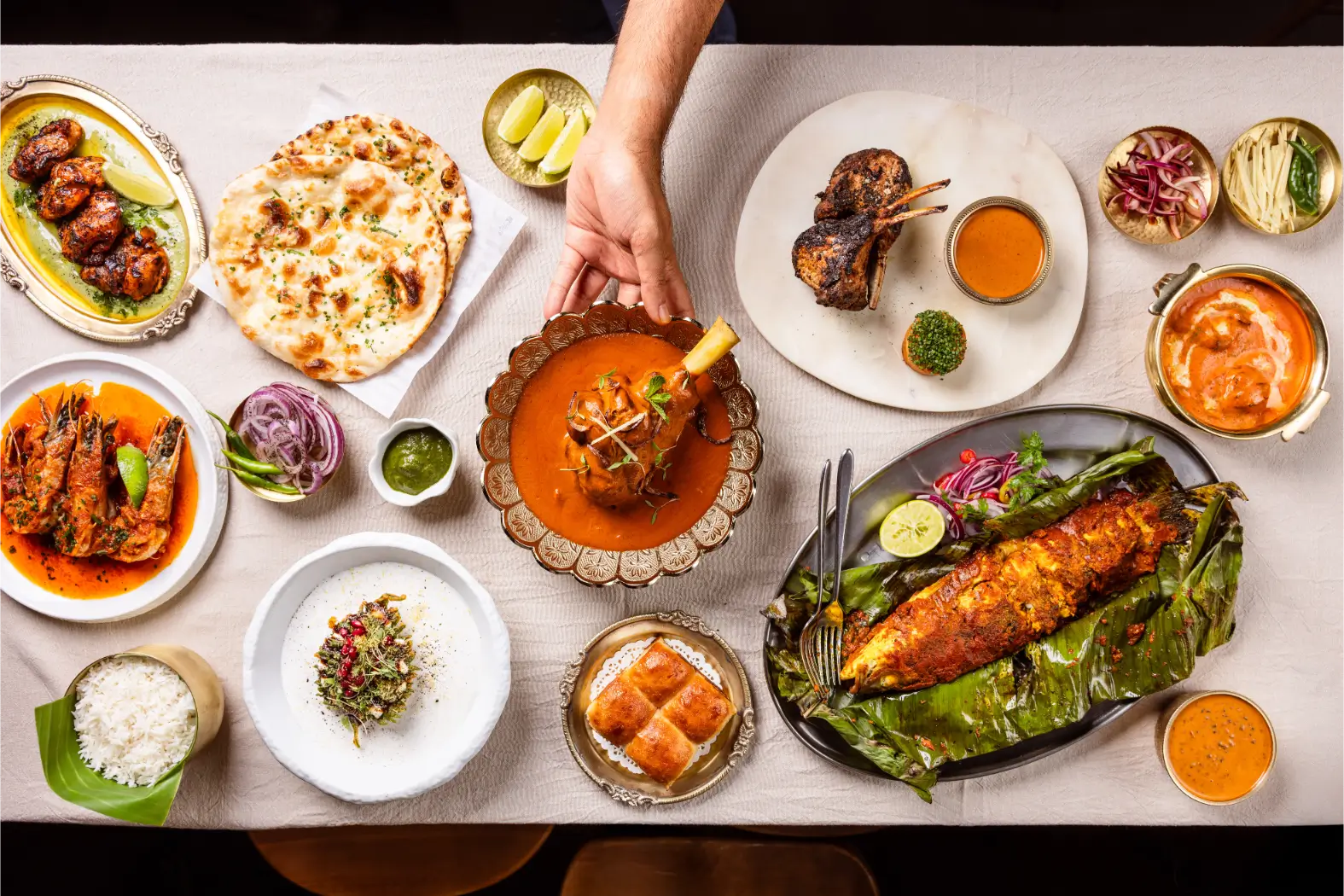
Seafood, for example, takes on a more central role. Dishes like grilled prawns or coastal curries feel instinctively aligned with the setting—lighter, more fluid, and reflective of the surrounding environment. Even non-seafood dishes are influenced by this coastal thinking. Acidity becomes more pronounced, freshness more important, and textures more defined.
The result is a menu that feels responsive—not imposed, but integrated into its location.

Refinement Through Editing, Not Reinvention
A common approach to modernising cuisine is to reinvent it. At The Crossing, the focus is different: refinement through editing.
Indian cuisine already carries depth and complexity. What it often requires is space. By reducing excess—whether in spice, garnish, or presentation—the essential structure of each dish becomes clearer. Flavours are easier to follow, and the overall meal feels more cohesive.
This philosophy aligns with both Indian culinary logic and the understated elegance of the Riviera.
A Menu Designed for the Riviera Rhythm
Dining in Nice follows a rhythm shaped by the day—long lunches, gradual evenings, and meals that unfold without urgency.
The menu at The Crossing reflects this. It is designed to move naturally from lighter, textural dishes into grilled preparations and then into slower, more developed curries. This progression mirrors both Indian dining traditions and the pace of the Riviera. It allows guests to engage with the meal gradually, building flavour without fatigue.
Set against the Mediterranean backdrop, this structure feels intuitive rather than imposed.
The Crossing: Where Nice Meets India
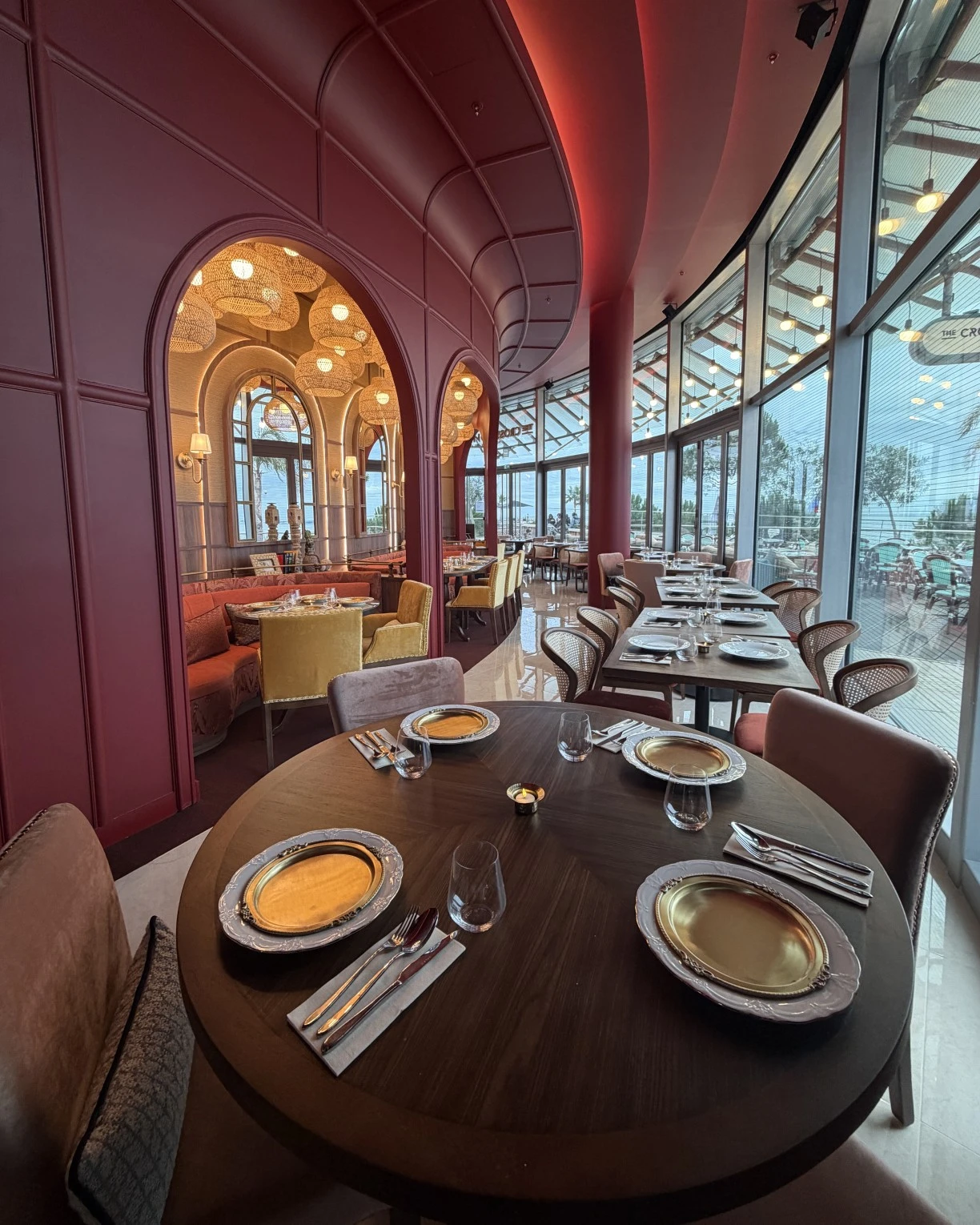
Located within CAP3000 in Saint-Laurent-du-Var, The Crossing Indian Bistro sits at a literal and cultural intersection—between land and sea, tradition and interpretation.
The restaurant brings together India’s diverse culinary influences while allowing them to evolve within the Riviera setting. The result is not fusion, but alignment—where Indian cuisine retains its identity while responding to its environment.
This is what defines the experience. A menu that feels grounded in India, yet shaped by Nice.
Conclusion
Flavour is never static. It is shaped by where it is cooked, served, and experienced.
At The Crossing, the influence of the French Riviera is not an addition—it is a condition. It refines, clarifies, and rebalances Indian cuisine without diminishing it.
The result is a dining experience that feels both familiar and new. Not because it changes what Indian food is, but because it reveals how it can belong—here, by the sea, in Nice.