Table of Contents
- Why Chef Philosophy Matters in Dining Today
- The Core Idea: Indian Food as Movement, Not Tradition Alone
- The Role of Restraint in Indian Cooking
- Editing Over Inventing: A Different Creative Process
- Technique, Time, and Trust in the Kitchen
- How This Philosophy Shapes The Crossing Experience
- Final Thoughts on Understanding the Approach
Why Chef Philosophy Matters in Dining Today
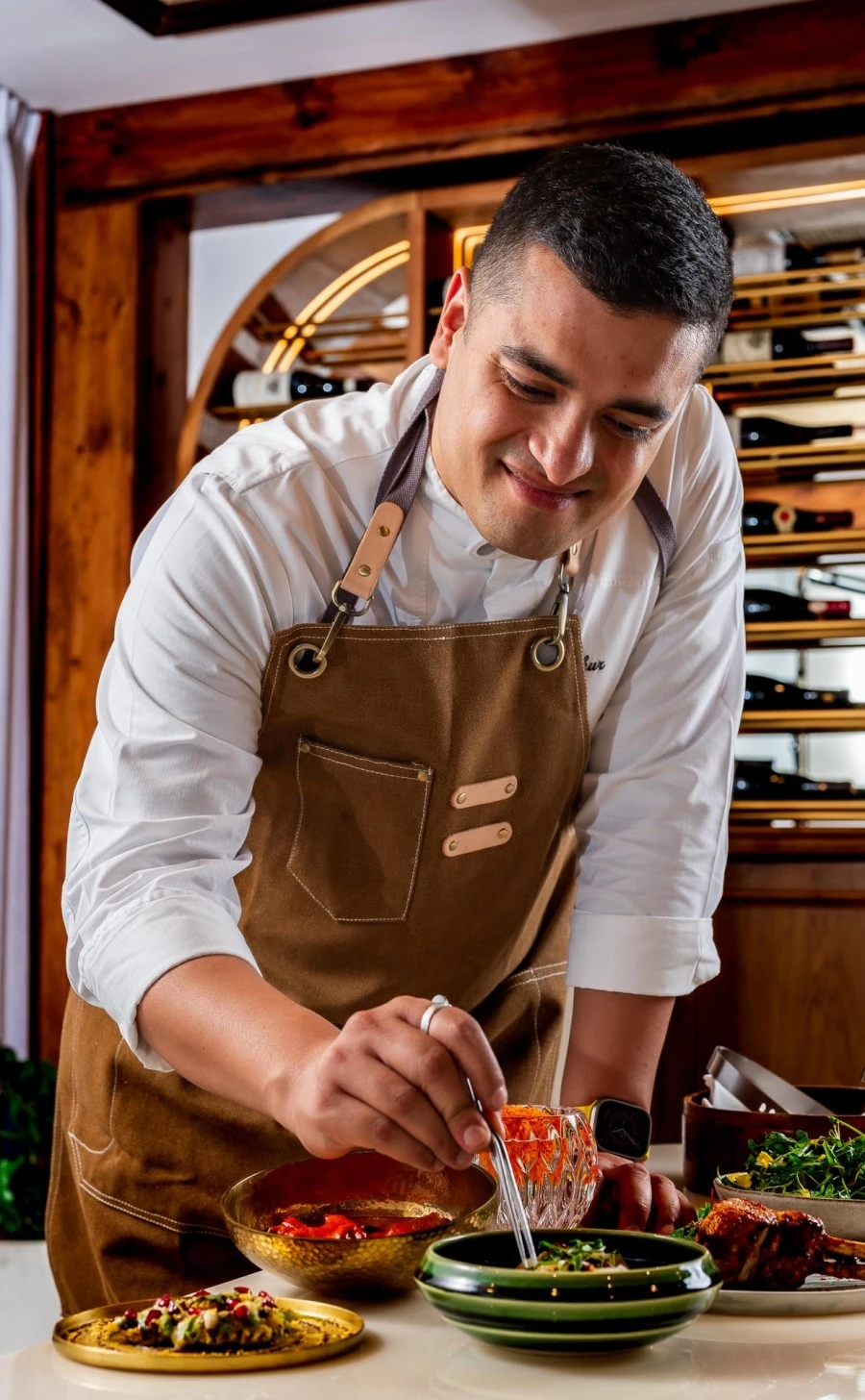
The phrase “chef-driven restaurant” is often used loosely, but it carries a specific implication: the food reflects a way of thinking, not just a set of recipes. Understanding Chef Ankur’s culinary philosophy is essential to understanding The Crossing—not as a concept, but as a system.
For diners, this matters more than ever. In a city like Paris, where options are abundant, differentiation does not come from novelty alone. It comes from clarity—how consistently a kitchen expresses its point of view.
The Core Idea: Indian Food as Movement, Not Tradition Alone
One of the most defining aspects of Chef Ankur’s approach is the rejection of Indian cuisine as something static. Instead, it is treated as migratory—shaped by people, travel, and adaptation over time.
This perspective reframes how dishes are understood. Recipes are not fixed artifacts; they are outcomes of movement. Flavours shift across regions, techniques evolve, and ingredients adapt to context.
The Crossing itself is built on this idea. It does not attempt to recreate India in Paris. It translates it—allowing Indian food to exist naturally within its environment while retaining its identity.
The Role of Restraint in Indian Cooking
Perhaps the most misunderstood element of Indian cuisine is its relationship with spice. It is often assumed that more spice equals more authenticity. Chef Ankur’s philosophy challenges this directly.
Restraint is central. Spices are used with precision, not abundance. The goal is not to overwhelm the palate, but to create balance—where each element is identifiable and intentional. This is particularly evident in dishes like butter chicken, where tomato, butter, fenugreek, and cardamom are aligned rather than layered excessively.
Restraint, in this context, is not limitation—it is control.
Editing Over Inventing: A Different Creative Process
In many contemporary kitchens, innovation is associated with adding—new techniques, unexpected combinations, visual complexity. Chef Ankur’s approach is the opposite.
He focuses on editing.
Indian cuisine already possesses depth and complexity. The role of the chef is not to add more, but to refine what exists. This means removing excess, simplifying presentation, and allowing technique to define the dish.
This philosophy results in food that feels composed rather than constructed. Each dish carries clarity because nothing unnecessary is left in it.
Technique, Time, and Trust in the Kitchen
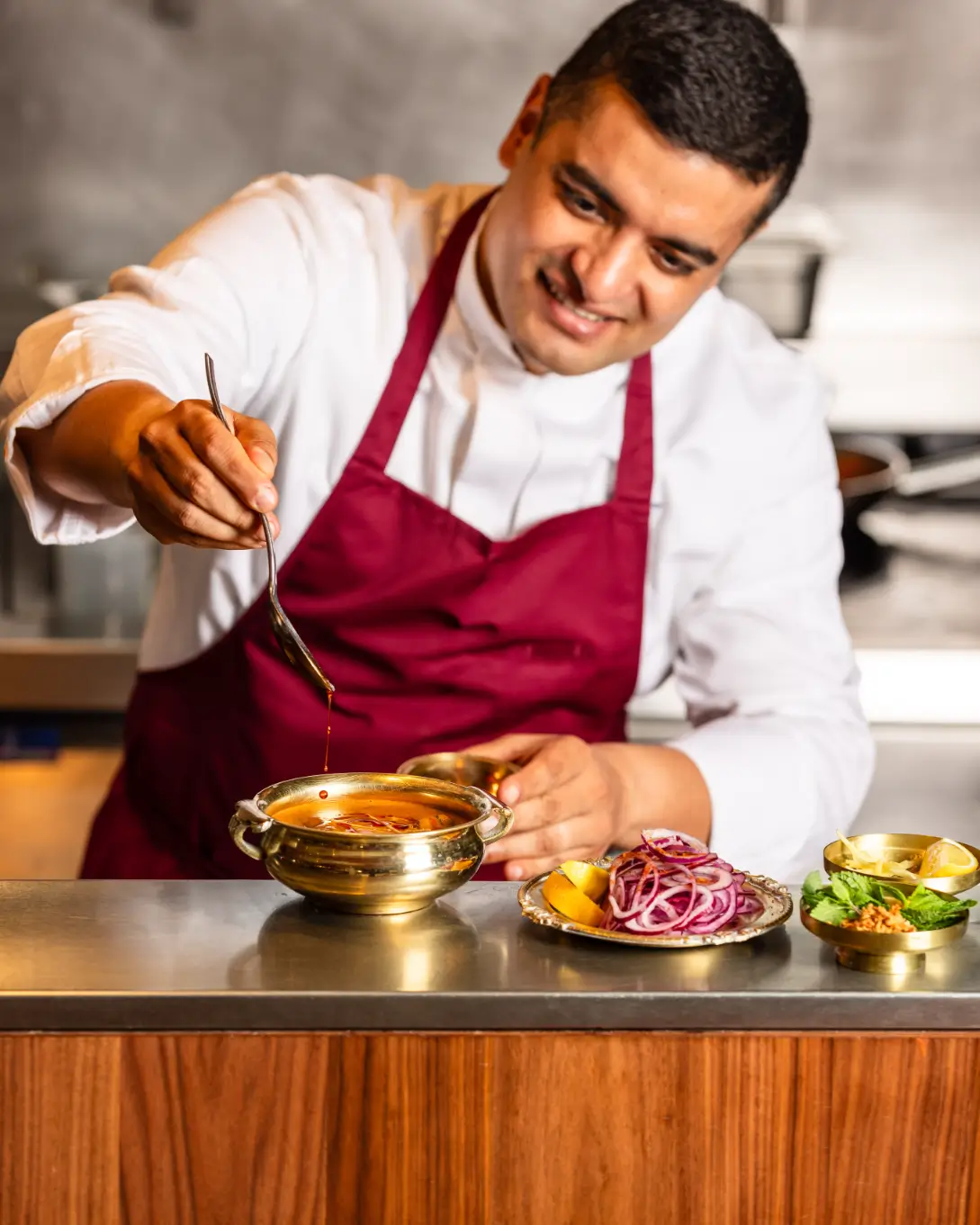
At the operational level, Chef Ankur’s philosophy is guided by a few non-negotiable principles: technique matters more than complexity, and time is an essential ingredient.
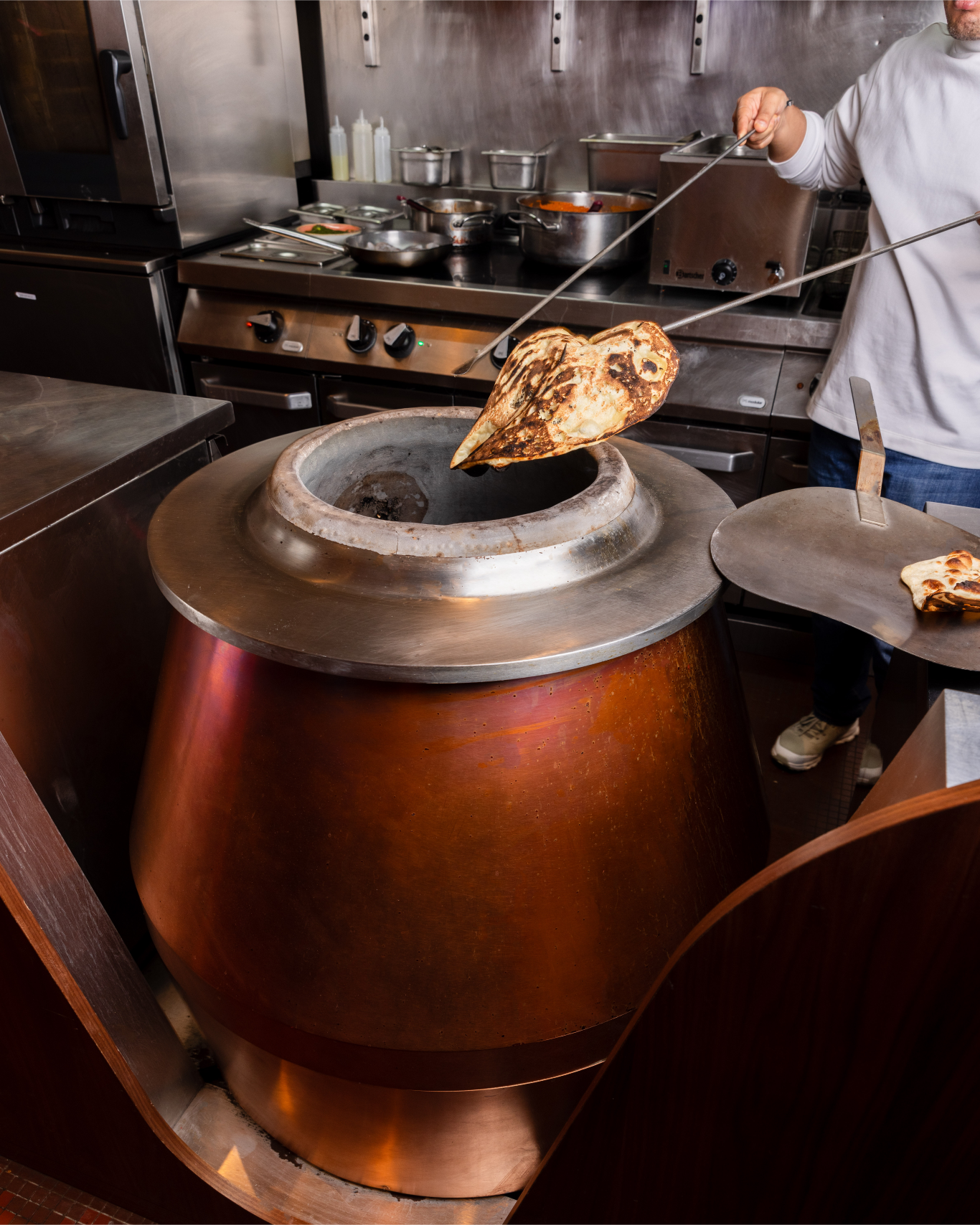
Slow braising, controlled fermentation, and careful heat application are not stylistic choices—they are foundational processes. Dishes like railway lamb curry rely on patience, not embellishment, to achieve depth.
Equally important is trust. The kitchen does not cook to impress immediately. It cooks to build consistency over time—ensuring that each visit feels reliable rather than surprising.
How This Philosophy Shapes The Crossing Experience
For the guest, this philosophy translates into a dining experience that feels calm, structured, and repeatable.
The menu is not designed for spectacle. It is designed for flow. Small plates introduce contrast, grills demonstrate technique, and curries anchor the meal with depth. The space itself reflects this approach—welcoming without being overwhelming, precise without being rigid. The goal is not to create a one-time impression, but a place guests return to regularly.
This consistency is what defines The Crossing within Paris’s dining landscape.
Final Thoughts on Understanding the Approach
Chef Ankur’s culinary philosophy is not about redefining Indian food through novelty. It is about revealing what is already there—through restraint, technique, and clarity.
For diners, understanding this approach changes how the food is experienced. It shifts the focus from intensity to balance, from quantity to structure, and from expectation to observation.
In doing so, it offers something increasingly rare in dining: a sense of quiet confidence, where every element is deliberate, and nothing is accidental.